
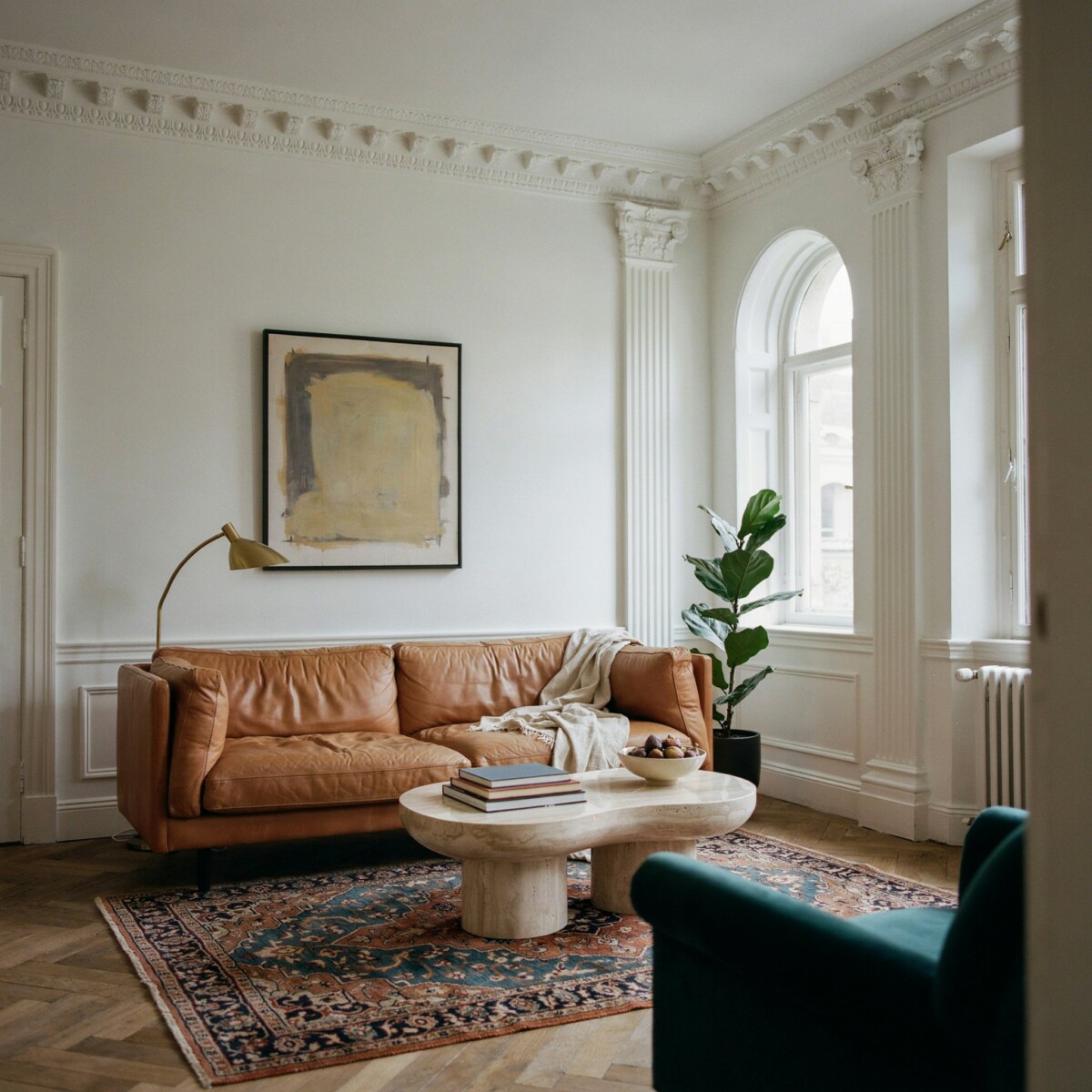
You love the clean, uncluttered lines of mid-century modern, but you also crave the cozy, collected feel of vintage farmhouse. When you try to put them together in the same room, the space ends up looking like a confused furniture showroom floor rather than a welcoming home. Learning how to mix design styles without clashing is the secret to creating a space that feels uniquely yours.
A cohesive mixed-style home isn’t about matching every single piece of furniture or buying a catalog room set. Instead, it relies on shared color, proportion, texture, and intentional repetition. In this guide, we will break down the exact formulas interior designers use to blend inherited antiques, budget-friendly finds, and contemporary purchases into a beautiful, unified space. Whether you are starting from scratch or layering new items into an existing room, these practical steps will help you decorate with confidence.
What Does It Mean to Mix Design Styles?
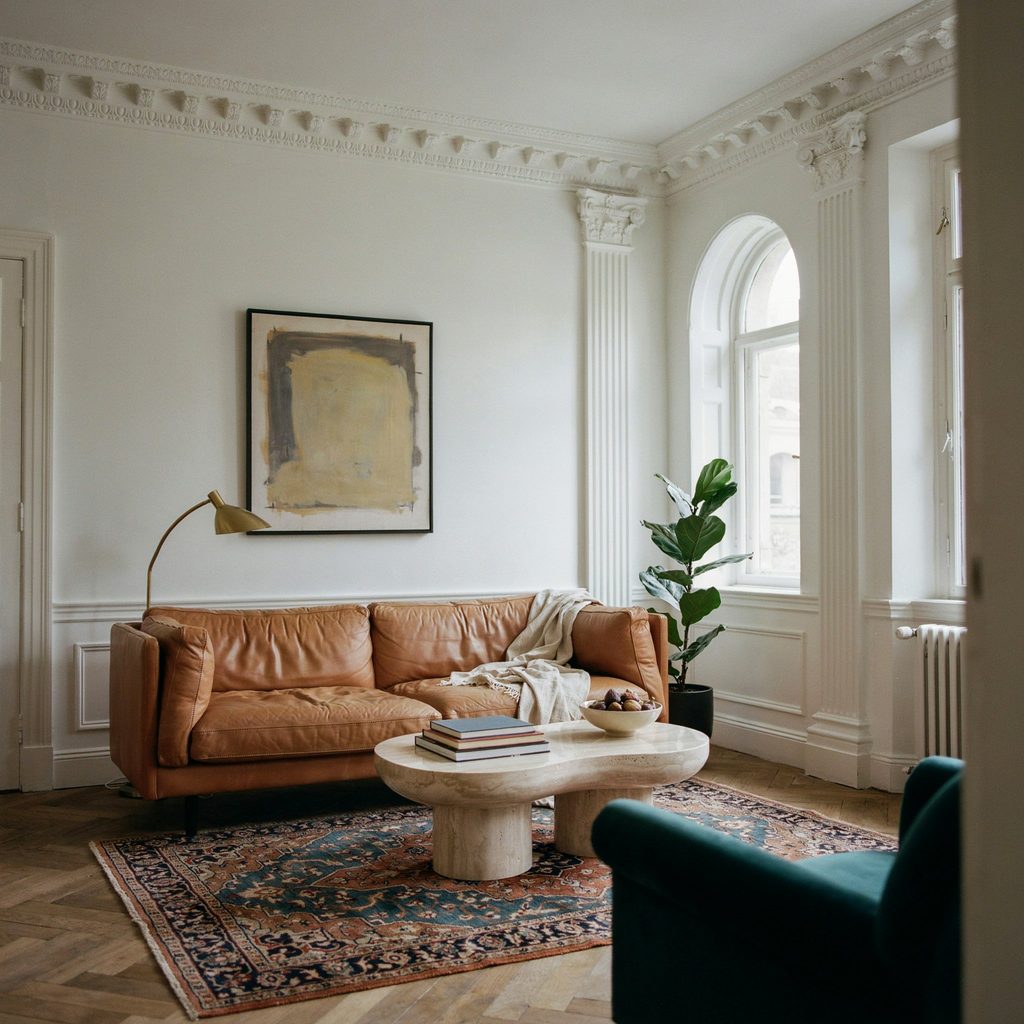
Mixing interior design styles—often referred to as eclectic interior design—means intentionally combining elements from different eras, aesthetics, and design philosophies into one harmonious space. It is distinctly different from maximalism, which embraces visual abundance, heavy layering, and organized chaos. It is also not simply placing unrelated furniture in a room and hoping for the best.
Successful eclectic rooms feel collected over time, curated, and highly intentional. Think of it as a conversation between different periods. A sleek contemporary sofa might sit across from an ornate antique coffee table, but they share a common visual language. When you understand how to blend old and new decor, the result is a deeply personal, cohesive home design that tells a story rather than following a strict, unwavering rulebook.
Why Design Styles Clash
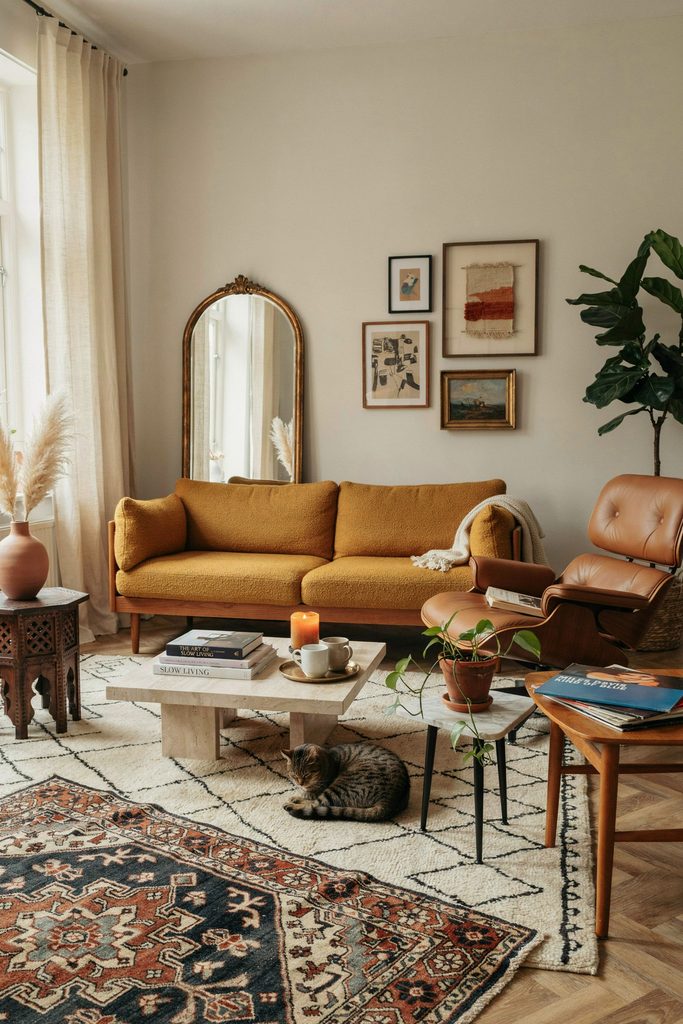
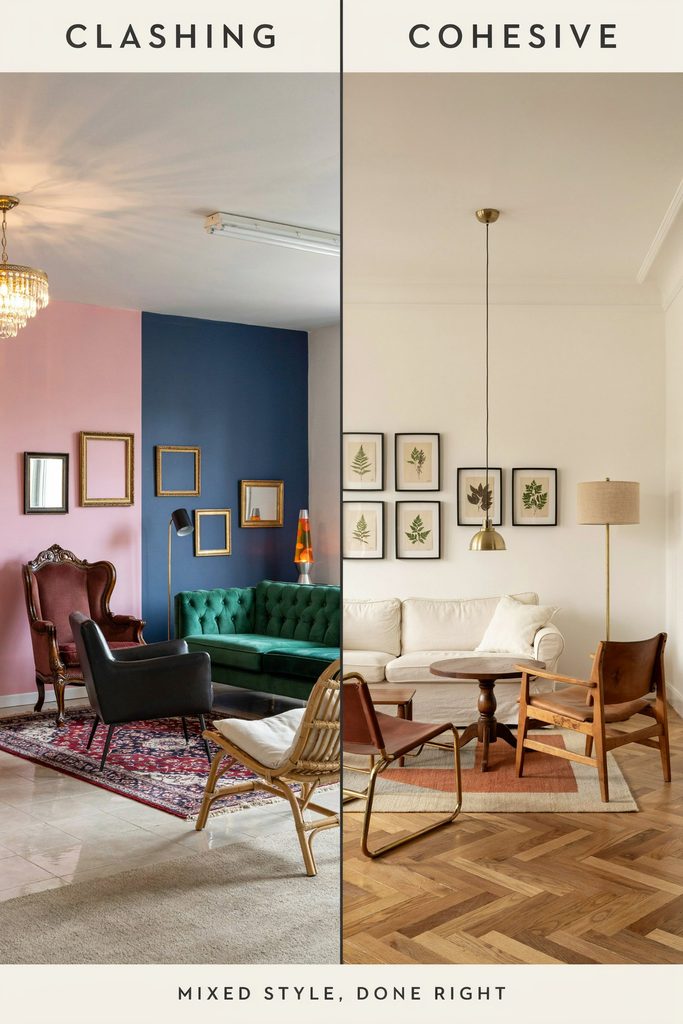
When mixing interior design styles goes wrong, the room usually feels disjointed, chaotic, or overly themed. This happens for a few common reasons:
- No dominant style: Giving every aesthetic equal weight creates a visual tug-of-war. The eye doesn’t know where to rest.
- Competing colors: Too many bold, saturated hues fighting for attention can make a room feel stressful rather than inviting.
- Mismatched scales: Pairing delicate, spindly furniture with massive, bulky items creates awkward proportions.
- Conflicting finishes: Clashing wood tones or mixing too many competing metal finishes without a unifying thread.
- Pattern overload: Too many loud prints without a unifying solid color or texture to let the eye rest.
- Lack of negative space: Crowding the room so no single piece has room to breathe. Every item needs breathing room to be appreciated.
- Style overload: Trying to combine mid-century, boho, farmhouse, and industrial all in one standard-sized room.
Designers avoid these pitfalls by letting one aesthetic set the foundational tone, allowing others to act as supporting accents.
Start With One Dominant Style
The foundation of any successful mixed room is a clear anchor. Designers often rely on the 80/20 rule interior design concept or the 70/30 rule interior design to maintain balance. The idea is simple: choose one primary style to occupy roughly 70 to 80 percent of the room, and introduce a secondary style in the remaining 20 to 30 percent.
Your dominant style should dictate the major investments and the room’s envelope: the sofa, the primary rug, the wall color, and the architectural details. The accent style is where you can have fun with accessories, artwork, lighting, and accent chairs.
Here is what this ratio looks like in practice:
- 80% modern minimalist + 20% vintage: A sleek, low-profile living room punctuated by a single, ornate antique mirror and a vintage brass lamp.
- 70% traditional + 30% contemporary: Classic wingback chairs and a tufted rug grounded by abstract modern art and a lucite coffee table.
- 70% mid-century modern + 30% bohemian: Walnut wood furniture and clean lines softened by a layered, textured Moroccan rug and a macramé wall hanging.
- 80% farmhouse + 20% industrial: Shiplap walls and slipcovered seating contrasted with matte black metal light fixtures and a reclaimed iron dining table.
Create a Unifying Color Palette
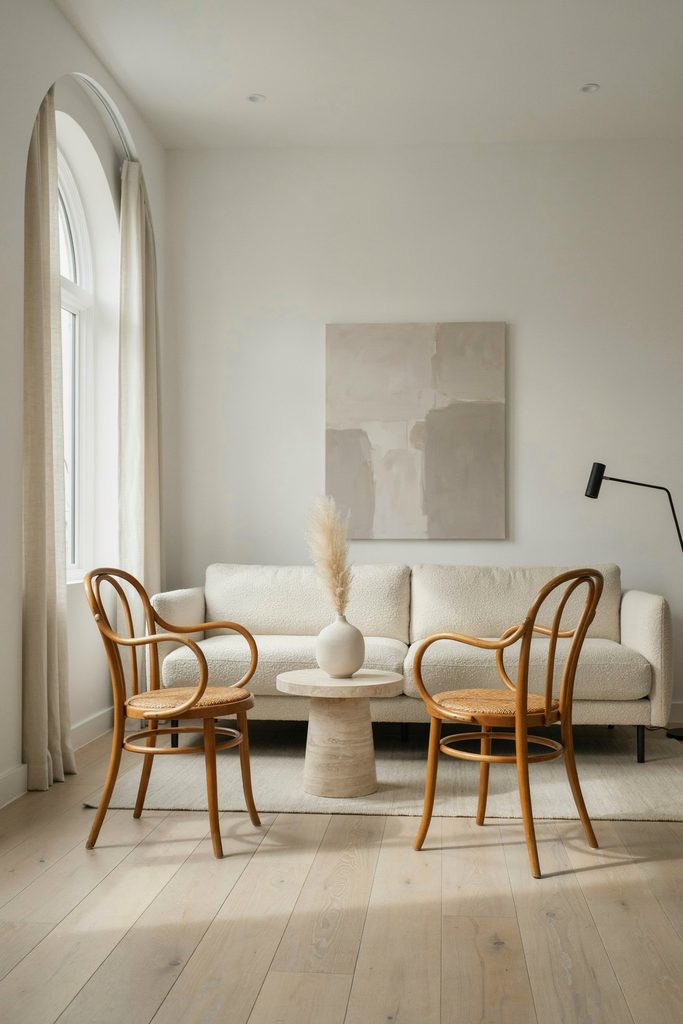
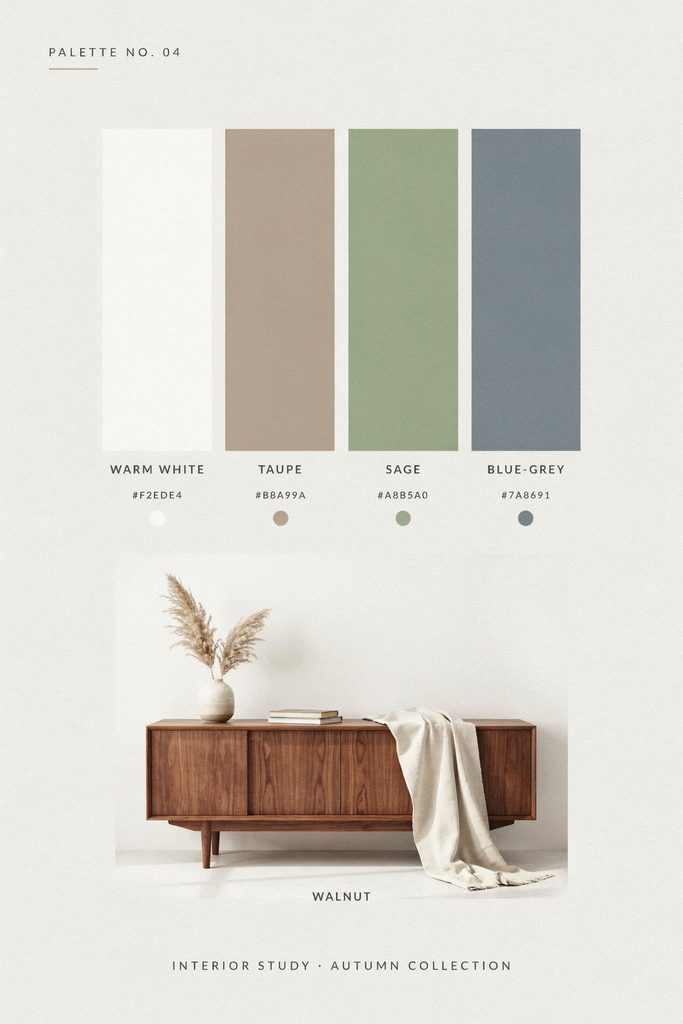
If you want to know how to mix furniture styles seamlessly, color is your best tool. A unifying color palette acts as the invisible thread connecting disparate pieces. When a traditional velvet sofa, a modern glass lamp, and a boho woven rug share the exact same underlying color family, the styles stop competing and start collaborating.
Use the classic 60-30-10 formula to build your interior design color palette:
- 60% Base Color: A neutral or muted shade that covers the walls, large rugs, and primary upholstery (e.g., warm white, soft oatmeal, or pale gray).
- 30% Secondary Color: A coordinating hue for curtains, accent chairs, and artwork (e.g., sage green, navy, or terracotta).
- 10% Accent Color: A bold pop used sparingly in throw pillows, vases, and small decor (e.g., mustard yellow or deep emerald).
For example, imagine a room with warm white walls (base), oatmeal upholstery (base), rich walnut wood tones (secondary), and matte black accents (secondary). If you add a single saturated rust-colored pillow (accent), it will tie together a modern armchair and a traditional cabinet beautifully.
Repeat Materials, Finishes, and Textures
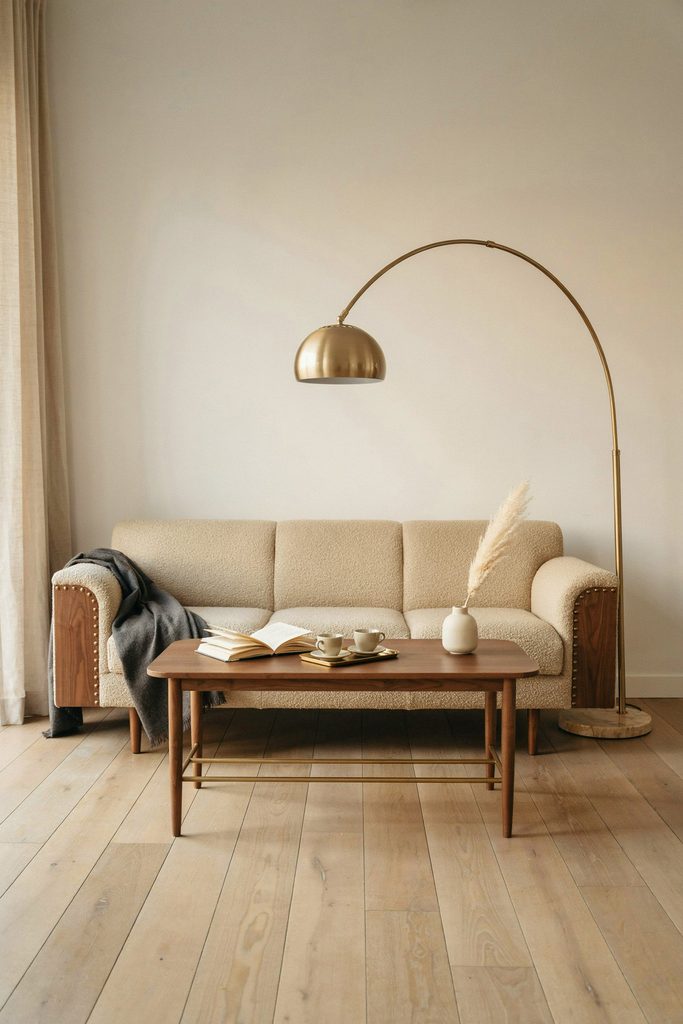
Color isn’t the only way to create harmony. Repeating a specific material, finish, or texture creates a visual thread that leads the eye around the room. This doesn’t mean everything must match perfectly; it means materials should relate to one another to create a cohesive home design.
Consider how repeating elements elevate a space:
- Metals: Let unlacquered brass appear in your pendant lighting, cabinet hardware, and the frame of a vintage mirror.
- Wood Tones: Carry a warm, medium-tone oak from your dining table into the legs of your modern dining chairs and the frame of a nearby bookshelf.
- Textural Contrast: Pair the sleekness of raw, polished marble with the warmth of natural rattan or nubby bouclé fabric.
By deliberately repeating a wood tone, metal finish, or texture across three or more items, you trick the brain into seeing a highly curated, intentional space, even if the individual pieces were bought decades apart from different stores.
Use Bridge Pieces to Connect Different Styles
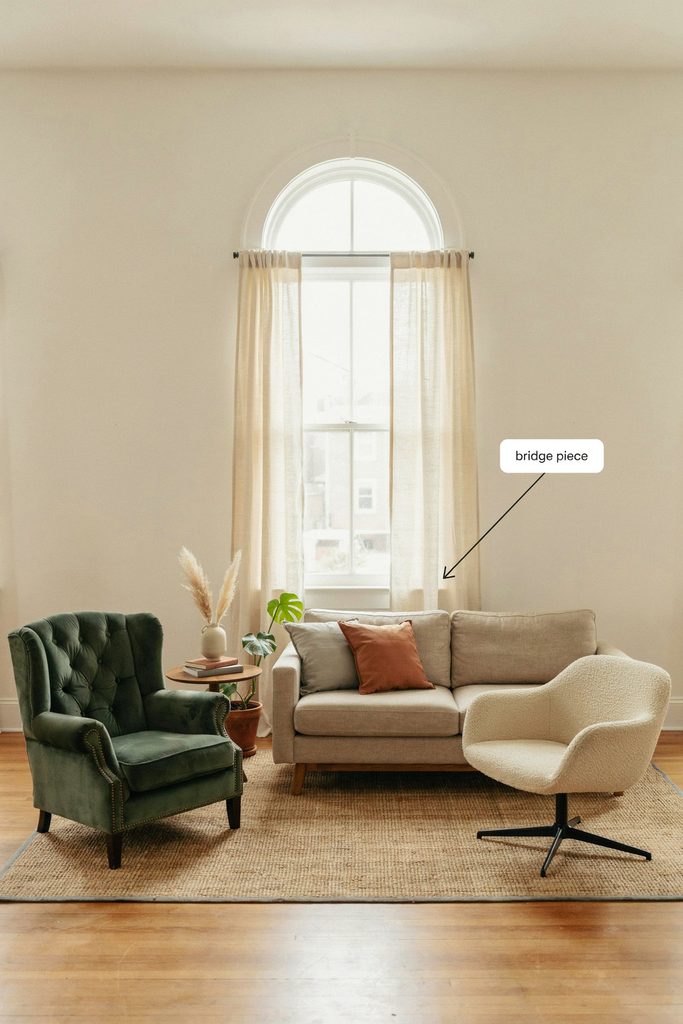
Bridge pieces in interior design are the ultimate secret weapon for mixing eras. A bridge piece is an item that shares a defining quality with two different styles, acting as a visual stepping stone between them.
A transitional interior design item is often a perfect bridge, as it inherently blends classic and contemporary elements. Examples of excellent bridge pieces include:
- A neutral linen sofa: Its clean lines appeal to modern minimalism, but its soft, organic texture bridges perfectly with rustic farmhouse style.
- A black metal console table: The dark, utilitarian finish connects industrial decor with sleek, contemporary spaces.
- A curved vintage armchair: A soft, organic silhouette can soften a room filled with harsh, modern, angular architecture and furniture.
When placing a highly ornate antique next to a stark modern sculpture, place a bridge piece—like a simple, natural wood stool or a woven jute rug—between them to ease the visual transition.
Balance Scale, Visual Weight, and Proportion
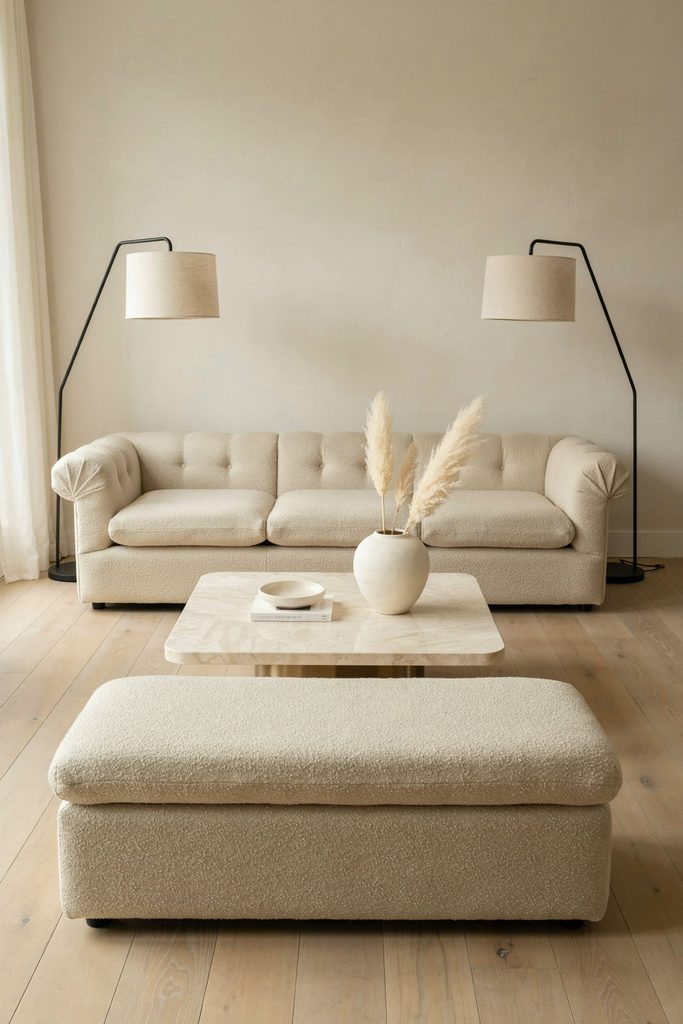
Visual weight in interior design refers to how “heavy” or “light” a piece of furniture feels to the eye, regardless of its actual physical weight. A bulky, dark wood, heavily carved traditional armoire has massive visual weight. A clear acrylic chair or a spindly mid-century wire chair has very little.
A balanced room layout requires distributing this visual weight evenly. If you place a massive, dark traditional sofa on one side of the room, you need something with equal visual weight on the other side—perhaps a large, dark modern abstract painting or a cluster of heavy, dark accent chairs.
Use this quick checklist before buying a new piece:
- Does this new piece fit the room’s physical scale?
- Is there enough negative space around it to breathe?
- Does it repeat a color, material, or shape already in the room?
- Does it share a similar level of formality with its neighbors?
Avoid placing a tiny, delicate side table next to an oversized, overstuffed sectional. Matching seat heights and ensuring adequate breathing space are crucial when mixing interior design styles.
Mix Patterns and Textures With Restraint
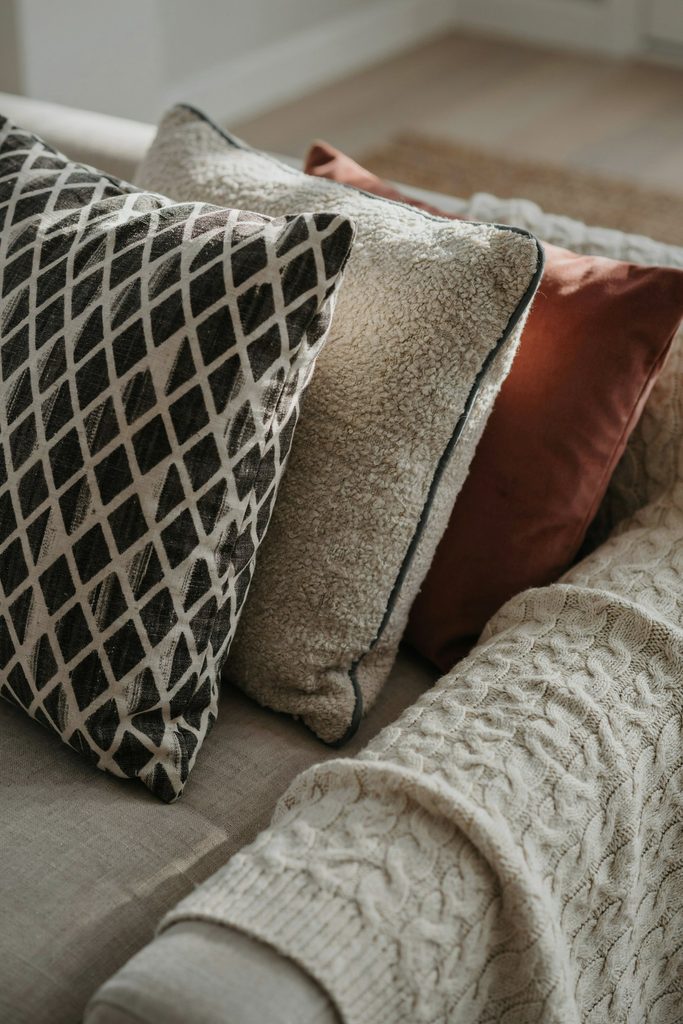
Mixing patterns and textures is where a room gains personality, but it is also where spaces easily tip into chaos. The key is varying the scale of your prints and grounding them with solids.
A foolproof formula is to use three scales: one large-scale pattern (like a bold floral or oversized geometric on a rug or curtains), one medium-scale pattern (like a stripe or subtle trellis on throw pillows), and one small-scale pattern or solid texture.
Ensure your patterns share at least two colors from your unifying palette. For instance, if your large rug features navy and cream, your medium striped pillows should also incorporate navy or cream.
Texture acts as a neutral pattern. If you are nervous about prints, mix textures instead: pair a smooth leather sofa with a chunky knit throw, a nubby wool rug, and velvet pillows. This provides the layered look of eclectic interior design without the visual noise of clashing prints.
Room-by-Room Examples
Let’s look at how these principles come to life in a real home.
The Living Room:
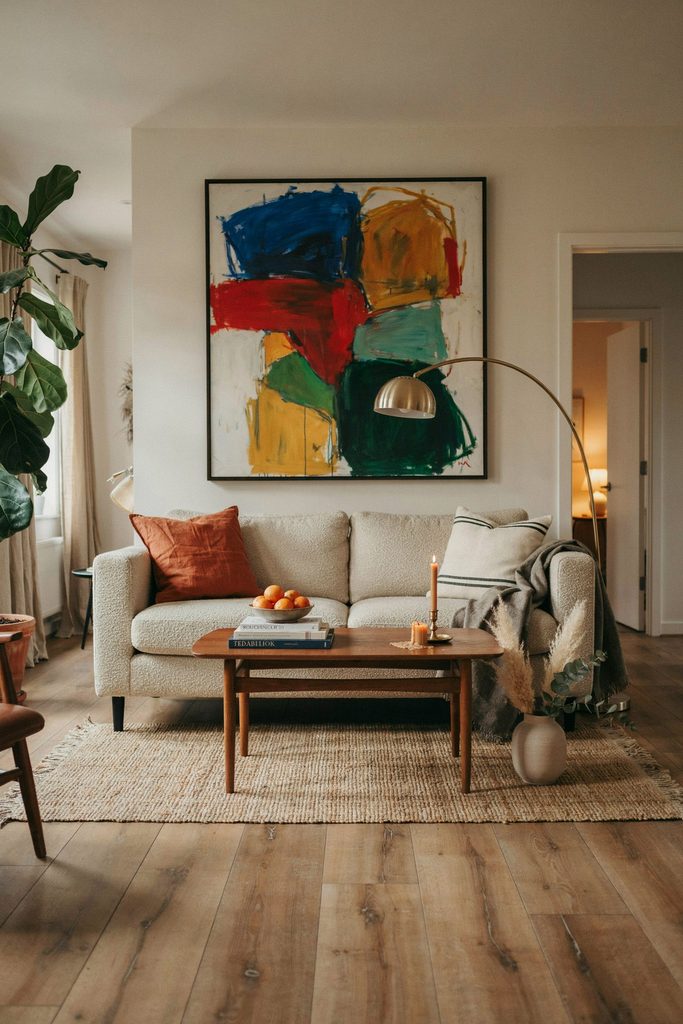
A modern, low-profile sectional in charcoal gray (dominant: contemporary) anchors the space. A vintage, reclaimed wood coffee table with hairpin legs adds warmth (accent: mid-century). A large, colorful abstract artwork pulls rust and mustard tones from a neutral jute rug.
Bridge & Unifiers: The jute rug and the black metal legs on the coffee table bridge the modern and vintage elements, while the rust accents tie the room together.
The Bedroom:
A traditional, ornate dark wood bed frame serves as the focal point (dominant: traditional). It is dressed in crisp, contemporary white linen bedding to keep it fresh. A natural rattan bench sits at the foot of the bed, and minimalist floating nightstands keep the space airy (accent: modern/boho).
Bridge & Unifiers: The woven texture of the bench softens the dark wood, while the white linen and natural wood tones bridge traditional and modern.
The Kitchen:
Classic white Shaker cabinets and natural honed marble countertops provide a timeless base (dominant: traditional/transitional). Modern, oversized matte-black pendant lights hang over the island, paired with sleek, vintage-inspired leather and metal counter stools (accent: industrial/modern).
Bridge & Unifiers: The honed marble and black cabinet hardware connect the classic architecture with the modern lighting.
The Entryway:
A beautifully carved antique French console table holds a simple, modern round black mirror (dominant: traditional). A woven seagrass basket sits underneath for storage, and sleek matte black metal hooks are mounted on the wall (accent: modern/boho).
Bridge & Unifiers: The black metal of the mirror and hooks grounds the ornate wood of the console, providing a cohesive look.
Common Mistakes to Avoid
Even with the best intentions, it is easy to stumble when figuring out how to mix design styles without clashing. Avoid these common pitfalls:
- Using too many accent styles: Stick to one dominant and one or two accents. Mixing mid-century, boho, coastal, and industrial in one room will feel like a garage sale.
- Buying matching sets: Purchasing a complete bedroom or dining set from one catalog feels flat and lacks personality.
- Ignoring proportions: A delicate French chair will be swallowed up by a massive, rustic farmhouse dining table.
- Forgetting negative space: Clutter is the enemy of intentional eclectic design. Give your special pieces room to breathe.
- Treating every accessory as a statement piece: If every vase, lamp, and pillow is loud and quirky, the eye doesn’t know where to rest.
- Ignoring texture: Relying solely on color and shape leaves a room feeling cold and one-dimensional.
- Adding trend-driven items blindly: Buying a trendy bouclé chair without considering if it fits your existing color palette or dominant style.
While maximalism can work, it is an advanced design technique. Beginners should master the balance of transitional interior design and the 80/20 rule before attempting a highly layered maximalist space.
Frequently Asked Questions
Can you mix modern and traditional furniture?
Absolutely. Mixing modern and traditional furniture is the very basis of transitional design. The key is to balance their visual weight and tie them together with a shared color palette or repeated metal finish so they feel like they belong in the same room.
What is the 80/20 rule in interior design?
The 80/20 rule interior design principle suggests decorating 80% of your room in a dominant, foundational style, and using the remaining 20% to introduce an accent style through accessories, art, or smaller furniture pieces to keep the space from feeling too rigid.
How many design styles can you mix in one room?
For the most cohesive home design, stick to two distinct styles. Advanced decorators might successfully blend three, but combining more than that usually results in a chaotic, disjointed space that lacks a clear focal point.
What colors work best when mixing design styles?
Neutrals like warm whites, soft grays, taupes, and oatmeals work best as a base. They act as a blank canvas, allowing the varied shapes and textures of different furniture styles to take center stage without visually clashing.
How do you make eclectic decor look intentional?
Use repetition. Intentional eclectic decor repeats specific wood tones, metals, or colors throughout the room so the eye naturally connects a modern lamp with a vintage table, making the mix feel curated rather than accidental.
Can you mix vintage and modern decor?
Yes! How to blend old and new decor is all about contrast. A sleek modern sofa looks incredibly chic against a vintage, distressed wood accent wall, provided they share a unifying color tone or bridge piece to connect them.
Final Takeaway
Figuring out how to mix design styles without clashing is not about achieving rigid perfection or showroom uniformity. Your home should tell the story of who you are, which naturally involves different tastes, eras, and experiences. By establishing a dominant style, relying on a unifying color palette, and utilizing bridge pieces, you can blend your favorite items into a beautiful, cohesive home design.
Before you buy your next piece of furniture, take a step back. Identify your room’s dominant style, choose one unifying element like a wood tone or metal finish, and select a bridge piece to connect your old favorites with your new finds. Happy decorating!
