
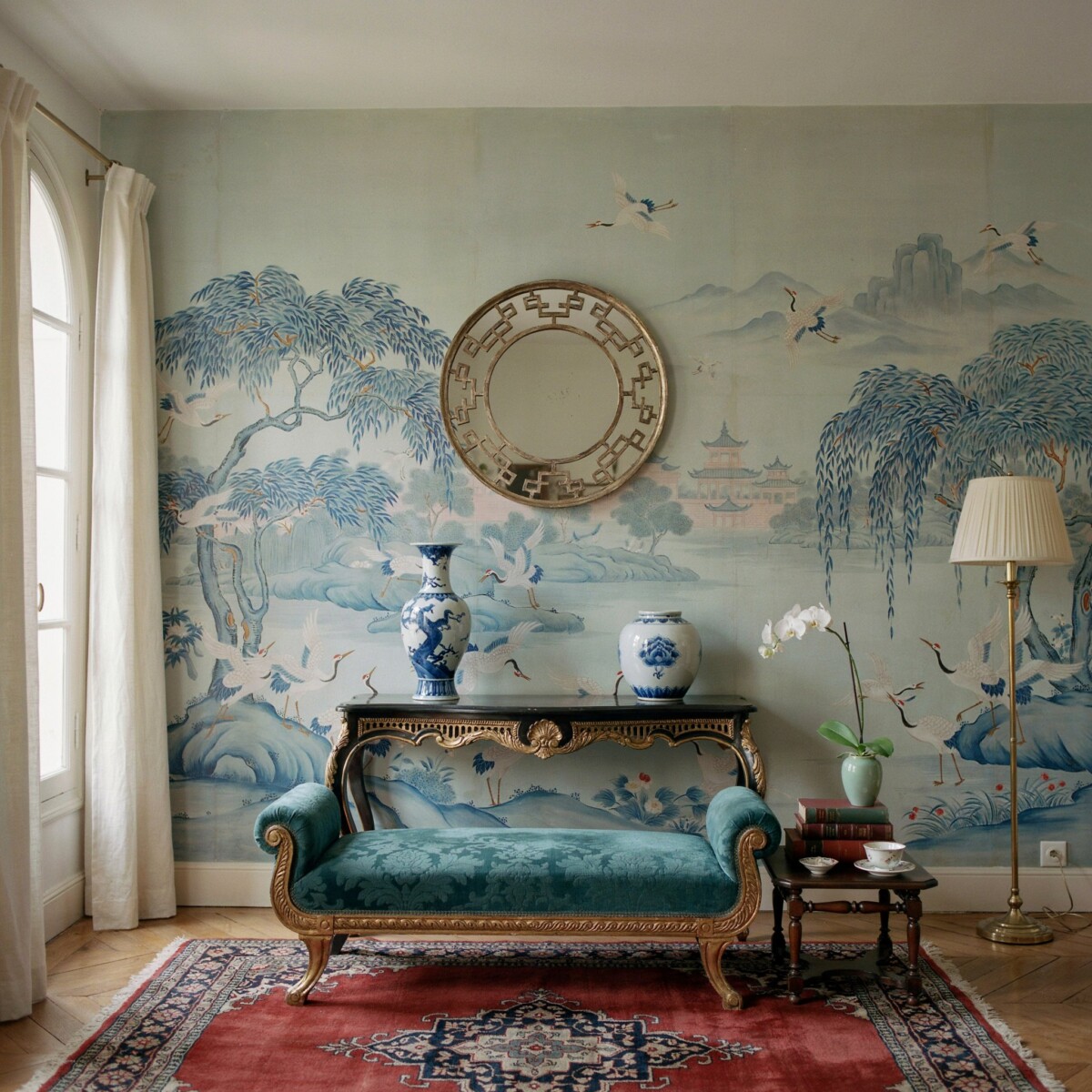
After years of beige minimalism and stark, sterile interiors, US homes are craving more drama, pattern, and storytelling—and chinoiserie interior design is leading the charge. If you’ve been scrolling through Pinterest, Instagram, or the pages of Architectural Digest lately, you’ve likely noticed a distinct shift away from the “sad beige” trend of the early 2020s toward spaces that feel collected, layered, and deeply personal.
But what exactly is this look? At its core, chinoiserie interior design is a Western decorative art style that features imagined, romanticized interpretations of Chinese and East Asian aesthetics, characterized by intricate patterns, lush florals, and elegant motifs. Far from being a fleeting fad, this style is experiencing a massive resurgence in 2025 and 2026. Driven by the rise of “grand-millennial” style—a design movement that embraces vintage charm, inherited antiques, and unapologetic pattern—and a collective pushback against the starkness of ultra-minimalism, chinoiserie is back in a big way.
However, today’s iteration is anything but dusty or dated. Whether you are a homeowner looking to add a touch of luxury to a historic property or a renter seeking rental-friendly ways to inject personality into a white-box apartment, modern chinoiserie offers endless possibilities. By the end of this guide, you will understand exactly what chinoiserie is, why it works so beautifully in modern American homes, and how you can seamlessly integrate this timeless trend into your own space, room by room, without it ever looking like a themed restaurant.
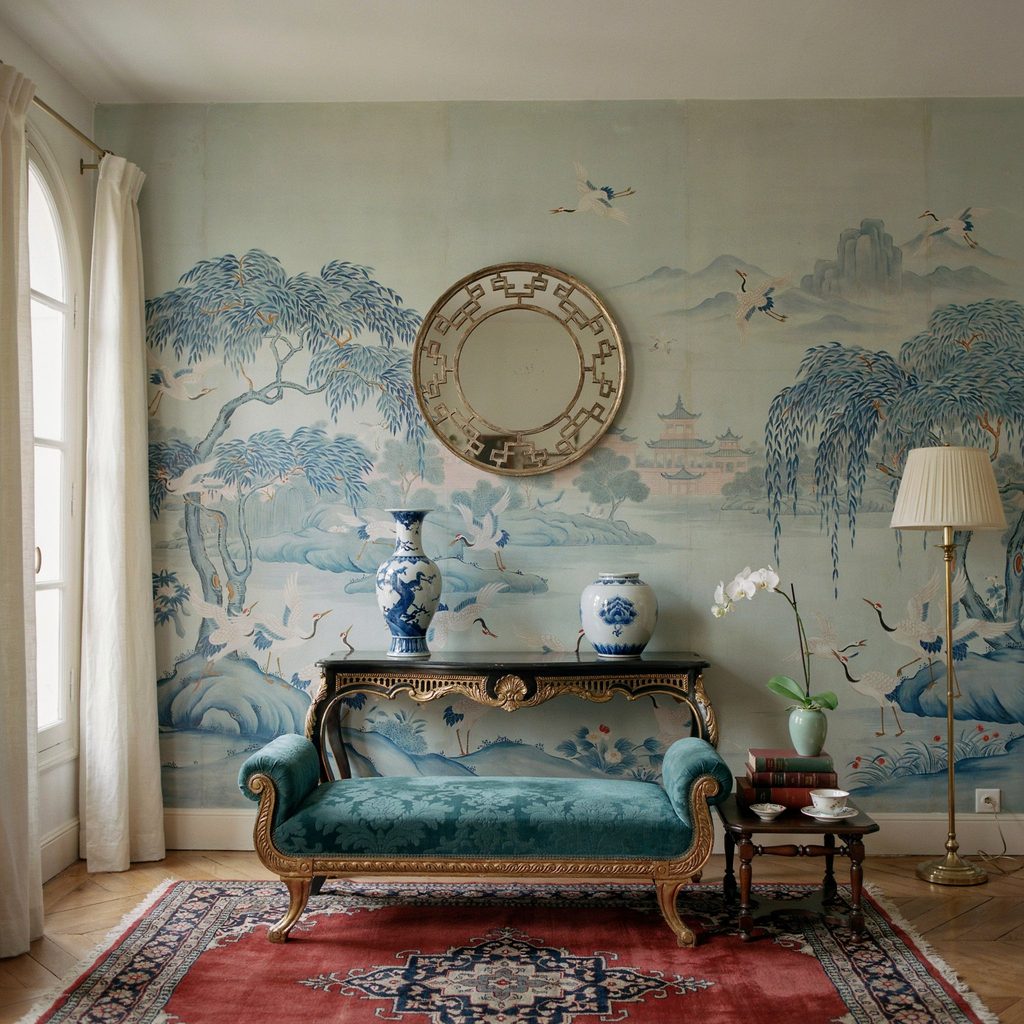
What Is Chinoiserie Interior Design?
To truly master this look, it helps to understand its fascinating history. The term “chinoiserie” derives from the French word chinois, meaning Chinese. The style originated in the 17th and 18th centuries when European trade with Asia brought back highly coveted goods like silk, lacquer, tea, and porcelain. Fascinated by these exotic imports, European artisans began creating their own whimsical, romanticized versions of Eastern aesthetics.
It is crucial to understand the nuance of chinoiserie vs Asian-inspired decor. Traditional chinoiserie is a Western fantasy and interpretation of Asian design, rather than an authentic representation of historical Chinese or Japanese interiors. Acknowledging this distinction is key to styling the look respectfully and thoughtfully in today’s culturally aware climate.
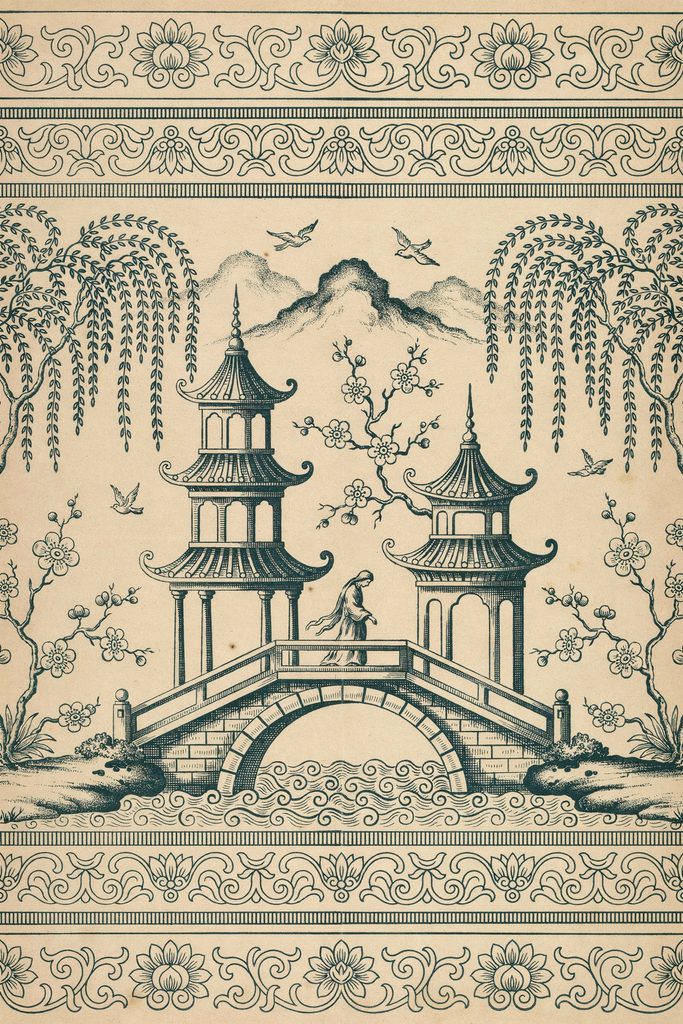
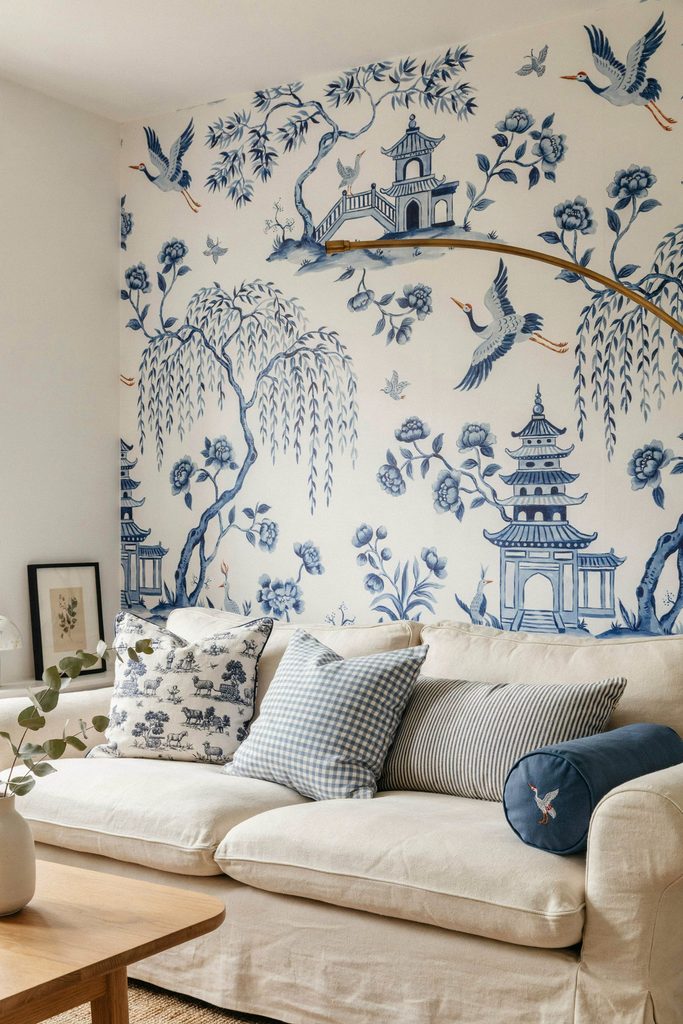
The core visual elements of chinoiserie decor are instantly recognizable and endlessly captivating. You will frequently encounter architectural motifs like tiered pagodas and arched bridges, alongside mythical creatures such as dragons, phoenixes, and cranes. The natural world is heavily represented through lush florals like peonies, lotus flowers, and cherry blossoms, as well as intricate scenes of birds, butterflies, and serene landscapes. These motifs are often showcased on iconic blue and white chinoiserie porcelain, high-gloss lacquered surfaces, and bamboo-inspired structural details.
Part of what makes chinoiserie home decor ideas so appealing is the inherent sense of luxury they convey. Historically, these pieces were defined by hand-painted details, incredibly intricate patterns, and craft-heavy finishes that required immense skill. Today, that legacy of craftsmanship translates into interiors that feel bespoke and expensive.
However, modern US designers are reinterpreting the style for the 21st century. Instead of overwhelming a space with heavy, dark woods and overly busy patterns, today’s modern chinoiserie style relies on cleaner lines, softer color palettes, and strategic placement. The goal is to evoke the elegance and romance of the past while maintaining the airy, livable comfort expected in contemporary American homes.
Why Chinoiserie Is Trending in the US Right Now
The revival of chinoiserie interior design trends 2025 2026 is deeply tied to the current cultural zeitgeist in the United States. First and foremost, it represents a direct reaction to minimalist fatigue. For nearly a decade, the dominant design narrative was “less is more,” resulting in homes that often felt cold, impersonal, and devoid of character. Homeowners are now actively seeking warmth, pattern, and visual interest, and the rich, layered nature of chinoiserie provides the perfect antidote to sterile environments.
This shift is heavily influenced by the grand-millennial style, which champions the idea of “granny chic.” This demographic loves mixing inherited or vintage-looking pieces with bold patterns, chintz, and vibrant colors. Grand-millennial style chinoiserie fits perfectly into this ethos, offering a sense of history and nostalgia that mass-produced, fast-furniture simply cannot replicate. Furthermore, the explosion of maximalist interiors on social media platforms and streaming television shows has exposed a wider audience to the beauty of layered, collected-over-time spaces. People are increasingly desiring timeless, collectible-looking decor that tells a story, rather than matching showroom sets.
One of the most beautiful aspects of this trend is its incredible versatility across different American architectural styles. In historic or traditional US homes—such as East Coast Colonials, Federal-style townhouses, or ornate Victorians—chinoiserie feels right at home, echoing the historical trade routes and classic tastes of early Americana. Conversely, chinoiserie in modern homes, sleek condos, and urban apartments works brilliantly when used as a striking contrast. A single, bold chinoiserie accent wall or a striking piece of lacquered furniture can add instant soul and sophistication to an otherwise generic modern footprint.
Key Elements of Chinoiserie Interior Design
To successfully incorporate this style, you need to understand its fundamental building blocks. Here is a breakdown of the patterns, colors, and materials that define the look.
Patterns & Motifs
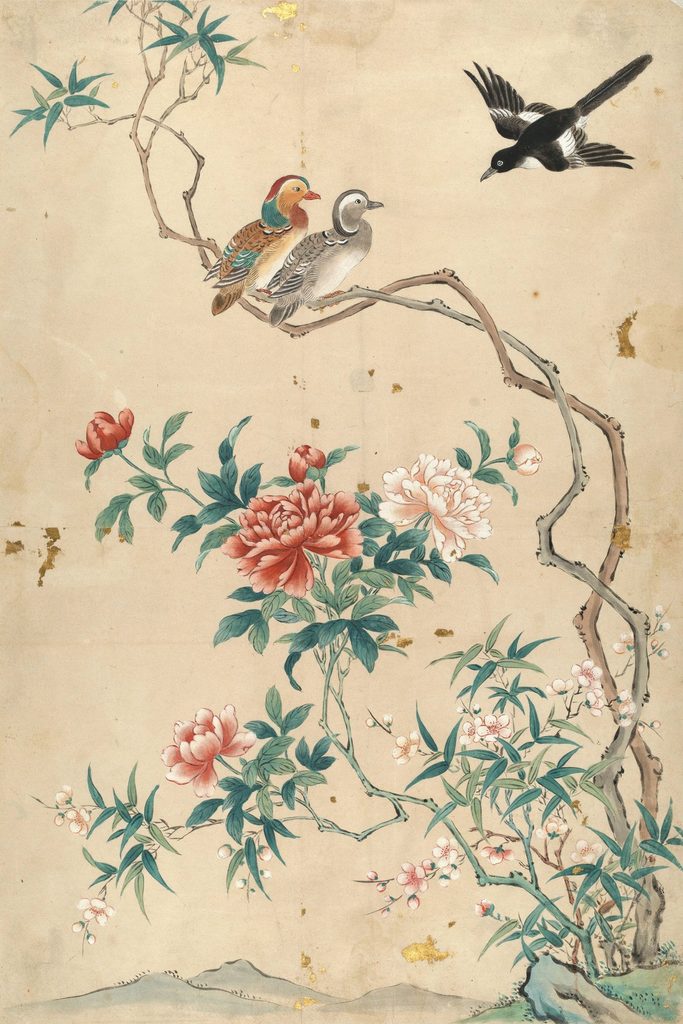
The lifeblood of chinoiserie patterns and motifs lies in their storytelling quality. Common designs feature majestic dragons (symbolizing power and strength), elegant cranes (representing longevity and peace), and mythical phoenixes (symbolizing renewal). Floral motifs are equally important; peonies are known as the “king of flowers” and represent honor and prosperity, while the lotus signifies purity. You will also see weeping willows, bamboo motifs, and scenic landscapes featuring tiny figures crossing arched bridges. While traditional designs are highly detailed, modern interpretations often abstract or simplify these motifs, scaling them up or stripping back the background to suit contemporary tastes.
Color Palettes
When people think of chinoiserie color palettes, the immediate association is the classic blue and white porcelain look. Inspired by Ming dynasty porcelain, this crisp, high-contrast combination remains the most popular and timeless choice. However, the style also embraces rich jewel tones: deep emerald greens, sapphire blues, ruby reds, and lacquered black accented with brilliant gold. For a more updated, “Neo-Chinese” feel, modern designers are utilizing soft neutrals—think oyster, warm gray, and raw linen—punctuated by a 10% accent color like celadon green, vermilion, or brushed brass. The golden rule for US interiors is to pick one dominant palette per room to maintain a cohesive, curated look rather than a chaotic one.
Materials & Finishes
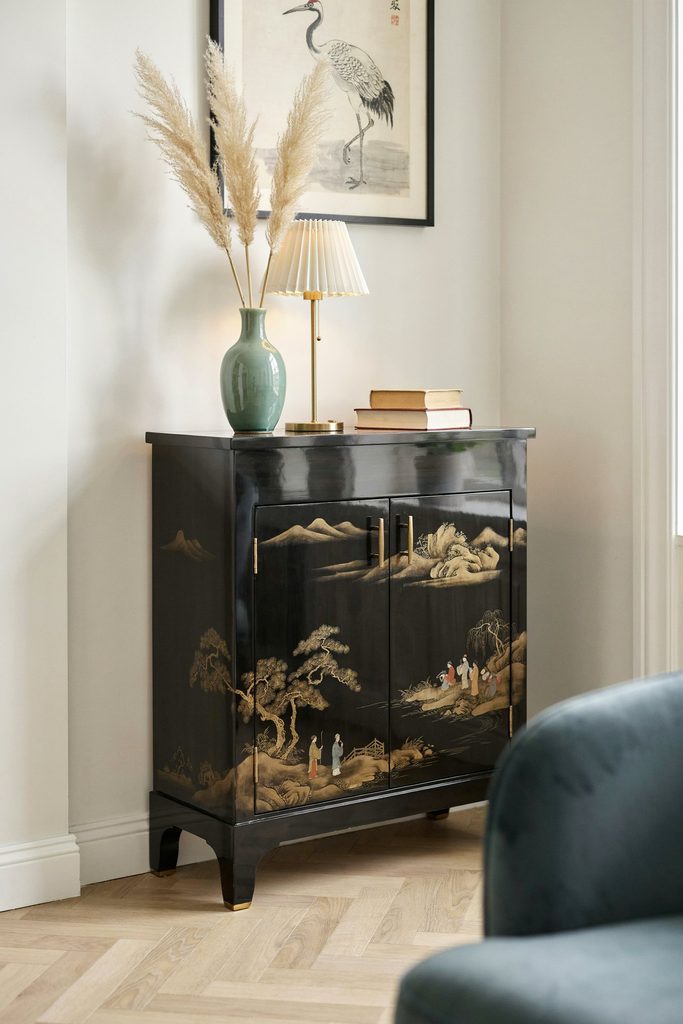
Texture and finish are what elevate chinoiserie from a simple pattern to a luxurious experience. Key materials include high-gloss lacquered furniture chinoiserie pieces, hand-painted silk or grasscloth wallcoverings, plush velvet and silk chinoiserie textiles and pillows, and, of course, fine chinoiserie porcelain and ginger jars. Reflective surfaces play a massive role; the shine of lacquer, the glaze of porcelain, and the gleam of brass or gold accents add inherent glamour and bounce light around the room. Rattan, bamboo, and faux-bamboo (a carved wood technique popular in the 19th century) are also frequently used to add organic texture.
Furniture & Architecture
Chinoiserie furniture often features distinct silhouettes and finishes. Look for lacquered cabinets, chinoiserie-painted console tables, and “bamboo-style” turned wood chairs. Architectural elements like folding screens, carved room partitions, and decorative paneling are hallmarks of the style, originally used to divide large, drafty European rooms. The secret to making these historically heavy pieces work in 2026 is juxtaposition. Mixing chinoiserie with modern decor—like pairing an ornate, hand-painted console with a clean-lined, mid-century modern mirror—creates a dynamic, updated look.
How to Style Chinoiserie in Modern US Homes
Knowing the elements is only half the battle; knowing how to style chinoiserie without making your home look like a movie set is where the real design skill comes in. Here is your practical guide to styling this trend in modern American homes.
The One-Statement-Piece Rule
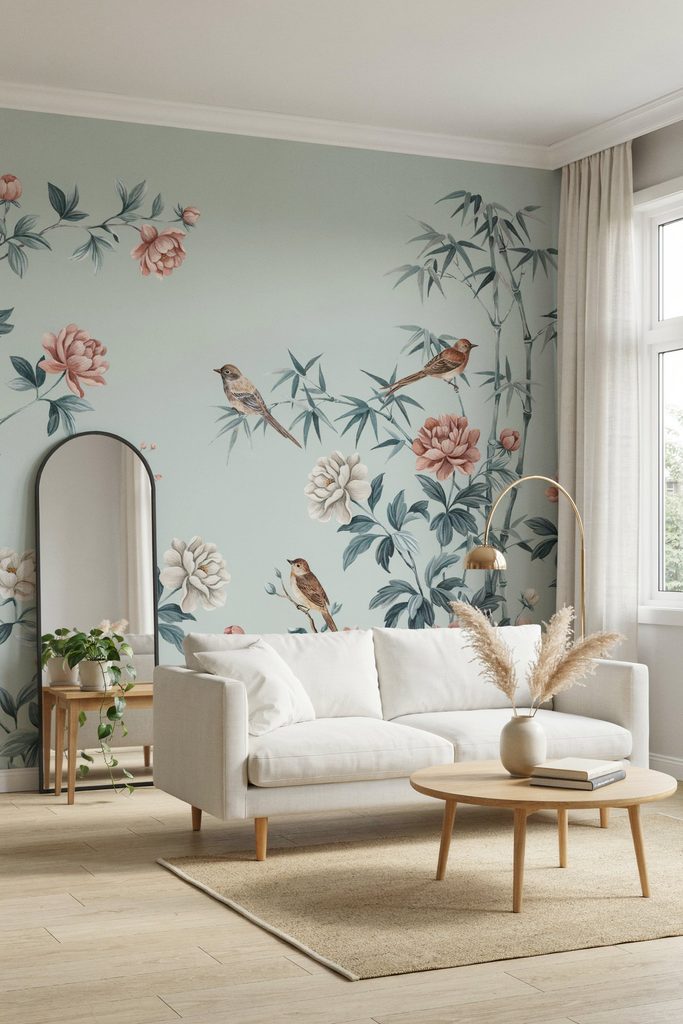
The most foolproof way to introduce this style is to anchor each room with one major chinoiserie element. This could be a breathtaking hand-painted chinoiserie wallpaper accent wall behind a bed, a striking vintage lacquered cabinet in the dining room, an ornate folding screen in the corner of a living room, or a curated, museum-style display of blue-and-white porcelain on floating shelves. Once you establish this focal point, let the rest of the room’s decor complement and support it, rather than compete with it.
Balance Ornate with Simple
Chinoiserie is inherently busy and highly detailed. To prevent visual fatigue, you must balance these ornate patterns with simplicity. Pair a heavily patterned chinoiserie wallpaper with solid-colored, upholstered furniture in neutral tones like cream, oatmeal, or charcoal. Introduce natural, grounding textures like jute chinoiserie rugs, raw linen curtains, and untreated wood to tone down the formality. Using clean-lined, contemporary furniture ensures the space feels fresh and livable, keeping the ornate elements from feeling costume-y or stuck in the past.
Start Small or in Secondary Spaces
If you are nervous about committing to bold patterns, chinoiserie for small spaces or secondary rooms is the way to go. Chinoiserie powder room ideas are incredibly popular because small, enclosed spaces can handle high-impact, all-over pattern without feeling overwhelming. Guest bedrooms, home offices, and entryways are also fantastic testing grounds. These spaces benefit immensely from the dramatic, enveloping feel that a richly patterned wallpaper or a bold lacquered ceiling can provide, offering a high visual payoff for a relatively small square footage.
Mix Old and New
The hallmark of a well-designed modern home is the tension between different eras. Combine vintage or vintage-inspired chinoiserie pieces with ultra-modern elements. Place a traditional blue-and-white ginger jar on a sleek Lucite coffee table. Hang an abstract, contemporary painting above an antique-style chinoiserie dresser. Swap out the traditional brass hardware on a painted cabinet for modern, minimalist matte black pulls. This contrast is exactly what makes the style feel relevant and chic in 2026.
Avoid “Theme Room” Traps
The biggest mistake DIY decorators make is treating chinoiserie as a literal theme rather than a sophisticated design language. Do not fill every available surface with pagodas and dragons. Leave plenty of negative space, especially in smaller American apartments, to let the eye rest. Use chinoiserie as an elegant accent—a sophisticated layer of history and art—rather than attempting to recreate an authentic, full-blown historical Asian interior.
Room-by-Room Chinoiserie Ideas for US Homes
Ready to get specific? Here are actionable, shoppable ideas for integrating this aesthetic into every room of your house.
Chinoiserie Living Room
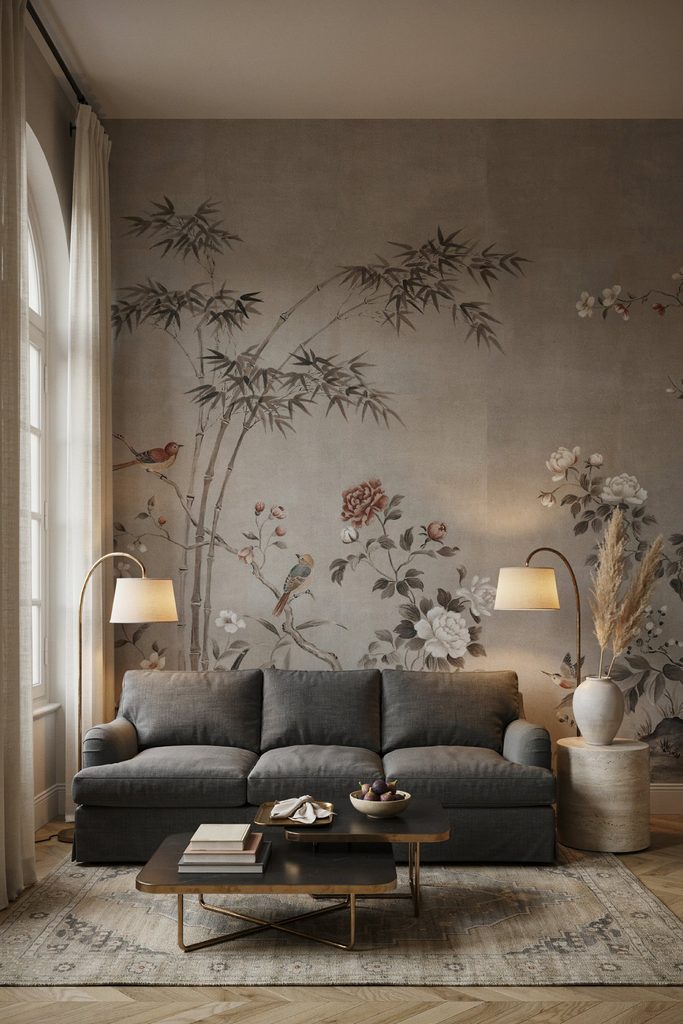
The chinoiserie living room is all about creating a welcoming, conversational atmosphere. Consider installing framed wallpaper panels—treated like large-scale art—behind a neutral, deep-seated sofa. Use blue-and-white ginger jars of varying heights on your mantel or media console to create a classic, collected-over-time anchor. Introduce chinoiserie textiles and pillows featuring delicate bird or floral embroidery in silk or velvet, but be sure to mix them with contemporary geometric or solid linen pillows to keep the vibe relaxed. A neutral sofa paired with a lacquered side table strikes the perfect balance.
Chinoiserie Dining Room
The chinoiserie dining room is the ultimate space for drama and entertaining. A hand-painted mural serves as a breathtaking, immersive backdrop for dinner parties. On the dining table, eschew a traditional floral centerpiece in favor of a classic grouping of blue-and-white porcelain vases or ginger jars, always styled in odd numbers (three or five) for visual appeal. Pair a traditional, ornate chandelier (a staple of chinoiserie lighting) with modern, upholstered dining chairs and a sleek, lacquered sideboard to bridge the gap between classic elegance and modern functionality.
Chinoiserie Bedroom Decor
Your bedroom should be a serene sanctuary, and chinoiserie bedroom decor can achieve this beautifully when scaled correctly. Opt for a headboard upholstered in a delicate, large-scale floral or bird motif, or use bedding with subtle, tone-on-tone embroidery. Above the bed, hang artwork featuring serene landscapes or abstracted traditional motifs in calming hues. To avoid sensory overload in a space meant for sleep, pair these patterned elements with simple, unadorned nightstands and modern, sculptural lamps.
Chinoiserie Powder Room Ideas
As mentioned, the powder room is where you can take the biggest risks. This is the ideal space for bold, all-over wallpaper, perhaps featuring a dark, moody background like lacquered black or deep emerald to make the metallic or white motifs pop. Alternatively, look for tiles with nature motifs for a more permanent, water-friendly installation. Complete the look with coordinating chinoiserie accessories like soap dishes and hand towels, but keep the plumbing fixtures and hardware distinctly modern—think matte brass or polished nickel—to provide a sharp, contemporary contrast.
Chinoiserie Entryway Decor
First impressions matter. In an entryway, place a slim, lacquered console table and top it with a single, dramatic blue-and-white vase or a traditional dragon jar. If you have the floor space, a small, vintage-style rug makes a stunning statement, provided it is balanced with neutral walls and a simple, modern bench. For long, narrow hallways, consider framing narrow strips of wallpaper or creating a gallery wall of vintage Asian-inspired botanical prints to add interest to an otherwise dead space.
Home Office / Study
A home office benefits from an environment that inspires creativity and focus. A single feature wall with a scenic, panoramic mural can serve as an incredible backdrop for video calls and a source of daily inspiration. Furnish the space with a lacquered desk or a vintage filing cabinet, but pair it with an ergonomic, modern office chair and sleek, architectural task lighting. Display a carefully curated shelf of porcelain, design books, and one or two statement objects to keep the space feeling professional yet deeply personal.
Chinoiserie on a Budget: US-Friendly Tips
You don’t need a massive budget or a historic estate to enjoy this look. Here is how to achieve chinoiserie on a budget, perfect for renters and cost-conscious decorators looking for chinoiserie for rental-friendly decor.
- Removable Wallpaper & Framed Panels: Hand-painted silk wallcoverings are incredibly expensive. Instead, opt for high-quality, removable peel-and-stick wallpaper. Many US-based brands now offer stunning, large-scale murals that are completely rental-friendly. Alternatively, buy rolls of beautiful paper, frame large sections in inexpensive, oversized gallery frames, and lean them against walls like traditional art.
- Thrift and Estate Sales: Authentic vintage blue-and-white porcelain and lacquered pieces can be found for a fraction of their retail cost. Scour local US thrift stores, Goodwill outlets, Facebook Marketplace, and weekend estate sales. You can often find authentic ginger jars, teacups, and small lacquered boxes hidden among the clutter.
- Start with Textiles: If furniture and wallpaper are out of reach, start with textiles. Swap out your standard duvet cover for one with a subtle blue-and-white motif, or invest in a pair of custom drapes made from discounted fabric remnants.
- DIY Art and Decals: Get crafty by framing beautiful fabric scraps, vintage scarves, or even high-quality paper napkins featuring traditional motifs. For a subtle, temporary accent, use peel-and-stick decals of bamboo or cranes on mirrors or furniture.
- Quality Over Quantity: It is always better to save up for one or two high-quality, authentic-looking statement items—like a solid wood, faux-bamboo chair or a large, well-painted porcelain vase—than to fill a room with cheap, flimsy, “theme park” versions of the style.
Common Mistakes to Avoid
As you integrate these elements, be mindful of these frequent styling pitfalls that can quickly make your home look dated or tacky.
- Overdoing Patterns: The most common error is using too many different prints in a single room. A dragon wallpaper, a peony rug, and a pagoda sofa will clash violently. Stick to one or two complementary patterns and scale them appropriately.
- Ignoring Balance and Negative Space: Ornate patterns need room to breathe. If every wall, floor, and piece of furniture is highly decorated, the room will feel chaotic and claustrophobic. Ensure you have plenty of solid colors and empty space to let the eye rest.
- Clashing Eras Without a Unifying Thread: Mixing an 18th-century French cabinet with a 1970s shag rug and a 1990s glass table will look disjointed. Ensure there is a unifying element, such as a consistent color palette or a repeated material (e.g., brass hardware), to tie the diverse pieces together.
- Treating It as a “Costume”: Avoid culturally insensitive styling or leaning into cheap stereotypes. Remember that chinoiserie is a specific historical European art style, not a catch-all term for authentic Asian decor. Approach the motifs with respect and an appreciation for their artistic history.
- Using Overly Intense Colors Everywhere: While jewel tones are beautiful, using deep reds, blacks, and golds on every surface will make a room feel like a cave. Always ground intense colors with ample lighting, mirrors, and plenty of crisp whites or soft neutrals.
Conclusion: Making Chinoiserie Work for Your Home
Chinoiserie interior design is far more than a fleeting trend; it is a celebration of storytelling, exceptional craftsmanship, and elegant, nature-inspired pattern. In an era where our digital lives are increasingly fast-paced and ephemeral, bringing the slow, deliberate beauty of hand-painted motifs and collected antiques into our physical spaces offers a profound sense of comfort and grounding.
You do not need to overhaul your entire house to embrace this timeless aesthetic. Start small. Pick one room, or even just one corner of a room, and build your design around a single, beautiful anchor piece—be it a vintage ginger jar, a framed wallpaper panel, or a lacquered tray. Let your space evolve organically, mixing the old with the new, and the ornate with the simple. Whether you live in a historic East Coast brownstone or a sleek, modern downtown apartment, chinoiserie can add the depth, drama, and sophisticated personality your space has been missing.
