
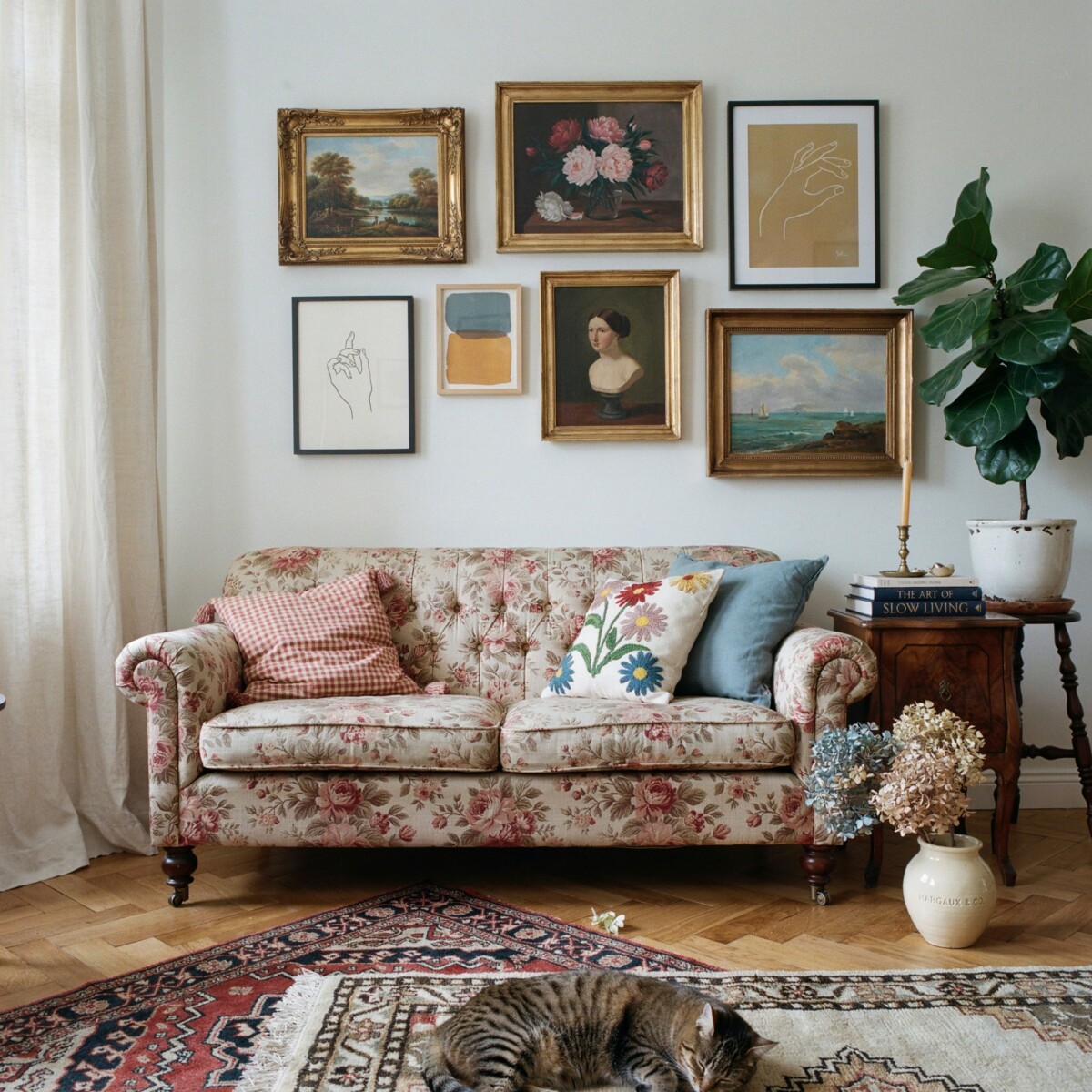
If you’ve spent the last decade surrounded by “millennial gray”—the greige sofas, the white-oak-everything, the rooms so serene they feel a little sterile—you’re not alone in being ready for something new. Across the US, homeowners and renters alike are trading cool, cookie-cutter minimalism for spaces that feel collected, cozy, and full of personality. And leading that shift is one of the most charming design movements in years: grandmillennial style.
So, what is it? Grandmillennial style is a fresh take on traditional design that pairs classic patterns, heirloom furniture, and vintage-inspired home decor with clean, contemporary lines, so rooms feel nostalgic yet perfectly livable for modern life.
In 2026, this “granny chic” revival is no longer a niche Pinterest aesthetic. It’s a full-blown response to our craving for comfort, character, and sustainability at home—and it lines up beautifully with this year’s warm, lived-in design trends. Ahead, we’ll cover what grandmillennial style actually is, why it’s resonating right now, the key elements that define it, room-by-room ideas for American homes, and how to blend old and new without tipping into dated or cluttered.
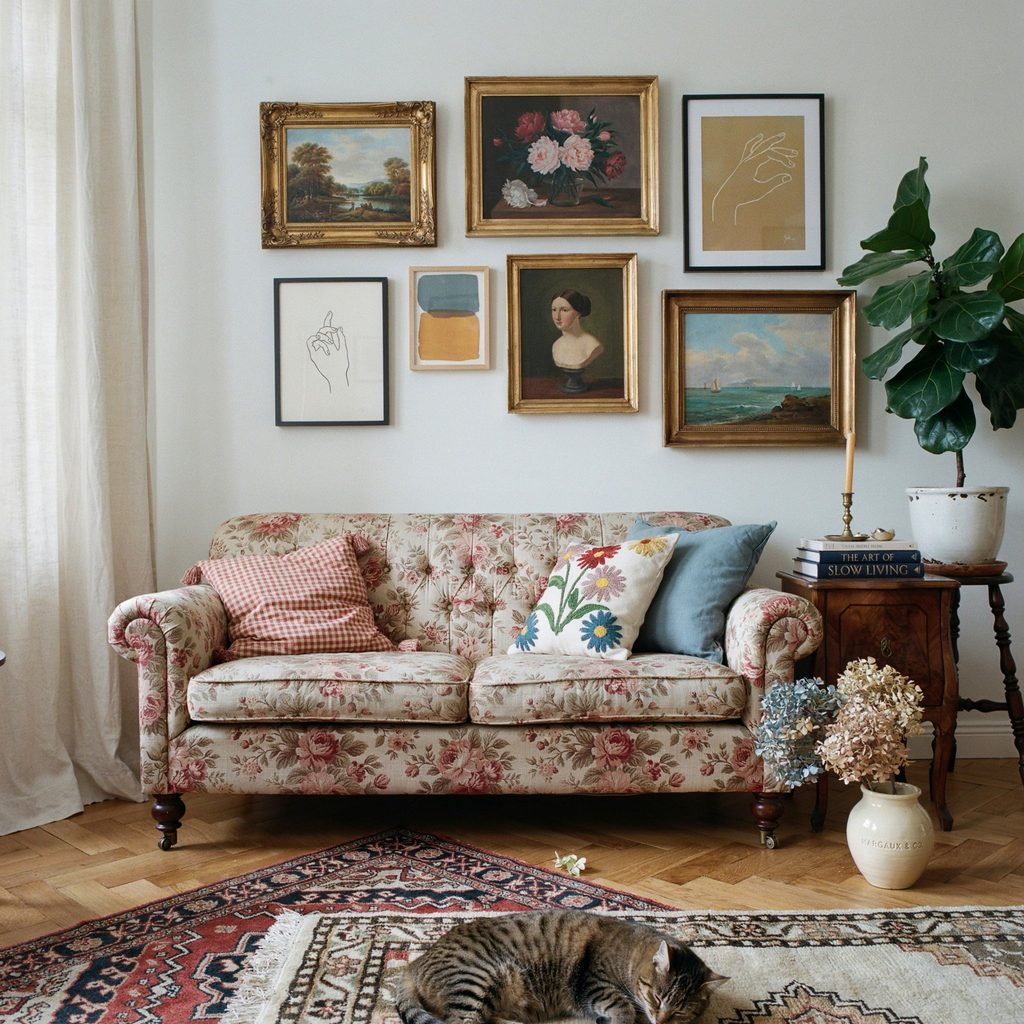
What Is Grandmillennial Style?
The term itself—a portmanteau of “grandma” and “millennial”—was coined by writer Emma Bazilian in a September 2019 House Beautiful article, and it stuck . It described a generation of twenty- and thirty-somethings who were unironically embracing the decor their grandparents loved—Laura Ashley-esque florals, toile, blue and white china, pleated lampshades—and remixing it with a modern sensibility. The label spread from shelter magazines to social feeds, and House Beautiful‘s original guide remains the go-to definition today (it’s worth bookmarking their ultimate guide to grandmillennial style).
At its core, grandmillennial decor is about honoring traditional design while updating it for modern living. Think floral curtains in a sunlit city apartment, an inherited sideboard anchoring a room of clean-lined furniture, or a skirted armchair paired with a sleek brass floor lamp. It’s warmth with intention—nostalgia, edited.
It helps to distinguish it from its cousins:
- Granny chic leans playful and kitschy—doilies, novelty ceramics, a wink of irony.
- Grandmacore, popularized on TikTok, is cozier and cottage-leaning: crocheted throws, garden florals, cardigan energy.
- Traditional design is the broader, more formal umbrella—symmetry, antiques, rich woods.
Grandmillennial style sits in the middle: more polished than grandmacore, more youthful than traditional, and more sincere than kitschy granny chic.
Crucially, it’s not about recreating your grandmother’s house room-for-room. US retailers like Ballard Designs lean into the look with chinoiserie, faux bamboo, and Chippendale-style pieces, but the at-home version is about curation . You take the pieces you love—especially the ones with a story—and set them against a fresh, livable backdrop. The goal is a home that feels collected over time, not decorated all at once.
Why Grandmillennial Style Is Trending in 2026
Several currents in 2026 interior design trends converge in grandmillennial’s favor. The broader American shift away from stark minimalism toward warm neutrals, earthy palettes, and “quiet luxury” has primed our homes for softer, more layered rooms . Vogue‘s 2026 trend forecast celebrates homespun, lived-in spaces and hanging textiles , while Milan Design Week’s standout directions—”pattern everywhere” and “history meets new design”—read like the grandmillennial playbook on a global stage . And Forbes‘ 2026 trend roundups name grandmillennial among the year’s defining looks, alongside relaxed, comfort-first “leisured living” .
Psychologically, the trend is rooted in a post-pandemic understanding of home as sanctuary. People want rooms that feel like a hug: familiar patterns, comfortable fabrics, objects with memories attached. There’s also a sustainability angle that resonates strongly with US millennials and Gen Z. Buying vintage, inheriting furniture, and reusing what already exists is both budget-smart and planet-friendly. Modernizing inherited furniture isn’t just a styling trick; it’s a values statement.
Social media has accelerated the revival. Pinterest boards overflow with layered pattern interiors, Instagram feeds celebrate thrifted china walls, and TikTok creators have turned antique hunting and flipping into a genre of its own. What was once dismissed as fussy is now celebrated as character.
Finally, economics plays a quiet role. With housing and furniture costs stretching budgets, younger homeowners are blending heirloom pieces with a few well-chosen new purchases. The result—a home that mixes eras—happens to be exactly what grandmillennial style does best.
Key Elements of Grandmillennial Decor
Classic Patterns
Chintz florals, toile, gingham, ticking stripes, damask—the pattern playbook is thoroughly traditional. The modern trick is layering without chaos: vary the scale (one large floral, one medium stripe, one small check), keep a shared color thread, and anchor the mix with warm neutrals so the eye has somewhere to rest. Classic patterns with a modern twist are about proportion, not restraint.
Soft, Traditional Colors
Swap cool grays for warm cream, porcelain blue, blush pink, sage green, and honeyed neutrals. These hues feel sun-faded in the best way and play beautifully with both antiques and modern pieces. (For more palette inspiration, see our warm neutrals interior design guide and 2026 color trends.)
Ruffles and Trim
Skirted sofas, scalloped edges, fringe-trimmed pillows, pleated lampshades—the “fussy” details are back, but the 2026 version is lighter and less precious. Skirted furniture trends in 2026 favor airy linens and simple pleats over heavy ruffles; one or two trimmed moments per room is plenty.
Antiques and Heirlooms
Inherited china, brass candlesticks, a wooden sideboard, a needlepoint pillow from an aunt—these are the soul of the style. To avoid a museum feel, give heirlooms a job: use the china, light the candles, and put the sideboard front and center with a modern lamp on top. Heirloom furniture styling works best when pieces feel used, not preserved.
Curated Collections
A wall of blue and white china, a gallery wall with mixed frames, open shelves of ceramics and well-read books. Display the favorites, edit the rest, and rotate pieces seasonally so displays stay alive.
Textiles and Texture
Linen curtains, cotton chintz, needlepoint rugs, embroidered throws. Layering texture keeps traditional patterns from feeling flat or formal—and adds the cozy factor owners and renters both crave.
Art and Accessories
Thrifted oil paintings, porcelain vases, crystal bowls, vintage mirrors with patina. Antique artwork in contemporary spaces is one of the fastest ways to add depth; a flea-market portrait can anchor a wall better than a big-box print.
Easy ways to start:
- Start small: a pair of chintz pillows, a pleated lampshade, one toile cushion.
- Mix one traditional piece per room and keep the rest simple.
- Use modern lighting to keep spaces bright and current.
Room-by-Room Grandmillennial Ideas
You don’t need a historic colonial to make this work. These ideas translate to suburban houses, city apartments, and rented spaces alike.
Living Room
- A skirted sofa in a neutral chintz, paired with a sleek modern coffee table.
- Layered rugs: a vintage Persian over a natural jute base.
- A gallery wall mixing antique oil paintings with contemporary prints in mismatched frames.
- A warm brass floor lamp and relaxed linen curtains to keep the room bright.
This is the classic cozy traditional living room formula: one ornate anchor, everything else easygoing. The contrast is what makes it feel like 2026, not 1962.
Bedroom
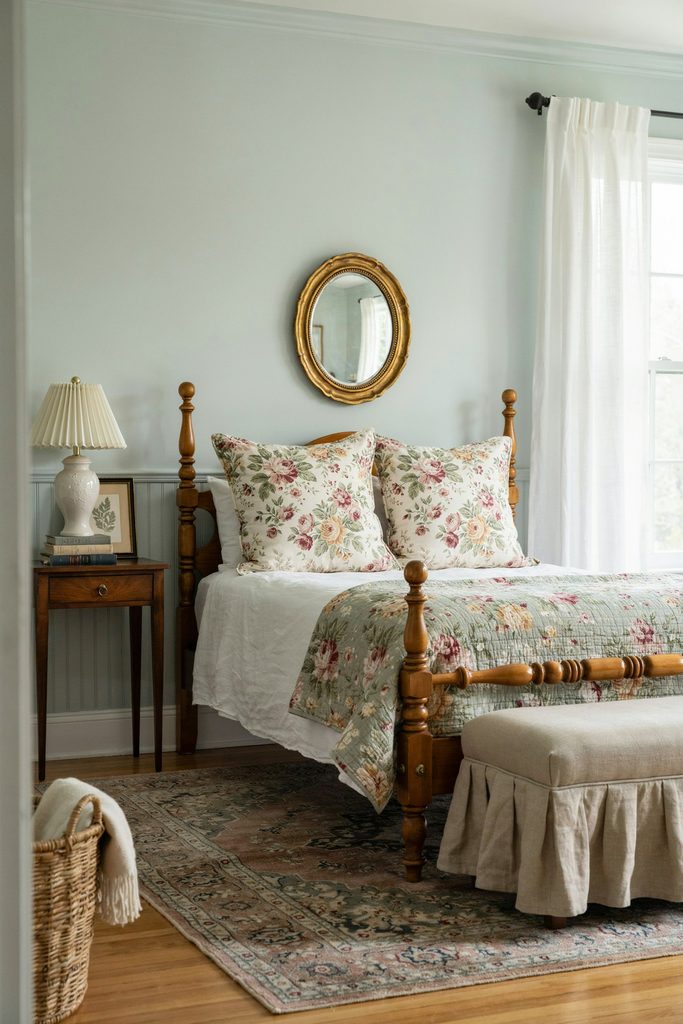
- A traditional wooden bed frame dressed in crisp modern white bedding and floral euro shams.
- Nightstands styled with inherited lamps and stacks of well-read books.
- Soft sage or blush walls with white trim for a fresh, timeless backdrop.
- A skirted bench or vanity if space allows—the lighter 2026 take on the trend.
These grandmillennial bedroom ideas work in a suburban primary suite or a rented city bedroom alike.
Dining Room or Kitchen Nook
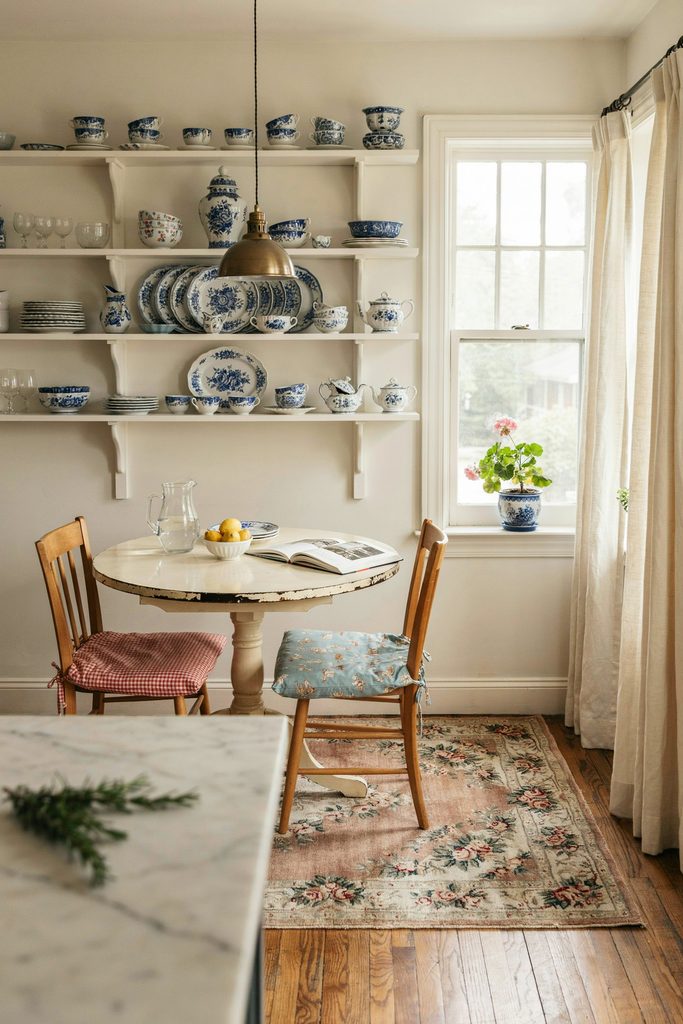
- Blue and white china decor displayed on open shelves or a plate rack—meant to be used, not saved for company.
- Inherited dining chairs mixed around a simple modern table.
- Gingham or toile seat cushions for an easy, renter-friendly hit of pattern.
- A vintage bowl filled with fresh garden flowers as the everyday centerpiece.
Home Office or Multi-Use Space
- A traditional wooden desk paired with a modern ergonomic chair—your back will thank you.
- Framed botanical prints plus modern task lighting for video calls.
- A textured throw and small needlepoint pillow on the chair for warmth and a collected, camera-ready backdrop.
Bathroom
- A vintage-style mirror and a small antique side table for folded towels.
- Patterned hand towels in toile or gingham, and a scalloped shower curtain as an easy swap.
- Keep surfaces light and uncluttered.
For Renters
- Removable wallpaper in a toile or small floral print on a single accent wall.
- Slipcovers instead of reupholstering; thrifted accessories instead of built-ins.
- Lean on portable pieces—lamps, art, china—so the style travels with you when the lease ends.
How to Blend Old and New Without Looking Dated
- Follow a ratio. A good rule of thumb is 70% modern/functional and 30% traditional accents—or flip it if your heart belongs to the past. A deliberate ratio keeps the mix from tipping into theme territory.
- Keep lines clean. Pair ornate pieces with simple, contemporary furniture so each era gets breathing room; a carved antique mirror pops against a plain plaster wall.
- Update the lighting. Swap heavy crystal chandeliers for lighter brass or glass fixtures. Lighting is the fastest way to modernize a traditional room.
- Use paint strategically. Warm neutrals on walls unify mixed eras and keep inherited dark woods from feeling heavy.
- Edit your collections. Display favorites, rotate seasonally, and resist surface clutter—grandmillennial is curated, not crammed.
- Focus on quality. Fewer, better pieces echo the quiet-luxury mindset and keep rooms calm instead of crowded.
Think of traditional pieces as the melody and modern pieces as the rhythm section: the old things give a room its tune, while the new things keep it moving. And when in doubt, remove one thing—edited rooms read as intentional, and intentional reads as modern.
Common Mistakes to Avoid
Grandmillennial style goes wrong when it tips from collected to cluttered. Watch for these common traps:
- Overdoing pattern without varying scale. Stick to one large, one medium, and one small print per room.
- Too many dark woods in a small space. Lighten with warm paint, linen upholstery, and brass or glass.
- Ignoring function. An uncomfortable heirloom chair belongs in a styled corner, not in daily rotation.
- Letting knickknacks dominate. Edit to the pieces you love; dust is not a design element.
- Forgetting modern storage. Grandmillennial ≠ cluttered—baskets, closed cabinets, and pretty boxes keep the charm without the chaos.
Conclusion
Grandmillennial style endures because it isn’t really about trends. It’s about warmth, personality, and timelessness—not perfection. It lets a rented apartment in Ohio and a suburban colonial in Georgia feel equally personal, and it gives inherited pieces a second act instead of a one-way trip to the donation bin. That’s the beauty of traditional design for modern living: it meets you where you are.
Start with one room, or even one inherited piece—a lamp, a china plate, a floral pillow. Let the rest of the room stay simple, and build slowly. The best grandmillennial homes aren’t decorated; they’re collected.
Your home should tell your story, not a showroom’s.
Ready to begin? Share your grandmillennial corners with us on social using #GrandmillennialHome, or subscribe for more 2026 decor guides delivered monthly.
