
After a long day, most of us want to come home to a space that feels calmer, brighter, and a little closer to the outdoors. That desire is driving one of the biggest trends in American interiors: biophilic design in interior design. This approach strengthens the connection between people and nature through daylight, indoor plants, natural materials, organic shapes, tactile textures, earthy colors, and views of the outdoors.
The good news is that biophilic design for homes does not require an expensive renovation, a large house, or a dramatic indoor jungle. Whether you own a suburban colonial in Ohio, a Craftsman bungalow in California, or a rented apartment in Chicago, small changes can make a real difference. Improving natural light, adding a few hardy houseplants, choosing linen over polyester, or painting a wall sage green can help a room feel more grounded and restorative.
In this guide, you’ll learn what biophilic design is, why it’s popular, the main elements to use, room-by-room ideas, budget guidance, and renter-friendly tips for bringing nature indoors.
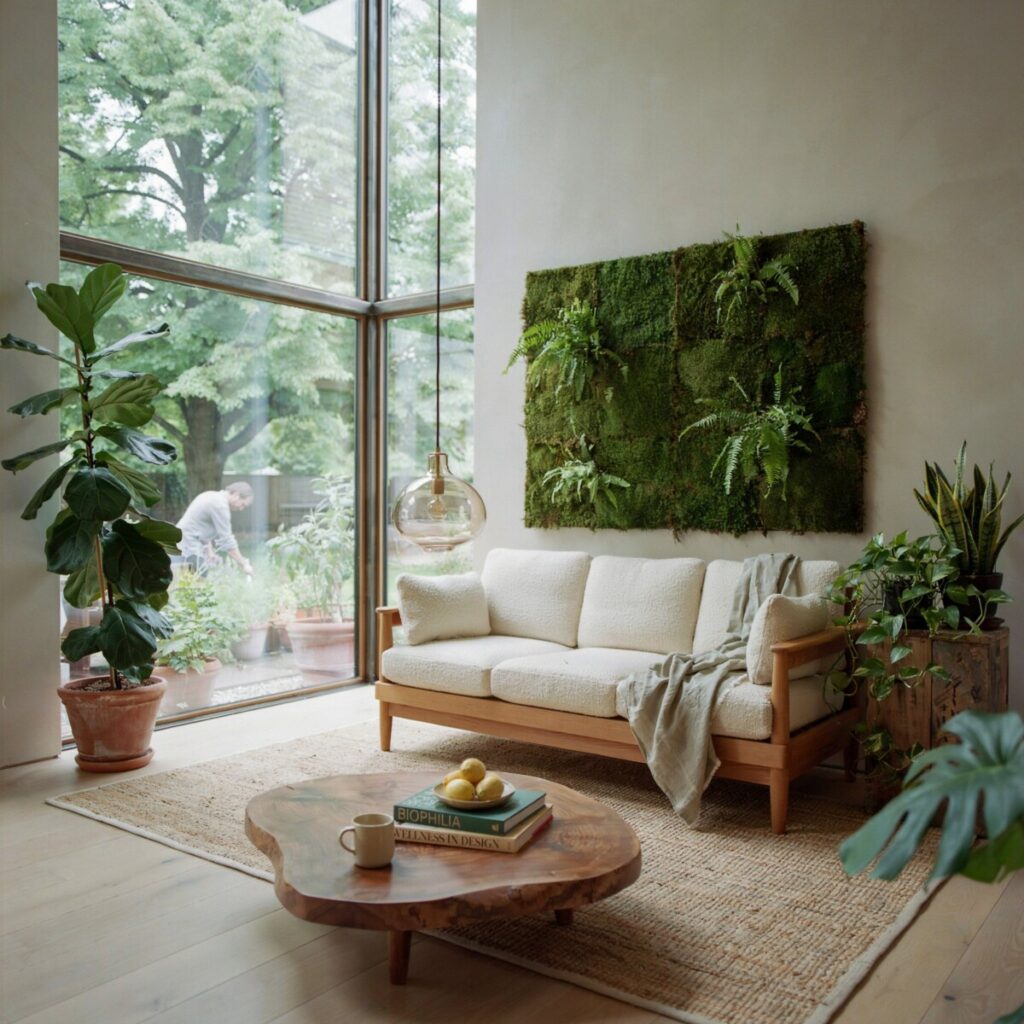
What Is Biophilic Design in Interior Design?
The word biophilia combines the Greek bios (life) and philia (love)—essentially “a love of living things.” Biologist Edward O. Wilson popularized the term to describe the innate human tendency to seek connections with nature, and designers later translated that idea into the built environment. In plain language, biophilic design is the practice of shaping homes, apartments, offices, hotels, and other buildings so people stay in meaningful contact with nature indoors.
In practice, biophilic interior design usually falls into three broad categories:
- Direct experiences of nature: indoor plants, sunlight, fresh air, water, flowers, and views of trees or sky.
- Indirect references to nature: wood, stone, botanical artwork, natural colors, organic textures, and nature-inspired patterns.
- Spatial experiences: open, airy layouts, cozy refuge nooks, framed window views, smooth transitions between rooms, and a stronger indoor-outdoor connection.
This is why biophilic design is more than decorating with houseplants. It layers visual, tactile, acoustic, lighting, and spatial elements to create calming, restorative, sensory-rich interiors.
Why Is Biophilic Design Becoming Popular in American Homes?
Americans spend the vast majority of their time indoors, and the rise of remote work turned homes into offices, gyms, and classrooms all at once. In response, many homeowners and renters are searching for wellness-focused interior design that feels calmer and more restorative after a busy workday.
Several trends are feeding the interest:
- The houseplant boom and growing love of indoor gardening.
- Demand for sustainable, eco-friendly home design with materials like reclaimed wood and natural fibers.
- The popularity of organic modern, Japandi, and rustic contemporary styles, which all lean heavily on natural elements.
- A strong appetite for indoor-outdoor living in places like California, Florida, and the Southwest, where patios act as extra rooms for much of the year.
- A desire for clutter-free interiors that support mindful living.
One important note: nature-rich rooms may support a sense of calm, comfort, and connection to nature, but they are not a substitute for professional medical care or mental health treatment. Think of biophilic design as one ingredient of a healthy lifestyle, not a therapy.
Main Elements of Biophilic Interior Design
Most biophilic interiors draw on a handful of core elements. Here is how each one works in a real home.
Natural Light and Daylight
Daylight is the backbone of good daylighting in any biophilic home. It supports your circadian rhythm, lifts the mood of a room, and makes natural materials look their best. To maximize what you have:
- Keep windows clear of tall furniture and heavy obstructions.
- Swap heavy drapes for sheer curtains or adjustable shades.
- Place mirrors opposite or beside windows to bounce light deeper into the room.
- Choose lighter wall colors that reflect rather than absorb daylight.
- Supplement with daylight-balanced or circadian-friendly bulbs that shift warmer in the evening.
Renters can do all of this without structural changes. In rooms with limited windows, combine mirrors, light paint, and layered lighting so the space still feels bright and open.
Indoor Plants and Greenery
Houseplants are the most visible symbol of bringing nature indoors, and the right ones add texture, color, and life to a corner. Match plants to your light, humidity, schedule, and pets:
- Snake plants and ZZ plants: tolerate low light and forgetful watering.
- Pothos and spider plants: fast, forgiving growers; spider plants are pet-friendly.
- Rubber plants: bold, glossy leaves for bright, indirect light.
- Peace lilies: elegant, but pet owners should check plant safety first.
- Herbs: basil or mint for a sunny kitchen windowsill.
- Ferns: perfect for humid spots like a bright bathroom.
If you travel often or your home truly lacks light, high-quality faux greenery, dried botanicals, botanical art, and small tabletop planters deliver a similar look. In dry states like Arizona or Colorado, favor succulents or group plants to raise local humidity; in humid regions, watch for overwatering and mold.
Natural Materials and Organic Textures
Wood, stone, bamboo, rattan, cork, and clay bring the tactile richness of the outdoors underfoot and under your fingertips. Layer in linen, cotton, wool, and jute for softness and warmth. Easy examples include:
- A reclaimed wood coffee table or dining table.
- A jute or wool area rug.
- Linen curtains that filter light softly.
- Rattan or woven pendant lighting.
- Stone accessories and handcrafted ceramic vases.
- Cork panels as a pinboard in a home office.
- A wool throw draped over a reading chair.
When choosing materials, weigh durability, maintenance, and sourcing. Look for responsibly harvested wood, low-toxicity finishes, and products that support good indoor air quality.
Nature-Inspired Colors
A biophilic, earthy color palette borrows from the landscape: sage green, warm white, sand, beige, terracotta, ochre, clay, forest green, muted blue, and soft brown. These shades feel grounding without turning dark when balanced well.
- Paint walls warm neutrals and add green accents through pillows, art, and plants.
- Use terracotta pots and accessories for instant warmth.
- Pair warm wood tones with cream upholstery for an organic modern feel.
- Try blue-green tile or paint in bathrooms for a spa-like calm.
- Renters can test the palette with an accent wall of removable wallpaper.
Nature-Inspired Patterns and Shapes
Beyond literal botanical prints, nature-inspired patterns include leaf motifs, floral designs, waves, curves, and fractal patterns—the repeating, self-similar shapes seen in ferns and coastlines. Biomorphic shapes appear in curved sofas, arched doorways, and oval mirrors.
Introduce pattern through wallpaper, upholstery, curtains, rugs, bedding, artwork, or decorative objects. To keep rooms calming, choose one or two statement patterns and let solid natural textures do the rest.
Fresh Air, Water, and Natural Sounds
Sensory design is a quiet superpower of biophilic interiors. Open operable windows for natural ventilation when weather and air quality allow, and let in birdsong or rain. Small water features—a tabletop fountain, aquarium, or bowl fountain—add gentle sound and movement.
Practical considerations matter: clean fountains regularly to prevent mineral buildup and mosquitoes, watch humidity and water damage near wood, and skip any sound that becomes distracting. A water feature is never mandatory; an open window, a visible sky view, or recorded nature sounds can offer a similar sensory connection.
Biophilic Design Ideas for Every Room
Biophilic Living Room
The living room is usually the easiest place to start. Try a large leafy plant near the biggest window, natural wood furniture, a stone or ceramic coffee table, and linen or cotton upholstery in warm neutrals. Hang botanical artwork, ground the seating area with a nature-inspired rug, and layer warm lighting for evening.
Arrange furniture toward outdoor views when possible, and keep circulation paths clear. A few meaningful pieces feel more restorative than a crowded jungle of decor.
Biophilic Bedroom
A biophilic bedroom should feel like a restorative retreat. Choose soft natural bedding in linen or cotton, wood nightstands, and relaxing earth tones like sage, sand, or muted blue. Add a small plant suited to the room’s light, and pair blackout curtains with adjustable daytime light so you control morning sun.
Keep electronics and clutter minimal, and favor low-toxicity finishes where possible. These choices will not cure insomnia, but they create a calmer, more comfortable atmosphere that supports winding down.
Biophilic Kitchen and Dining Area
Kitchens welcome biophilic touches that are also useful. Grow herbs on a sunny windowsill, install open wood shelving for ceramic dishware, and choose natural stone or wood-look surfaces. Woven pendant lights add texture overhead.
Place indoor plants safely away from stoves and hot surfaces, and remember kitchens demand moisture-resistant, easy-clean, food-safe materials. If you have a view of a backyard, balcony, or patio, keep it visible from the sink or table.
Biophilic Bathroom
Bathrooms naturally echo spa-like, nature-inspired interiors. Consider stone, clay, or wood-look finishes; tile in soft green, blue, or sand; and natural textures in towels and bath mats. A skylight or frosted window adds daylight while preserving privacy.
Humidity-tolerant plants like ferns or pothos thrive here, but choose wood and live plants carefully for damp areas and ventilate well to control moisture—especially in humid climates like the Southeast.
Biophilic Home Office
A biophilic home office feels more inviting and visually comfortable. Position the desk near natural light without creating screen glare—often perpendicular to the window works best. Add a small plant or compact vertical garden, bamboo or wood desk accessories, and a natural fiber rug.
Use a nature-inspired color palette on the walls, adjustable task lighting for evening, good ventilation, and ergonomic furniture. Even a view of a tree or framed botanical print in your sightline can soften long video-call days.
Biophilic Design for Small Apartments and Rentals
Urban biophilic design proves you don’t need a backyard to feel close to nature. Renter-friendly, small-space ideas include:
- Freestanding plant stands and hanging planters on peel-and-stick hooks.
- Removable botanical wallpaper and nature-inspired artwork.
- Mirrors positioned near windows to double light and greenery.
- A small tabletop fountain, natural-fiber baskets, and bamboo furniture.
- Linen curtains and balcony container gardens where permitted.
For rooms with little or no natural light, combine daylight-balanced lighting, botanical art, earthy colors, organic textures, and carefully chosen faux greenery. In tight floor plans, go vertical with shelves and wall planters to keep the floor clear.
How Much Does Biophilic Interior Design Cost?
Costs vary widely by location, home size, materials, and contractor rates, but a simple three-tier framework helps:
- Low-cost updates (roughly under $100–$300): houseplants, planters, textiles, botanical artwork, a gallon of paint, mirror repositioning, and lighting adjustments.
- Mid-range improvements (roughly $300–$2,000): natural-fiber rugs, solid wood furniture, upgraded window treatments, open shelving, and larger statement plants.
- Higher-cost renovations (roughly $2,000 and up, often far more): skylights, larger or energy-efficient windows, indoor-outdoor doors, living walls and green walls, natural stone surfaces, custom millwork, and landscaping.
Treat these ranges as a planning guide, not a quote. Prioritize high-impact changes you interact with daily—natural light, window views, plants, and tactile materials—then expand gradually as your budget allows.
Common Biophilic Design Mistakes to Avoid
Even nature-loving rooms can miss the mark. Watch for these pitfalls:
- Treating biophilic design as only a plant collection. Solution: also address light, materials, color, and layout.
- Choosing plants that can’t survive your light. Solution: match species to your actual conditions, not your Pinterest board.
- Ignoring pet safety. Solution: check toxic-plant lists (such as the ASPCA’s) before buying.
- Using too many patterns or colors. Solution: pick one or two statement patterns and keep the rest calm.
- Selecting natural materials without considering maintenance. Solution: research sealing, cleaning, and humidity tolerance first.
- Blocking windows with oversized furniture. Solution: keep windows and views clear so daylight can enter.
- Creating excessive humidity. Solution: ventilate bathrooms and kitchens and water plants appropriately for your climate.
- Buying unsustainably sourced products while claiming eco-friendly design. Solution: look for responsible sourcing, reclaimed materials, and durability.
- Sacrificing comfort for appearance. Solution: test seating and layouts for real life.
- Overcrowding a small apartment. Solution: go vertical and edit ruthlessly.
- Making unsupported health claims. Solution: enjoy the calm without expecting design to replace medical care.
- Forgetting allergies, cleaning, and water damage. Solution: plan for pollen, dust, and spills from day one.
Is Biophilic Design the Same as Sustainable Interior Design?
Not quite, though the two make natural partners. Biophilic design focuses on the human-nature relationship—how a space connects you to daylight, plants, and natural patterns. Sustainable interior design focuses on reducing environmental impact through responsible materials, energy efficiency, durability, reuse, and waste reduction.
A synthetic wood-look product may support the appearance of biophilic design while being a less sustainable choice, while an energy-efficient window framing a tree does both jobs at once. When planning a sustainable home renovation, consider lifespan, repairability, recycled content, responsible sourcing, and local availability. That is where eco-friendly home design, green building programs like LEED-certified homes, and WELL Building principles meet wellness design.
How to Start a Biophilic Home Design Project
Ready to begin? Follow this simple sequence:
- Identify the room that feels least connected to nature.
- Observe its natural light, ventilation, views, colors, and textures at different times of day.
- Choose one high-impact improvement, like clearing a window or adding a statement plant.
- Add one or two natural materials, such as a jute rug or linen curtains.
- Introduce suitable plants or botanical artwork.
- Adjust the color palette with earthy accents.
- Improve lighting for both daytime and evening use.
- Remove unnecessary clutter so the room can breathe.
- Check maintenance, safety, durability, and budget before buying.
- Review the room after a few weeks and improve gradually.
Frequently Asked Questions
What is the main goal of biophilic interior design?
The main goal is to strengthen the connection between people and nature inside the built environment. By combining daylight, plants, natural materials, organic shapes, and views of the outdoors, biophilic interiors aim to create spaces that feel calmer, more comfortable, and more supportive of everyday well-being.
Is biophilic design only about adding plants?
No. Plants are one element, but biophilic design also includes natural light, fresh air, wood and stone, nature-inspired patterns, earthy colors, and spatial qualities like cozy nooks and framed views. A room with great daylight, an oak floor, and a tree view can be biophilic without a single houseplant.
How can I use biophilic design in a room without windows?
Combine layered, daylight-balanced lighting with nature-inspired artwork, organic textures, and earthy colors. Add low-light-tolerant plants like ZZ plants or pothos, or use high-quality faux greenery where no light exists. Mirrors, a small tabletop fountain, and natural-fiber textiles add sensory connection too.
What are the best low-maintenance plants for a biophilic home?
Snake plants, ZZ plants, pothos, and spider plants tolerate irregular watering and a range of light conditions. Rubber plants and peace lilies add bigger leaves with modest care. If you have cats or dogs, check pet safety first—spider plants are pet-friendly, while peace lilies are not.
Is biophilic design expensive?
Not necessarily. Many changes—rearranging furniture for light, adding plants, hanging botanical prints, or switching to linen curtains—cost little. Mid-range upgrades like solid wood tables or jute rugs cost more, while skylights and living walls are renovation-level investments. Start small and build gradually.
Can renters use biophilic interior design?
Yes. Renters can use freestanding plant stands, hanging planters with peel-and-stick hooks, removable botanical wallpaper, mirrors near windows, natural-fiber baskets, and linen curtains. Balcony container gardens work where permitted. Every one of these ideas is deposit-friendly and can move with you.
What colors are commonly used in biophilic interiors?
Think of colors you’d see outside: sage and forest green, warm white, sand, beige, terracotta, ochre, clay, soft brown, and muted blue. These shades pair beautifully with natural wood tones. Start with neutral walls, then add green or terracotta accents through textiles, art, and planters.
How is biophilic design different from eco-friendly interior design?
Biophilic design centers on the human-nature relationship—how a space feels and connects you to nature. Eco-friendly or sustainable design centers on reducing environmental impact through responsible materials, energy efficiency, and waste reduction. The two overlap beautifully, but a product can be one without the other.
Is biophilic design suitable for modern homes?
Absolutely. Modern biophilic design pairs clean lines with warm wood, stone, and greenery—think organic modern or Japandi interiors. A minimalist home with a sculptural ficus, a walnut credenza, and generous daylight feels naturally biophilic. Curved, biomorphic furniture also softens contemporary spaces beautifully.
How can I make my bedroom more biophilic?
Choose linen or cotton bedding in earthy tones, add wood nightstands, and keep clutter and electronics minimal. Include one or two small plants if light allows, and use layered lighting that is bright in the morning and soft at night. Blackout curtains let you control daylight on your schedule.
Conclusion
Biophilic design in interior design is not about copying a forest or filling every shelf with pots. It is about creating a more natural, comfortable, and sensory-rich home—one where daylight lands on a wood table, linen feels soft under your hands, and a glimpse of green rests in your sightline.
You can start simply: improve daylight, add a suitable plant, introduce natural textures, choose earthy colors, or strengthen your view of the outdoors. Small, consistent changes add up to a calmer, more grounded home in any climate, budget, or floor plan.
This week, choose one room and make one nature-inspired improvement. Then notice how it feels—that quiet sense of connection is the true payoff of bringing nature indoors.
