
More Personality, Less Clutter
If your feed is full of beige living rooms and you still crave color, you’re in good company. Homeowners, renters, and apartment dwellers across the U.S. are turning to colorful, maximalist home decor because they want rooms that reflect their travels, thrift-store luck, and family heirlooms — in short, themselves. A home should read like an autobiography, not a showroom.
The catch? Maximalism done right was never about displaying everything you own at once. The most admired maximalist rooms follow a quiet visual plan: a clear color story, patterns mixed at varied scales, layered textures, edited collections, and intentional negative space. Ahead, you’ll learn how to decorate with maximalism — layering color, pattern, texture, and personality so your space feels collected, expressive, and welcoming instead of crowded or chaotic.
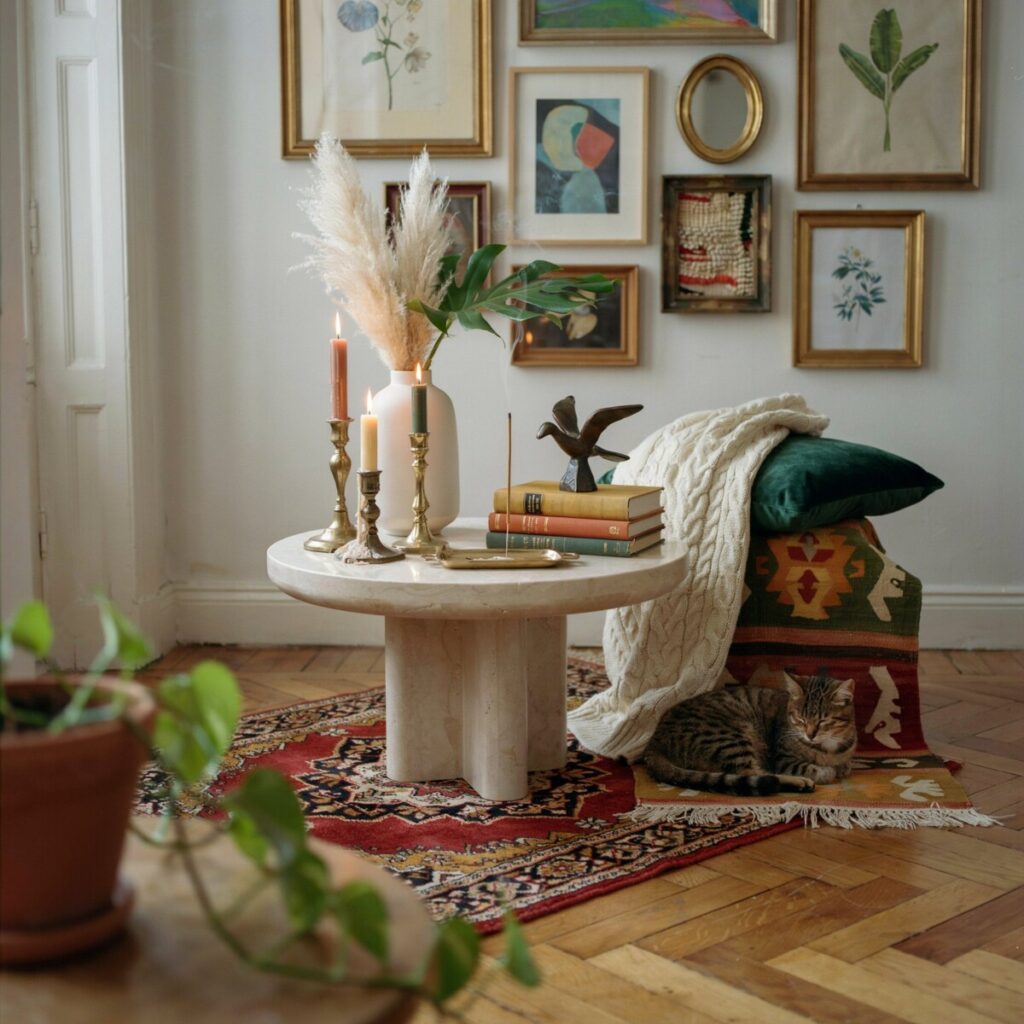
What Is Maximalist Interior Design?
Maximalist interior design is a style of intentional abundance: saturated color, mixed prints, layered textiles, statement pieces, and personal collections arranged with a clear point of view. Minimalism pares a room down; maximalism layers up — but with a plan. It borrows freely from eclectic home decor’s mix of eras and bohemian warmth, yet it’s defined by abundance with intent, never by accident.
A maximalist space may include:
- Bold or saturated wall color and patterned wallpaper
- Multiple prints in one view — floral, stripe, plaid, geometric
- Layered textiles like velvet, linen, wool, and rattan
- Statement furniture and oversized artwork
- Vintage, antique, handmade, and modern pieces side by side
- Personal collections and meaningful objects
- Decorated walls, shelves, tabletops, and windows
That blend of vintage and modern home decor is a maximalist signature. The through-line is curation and repetition: every layer adds to the room’s palette, mood, function, story, or visual rhythm.
Maximalism:
- Intentional abundance
- Repeated colors, shapes, or motifs
- A mix of scales and textures
- Edited collections
- Deliberate focal points
Clutter:
- Random accumulation
- No color or design connection
- Too many competing focal points
- Blocked walkways and unusable surfaces
- Items with no visual, emotional, or practical purpose
When the elements share a common design language, a room can be full without feeling chaotic.
Start With One Clear Design Direction
Every maximalist room that works has an organizing principle — a decision about how the space should feel before a single pillow is purchased. “Everything I love” is not a direction; “moody vintage bedroom” is.
Pick a lane, for example:
- Colorful English-country-inspired living room
- Moody vintage bedroom in jewel tones
- Tropical maximalist dining room
- Art-filled eclectic apartment
- Playful retro home office
- Global-inspired room full of handmade pieces
- Jewel-toned modern maximalist space
Build a mood board with Pinterest boards, saved Instagram posts, fabric swatches, paint chips, magazine clippings, or photos of objects you already own. The board doesn’t need to coordinate perfectly; its job is to reveal the colors, materials, patterns, eras, and moods you keep returning to.
Try this five-step exercise:
- Choose three words that describe how you want the room to feel.
- Pick one dominant theme or mood.
- Identify three to five colors that keep appearing.
- Choose one feature that will act as the main focal point.
- Remove ideas that don’t support the chosen direction.
Build a Cohesive Color Palette
Learning how to decorate with bold colors starts with hierarchy. Cohesive maximalist rooms choose a dominant color, a supporting cast, and small accents — often with a loose 60/30/10 guide:
- About 60% dominant color or visual base (walls, large rug, sofa)
- About 30% secondary color (curtains, accent chairs, artwork)
- About 10% accent color (pillows, vases, lamp bases, book spines)
The percentages are flexible, not a math test — simply a way to distribute color intentionally across walls, rugs, furniture, window treatments, and accessories.
Palettes that work beautifully in American homes:
- Navy, rust, mustard, cream, and olive
- Emerald green, blush pink, brass, and warm white
- Terracotta, cobalt blue, butter yellow, and walnut brown
- Plum, teal, camel, black, and antique gold
- Coral, turquoise, orange, natural wood, and ivory
The real secret is repetition. If your area rug contains rust and navy, echo the rust in a throw pillow and the navy in wall art or curtains. Repeated color is what makes bold interior design feel planned instead of accidental.
And don’t underestimate solids. A solid sofa, plain curtain, or quiet wall gives the eye a resting place between prints. Remember: harmony matters more than quantity — ten unrelated colors read as noise; five repeated colors read as a story.
Choose a Hero Element
Walk into a well-designed maximalist room and one thing grabs you first: the hero. Strong statement pieces for home make natural heroes — patterned wallpaper, a colorful sofa, a large area rug, oversized artwork, a dramatic bed frame, a painted ceiling, a vintage cabinet, a gallery wall, a sculptural light fixture, or a bold pair of curtains.
Choose one primary focal point rather than making every piece equally dramatic. Other bold pieces can join in, but they should vary in scale and support the same color story.
For example: if your living room’s hero is a large floral rug, keep the sofa a solid jewel tone, choose throw pillows in a smaller geometric print, and let the artwork repeat two colors pulled straight from the rug. The hero leads; everything else harmonizes. That hierarchy is the foundation of visual balance in interior design.
Learn How to Mix Patterns Without Visual Noise
How to mix patterns in interior design is the skill that separates curated maximalism from visual noise. The goal isn’t to love each pattern alone; it’s to love them together.
Mix Pattern Scales
Combine one large-scale pattern, one medium, and one small. A big botanical wallpaper, a medium stripe on the curtains, and a small geometric on the pillows coexist happily — three oversized florals shouting at once do not.
Repeat at Least One Color
Patterns can differ wildly in style as long as they share one or two colors. A botanical print, a plaid pillow, and a geometric rug feel like relatives the moment they all contain the same navy, green, or rust.
Combine Different Pattern Families
Variety in type creates energy; shared color creates unity. Reliable pairings include:
- Floral with stripes
- Plaid with geometric shapes
- Animal print with botanical motifs
- Abstract art with checkered textiles
- Damask with solid velvet
- Suzani-inspired patterns with simple stripes
Balance Busy Patterns With Solids
Solid-colored furniture and accessories between patterned layers aren’t boring — they’re the pause that makes the bold pieces legible. A plain emerald velvet chair between two printed pillows makes both prints pop.
Spread Patterns Around the Room
Don’t stack every print on one sofa or one wall. Distribute motifs and colors across the rug, window, bedding, and wall art so the eye travels and the room feels balanced.
Layer Textures for Depth
Color and pattern get the attention, but layered textures in interior design are what make a bold room feel comfortable instead of costumey.
Mix materials freely:
- Soft: velvet, linen, cotton, wool, bouclé, faux fur
- Natural: leather, rattan, woven baskets, wood, stone
- Hard: ceramic, glass, brass, metal
A reliable living room combination: a velvet sofa, linen curtains, a wool area rug, woven baskets, ceramic lamps, a wooden coffee table, and metallic picture frames. Each surface catches light differently — that’s what designers mean by depth.
Texture layering also works in neutral or small rooms. If saturated color feels like a leap, start tactile: a chunky knit throw, a jute rug, a cane chair. Add expressive accents gradually.
Finally, place texture at different heights and locations — underfoot on the floor, draped over furniture, hung at the window, and styled on shelves and walls.
Use the Layering Formula: Background, Foundation, and Details
The simplest way to think about how to layer home decor is in five passes. Add each layer, then step back and evaluate before moving on.
Layer One: Architectural Background
Walls, trim, ceilings, and window treatments set the stage: wall paint or wallpaper, painted trim, a colored ceiling, molding or built-in shelving, and curtains or shades. Renters aren’t left out — removable wallpaper, framed fabric panels, peel-and-stick decals, bold art, and temporary window treatments transform a rental without touching the deposit. This is renter-friendly maximalist decor at its best.
Layer Two: Functional Furniture
Sofa, chairs, bed, dining table, bookshelves, sideboards, desks, and storage pieces come next. Furniture must serve the room’s function before decorative layering begins. Keep walkways clear, never block doors, windows, or vents, and skip any piece that makes the room harder to use.
Layer Three: Soft Furnishings
Area rugs, layered rugs, curtains, throws, pillows, bedding, table linens, and upholstered stools introduce pattern, comfort, and visual warmth. Soft furnishings are the heart of layered interior design — and the easiest layer to swap with the seasons.
Layer Four: Decorative Objects
Books, lamps, vases, candles, plants, sculptures, baskets, mirrors, framed artwork, travel souvenirs, and vintage accessories. Add these gradually; if a surface starts to feel crowded, you’ve found the room’s limit.
Layer Five: Personal Details
The final layer is you: family photographs, heirlooms, handmade pieces, artwork from local makers, souvenirs, and meaningful gifts. Personal objects land hardest when edited and displayed with intention — grouped on a shelf, clustered on a wall — rather than scattered across every surface.
Vary Height, Scale, and Shape
A room where everything sits at the same height reads as flat and busy at once. Create rhythm with tall, medium, and low elements:
- A tall floor lamp beside a low coffee table
- Large artwork above a small console table
- A medium vase next to low stacks of books
- A tall plant beside a short cabinet
- An oversized mirror balanced by smaller framed art
Vary shape, too. Pair curved silhouettes with angular ones — a sculptural vase against a grid gallery wall, a round mirror over a rectangular sideboard.
Scale matters most on shelves, coffee tables, mantels, and gallery walls. A row of identical objects feels static; varied heights and proportions create movement.
A practical styling rule: arrange objects in groups of three or five — but don’t apply the rule mechanically. Group items that share a color, material, theme, or purpose, and let one tall piece anchor each group.
Create Curated Collections
Collections are maximalism’s soul — but displayed without boundaries, they read as storage. Try grouping:
- Books by color or subject
- Ceramic pieces by shape or glaze
- Framed art that shares one color
- Vintage mirrors in varied sizes
- Travel souvenirs in one cabinet or on one shelf
- Plants in coordinated (or deliberately contrasting) planters
- Brass, wood, or glass accessories in one contained zone
Use trays, bookcases, cabinets, baskets, shadow boxes, and wall-mounted shelves to give each collection a border. A tray of three vases on a console reads as styling; nine loose vases on the same console reads as clutter.
And protect negative space in home decor even here: some empty shelf space, a cleared tabletop corner, and breathing room between artwork groups are what let a collection be seen.
Leave Breathing Room
All that layering needs a counterweight. Negative space is the secret ingredient in maximalism without clutter — empty space isn’t wasted space; it’s the pause that makes abundance legible.
- Keep walking paths clearly open
- Leave some wall areas unadorned
- Avoid decor on every square inch of a tabletop
- Use closed storage for practical, unpretty items
- Keep windows partially clear so natural light can enter
- Leave air around major furniture pieces
- Edit items that no longer support the room
“More is more” does not mean “everything belongs everywhere.” A maximalist space should feel abundant and still function — comfortable to sit in, easy to clean, pleasant to move through. If you can’t set a coffee cup down, the room isn’t done; it’s overdone.
Room-by-Room Maximalist Decorating Ideas
Ready for colorful interior design ideas and maximalist room ideas you can use this weekend? Here’s how the principles translate space by space.
Maximalist Living Room
Anchor the maximalist living room with one hero — a statement sofa or large patterned rug — then layer: mixed-scale pillows, patterned curtains, gallery wall ideas you love, books, plants, and a colorful lamp. Keep seating and walkways functional, and let the coffee table hold one styled vignette, not everything within reach.
Maximalist Bedroom
Bold wallpaper behind the headboard, colorful bedding, layered blankets, mismatched nightstands, art, and vintage accessories all shine in a maximalist bedroom. Because the room must rest the eye, lean on softer textures and slightly calmer color — jewel tones with warm lamplight work beautifully — and keep surfaces near the bed lightly styled.
Maximalist Dining Room
Try a saturated painted wall, a dramatic light fixture over the table, patterned dining chairs, one large artwork, a decorative table runner, and a styled sideboard. Preserve real tabletop space for meals and entertaining; the drama should live on the walls, chairs, and sideboard.
Maximalist Entryway
A patterned runner, statement mirror, colorful console table, decorative wall hooks, one or two pieces of art, a basket, and a small lamp create a welcoming first impression. Keep the path clear — an entryway should greet you, not block you.
Maximalist Home Office
Colorful shelving, framed art, a patterned desk chair, a characterful lamp, books, plants, and storage baskets make work feel personal. Keep the desk surface mostly clear so visual stimulation surrounds the work without invading it.
Maximalist Small Apartment
Small spaces love edited maximalism. Use removable wallpaper on one wall, colorful textiles, vertical shelving, peel-and-stick tile, artwork, plants, and multifunctional furniture. Maximalist apartment decor thrives on a tight repeated palette; maximalist decor for small spaces benefits from vertical layering and fewer, better collections — rich, not cramped.
Budget-Friendly and Renter-Friendly Tips
Maximalism is famously kind to a budget because personality can’t be purchased pre-packaged. Affordable ways in:
- Shop thrift stores, estate sales, flea markets, and online resale marketplaces
- Change pillow covers instead of replacing furniture
- Frame fabric scraps, scarves, postcards, or children’s artwork
- Paint one accent wall instead of the entire room
- Use removable wallpaper in a small area or alcove
- Rearrange existing books and accessories by color
- Layer a small patterned rug over a larger neutral rug — an easy layered rug idea
- Repurpose vintage dishes as decorative objects
- Use plants and baskets to add texture
- Update lampshades or cabinet hardware
- Create a gallery wall with affordable prints
- DIY artwork using paint, fabric, or found materials
Budget maximalist decor is about thoughtful expression, not spending. A $4 flea-market vase placed with intention beats a $400 decor bundle that arrived in one box.
Common Maximalist Decorating Mistakes
Even experienced decorators slip on these maximalist design principles:
- Too many unrelated colors. Fix: repeat a controlled palette.
- Patterns all at the same scale. Fix: mix large, medium, and small.
- Every item is a focal point. Fix: choose one hero; let the rest support it.
- Filling every surface. Fix: preserve negative space like it’s furniture.
- Ignoring function. Fix: keep storage, seating, lighting, and walkways practical.
- Buying decor without a plan. Fix: mood board first, then a 48-hour waiting rule.
- Forgetting lighting. Fix: layer overhead, task, accent, and ambient lighting.
- Mixing styles without a connection. Fix: repeat a color, material, shape, or era.
- Styling only at eye level. Fix: vary heights from floor to ceiling.
- Keeping items that no longer fit. Fix: edit regularly.
Editing is not the opposite of maximalism — it’s what makes maximalism feel intentional.
A Simple Weekend Plan for Maximalism Done Right
Day one:
- Photograph the room as it is
- Remove items that don’t belong
- Choose a color palette
- Select a focal point
- Gather existing decor
- Create a quick mood board
Day two:
- Arrange the furniture
- Add the area rug and window treatments
- Place artwork and mirrors
- Add pillows, throws, plants, and lighting
- Style shelves and surfaces
- Remove approximately 10–20% of the smallest accessories
- Walk through the room and check comfort, balance, and function
Live with the arrangement for several days before making expensive purchases, and adapt every choice to your home’s size, lighting, layout, budget, and lifestyle. Maximalism done right is built, not bought — one intentional layer at a time.
Final Checklist: Is Your Maximalist Room Balanced?
Run through these maximalist style tips before you call the room finished:
- Does the room have a clear focal point?
- Do the colors repeat throughout the space?
- Are patterns mixed at different scales?
- Are there enough solid colors for visual rest?
- Do the textures feel varied?
- Are objects displayed at different heights?
- Are the walkways clear?
- Can the room still be used comfortably?
- Is there some intentional negative space?
- Do the displayed objects feel personal or meaningful?
- Does the room reflect the intended mood?
- Is anything present only because there was an empty spot?
If most answers are yes, you’ve achieved what some call intentional clutter — but is really a curated, colorful, comfortable home.
Conclusion
Maximalism done right is intentional storytelling: a palette that repeats like a refrain, patterns that converse instead of compete, textures that invite touch, and objects that say something true about you. You don’t need a big budget or a big house — begin with one room, one color palette, one hero element, and a few meaningful layers, added patiently and edited honestly.
Start with the room you use most, choose one element you love, and build outward with color, texture, pattern, and personality. The goal is not to create a perfect showroom—it is to create a home that feels collected, comfortable, and unmistakably yours.
Frequently Asked Questions
1. What is maximalist interior design?
Maximalist interior design is a style built on intentional abundance — bold colors, mixed patterns, layered textures, statement pieces, and personal collections arranged with a clear plan. It’s the opposite of minimalism’s restraint, but not the opposite of order.
2. How can I make maximalist decor look intentional?
Maximalism done right comes down to repetition and editing: repeat a defined color palette, choose one focal point, mix patterns at different scales, give collections boundaries, and preserve negative space. When everything shares a color story, abundance reads as curated.
3. How many colors should a maximalist room have?
Most cohesive maximalist rooms use three to five main colors — one dominant, one or two supporting, and one or two accents — repeated across walls, furniture, and textiles. Repetition matters more than quantity.
4. How do you mix patterns without creating chaos?
Combine one large, one medium, and one small pattern from different families (floral, stripe, geometric, plaid), make sure they share at least one color, and separate busy prints with solid pieces. That’s the core of mixing colors and patterns successfully.
5. Can maximalist decor work in a small apartment?
Yes — often beautifully. Small spaces benefit from a tight repeated palette, vertical layering with shelves and art, removable wallpaper, multifunctional furniture, and edited collections. Maximalist apartment decor works best when every piece earns its footprint.
6. What is the difference between maximalism and clutter?
Maximalism is curated: repeated colors, deliberate focal points, edited collections, and clear walkways. Clutter is random accumulation with no design connection and no function. If an object serves no visual, emotional, or practical purpose, it’s clutter in any style.
7. How can I try maximalist decorating on a budget?
Shop thrift stores, estate sales, and online resale; swap pillow covers; frame fabric or affordable prints; paint one accent wall; layer a small patterned rug over a neutral one; and rearrange what you own by color. Budget maximalist decor is about expression, not expense.
