
Picture this: it’s a rainy Saturday afternoon, you’re three hours deep into a Pinterest scroll, and your “Living Room Refresh” board has ballooned to 347 pins. Half of them feature walnut credenzas with tapered legs and mustard-yellow throw pillows. The other half showcase sculptural white sofas, arched doorways, and matte-black pendant lights. You close the app, stare at your perfectly fine but somehow blah living room, and think: What do I actually want?
If that sounds familiar, you’re not alone. Mid-Century Modern and Contemporary are two of the most searched, most saved, and most debated interior design styles in the United States right now. They share a love of clean lines and uncluttered spaces, which is exactly why so many homeowners mix them up—or assume they’re basically the same thing.
They’re not.
In this guide, we’ll break down Mid-Century Modern vs Contemporary design in plain English. By the end, you’ll understand each style’s history, signature looks, materials, and price points well enough to walk into any furniture store (or open any browser tab) with confidence. Whether you’re tackling a full renovation or just swapping out a coffee table, understanding these interior design styles will save you time, money, and a lot of second-guessing. Let’s dig into the home decor trends 2026 are built on.
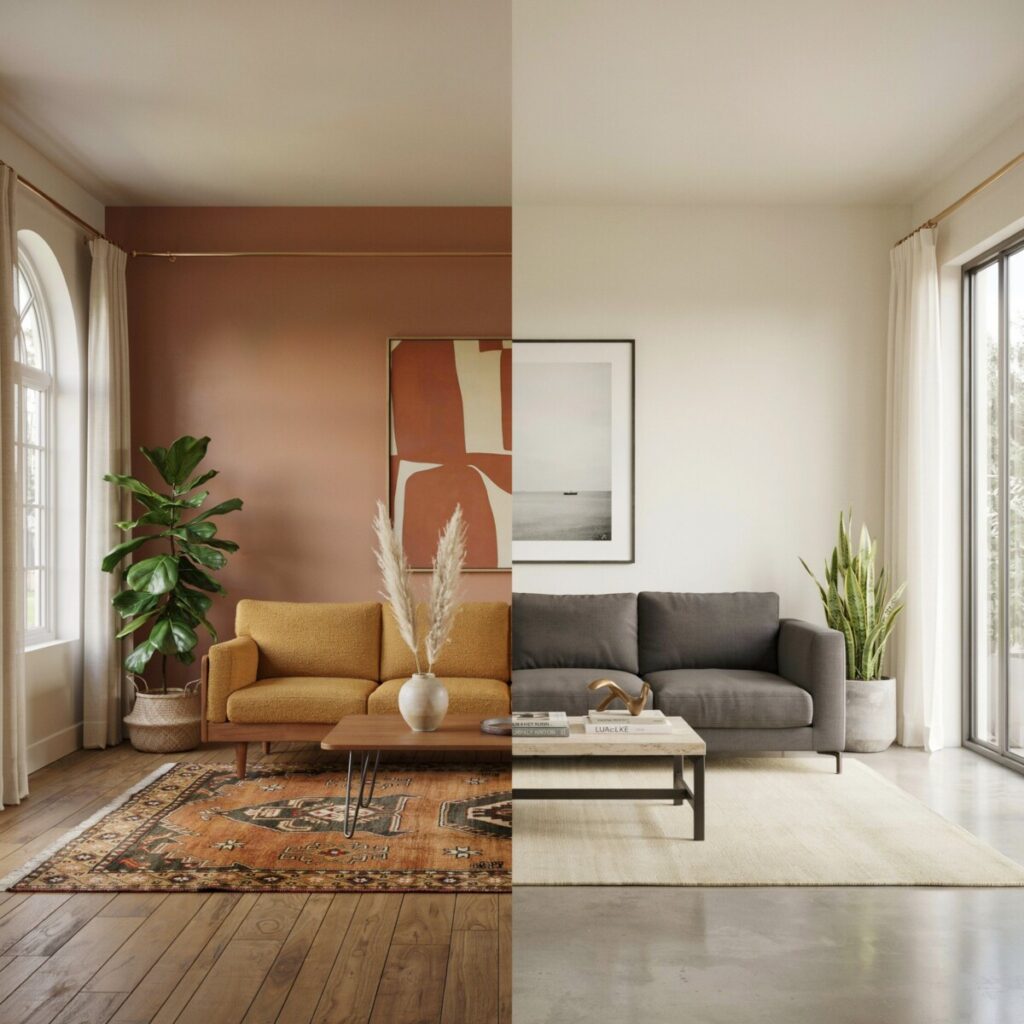
What Is Mid-Century Modern Design?
A Style Born from Optimism
Mid-Century Modern—often shortened to MCM—isn’t a vague vibe. It’s a specific design movement that flourished roughly between 1945 and 1969, primarily in the United States. After World War II, American families were moving into newly built suburban homes, and they wanted furniture and interiors that felt fresh, functional, and forward-looking. The old, heavy, ornamental styles of the pre-war era felt stuffy. Enter a generation of designers who’d absorbed the Bauhaus school’s “form follows function” philosophy and were ready to reimagine everyday living.
Names like Charles and Ray Eames, Eero Saarinen, George Nelson, and Isamu Noguchi became household staples. Their work married mass-production techniques with genuine artistry, making good design accessible to the middle class for the first time.
The Look and Feel
When you walk into a Mid-Century Modern living room, several things hit you at once:
- Clean, streamlined silhouettes. Sofas sit low. Cabinets float on slender, tapered legs. Nothing feels bulky or overwrought.
- Organic curves meet geometric shapes. Think of the swooping shell of an Eames chair paired with the sharp angles of a geometric rug.
- Warm wood tones. Teak, walnut, rosewood, and white oak dominate. The grain is celebrated, not hidden under paint.
- Bold accent colors. Mustard yellow, avocado green, burnt orange, and teal pop against neutral backdrops of cream, tan, or soft gray.
- Honest materials. Molded plywood, fiberglass, vinyl, and brushed steel sit right alongside that gorgeous walnut. There’s no pretending one material is another.
The overall feeling is cozy, approachable, and a little nostalgic—like a really well-designed 1958 ranch house that never went out of style.
Iconic Pieces You’ll Recognize Instantly
If you’ve ever seen an Eames Lounge Chair and Ottoman, a Noguchi coffee table with its sculptural glass top, or a Saarinen tulip table balancing on a single pedestal, you’ve seen Mid-Century Modern furniture in the wild. These pieces are the backbone of retro interior design and remain some of the best-selling furniture designs in the US, more than sixty years after their debut.
For anyone drawn to 1950s home decor or the broader vintage modern style, MCM offers a timeless starting point that never feels like a costume.
What Is Contemporary Design?
The Style That Never Stands Still
Here’s the key distinction: Contemporary interior design doesn’t refer to one fixed era. The word “contemporary” literally means “of the present moment.” So while Mid-Century Modern is locked into 1945–1969, Contemporary design is whatever’s cutting-edge right now—and it shifts every decade or so.
What reads as Contemporary in 2026 would look noticeably different from Contemporary in 2005. That fluidity is the style’s superpower and its biggest source of confusion.
Defining Features in 2026
If you walked into a model home showcasing modern home trends 2026, you’d likely notice:
- A neutral foundation. Warm whites, soft taupes, greige, and gentle grays create a calm canvas. Saturated accents—deep navy, terracotta, forest green—appear strategically, not everywhere.
- A material mix. Natural wood, honed stone, brushed brass, blackened steel, and textured glass coexist in one room. The contrast is the design.
- Curved, organic shapes. Arched niches, rounded-back sofas, oval dining tables, and circular mirrors have replaced the sharp angles that dominated the 2010s.
- Statement lighting as art. Oversized sculptural pendants, linear chandeliers, and backlit wall sconces function as focal points, not just light sources.
- Open, fluid floor plans. Great rooms that blend kitchen, dining, and living areas are standard in open floor plan design, encouraging flow and conversation.
- Technology woven in seamlessly. Smart lighting scenes, hidden in-ceiling speakers, motorized shades, and integrated charging stations are expected, not optional. This is smart home interior design in practice.
- Sustainability front and center. Reclaimed wood, rattan, jute, organic cotton, and recycled metals aren’t niche anymore—they’re mainstream. If you’re shopping for eco-friendly furniture USA retailers now stock it prominently, and sustainable home decor is one of the fastest-growing segments in the market.
The overall feeling is calm, curated, and current—less “grandma’s den,” more “boutique hotel lobby you actually want to live in.”
Mid-Century Modern vs. Contemporary: Side-by-Side Comparison
Let’s put these two current design styles head to head. This interior design style comparison should make the interior design differences crystal clear.
| Feature | Mid-Century Modern | Contemporary (2026) |
|---|---|---|
| Time Period | Fixed: ~1945–1969 | Fluid: always “now” |
| Color Palette | Earthy retro hues + bold pops (mustard, avocado, burnt orange) | Neutral base + saturated accents (navy, terracotta, forest green) |
| Primary Materials | Teak, walnut, molded plywood, fiberglass, steel | Wood, stone, metal, glass, recycled & sustainable materials |
| Shapes & Lines | Clean lines, organic curves, geometric accents | Soft curves, minimal ornamentation, sleek symmetry |
| Furniture Feel | Cozy, lived-in, approachable | Minimalist, polished, sometimes gallery-like |
| Floor Plans | Defined rooms with specific purposes | Open-concept, multi-functional spaces |
| Tech Integration | Minimal; durability was the “innovation” | Smart home features, hidden AV, energy-efficient systems |
| Sustainability Angle | Built-to-last craftsmanship | Eco-friendly materials, energy efficiency, circular design |
What This Means in Practice
If you’re comparing Mid-Century Modern vs Contemporary furniture at a showroom, here’s a quick gut-check. An MCM sofa will likely have exposed wooden legs, a low profile, and maybe a tufted back in a warm fabric. A Contemporary sofa in 2026 might sit on a recessed platform, feature a rounded silhouette, and be upholstered in a performance linen in a soft greige.
Neither is “better.” They simply solve different aesthetic and functional problems. Figuring out which design style is right for me comes down to how you actually live in your space, which we’ll tackle next.
Which Style Is Right for Your Home?
Choose Mid-Century Modern If…
- You light up at the sight of retro interior design and vintage flea-market finds.
- You want a home that feels warm, inviting, and a little nostalgic—like a favorite record album.
- Bold color doesn’t scare you. You’d genuinely enjoy a burnt-orange accent wall or a teal velvet armchair.
- You prefer defined rooms: a separate dining room, a dedicated den, a closed-off kitchen with character.
- You love the idea of collecting iconic pieces over time. A real Mid-Century Modern living room tells a story.
Choose Contemporary If…
- You crave a clean, clutter-free, up-to-the-minute look.
- Your ideal palette is a neutral color palette home with one or two strategic color pops.
- You want an open floor plan design where the kitchen, dining, and living areas flow together.
- Sustainability matters to you. You actively seek out sustainable home decor and energy-efficient upgrades.
- You’re excited by smart home interior design—voice-controlled lighting, hidden speakers, automated shades.
- You’re designing a Contemporary kitchen design with waterfall countertops and handle-less cabinets.
Mixing Styles: The Best of Both Worlds
Here’s the secret most design magazines won’t shout from the rooftops: you don’t have to pick a side. Mixing design styles is not only acceptable—it’s how the most interesting American homes actually look.
- Contemporary base, Mid-Century Modern accents. Keep your walls, flooring, and large upholstery neutral and current. Then drop in a walnut credenza, a pair of Eames-style side chairs, or a sunburst clock for instant warmth and personality.
- MCM furniture in a Contemporary open-plan home. A Saarinen tulip table looks stunning in a bright, open-concept great room with polished concrete floors and floor-to-ceiling windows.
- Real-life examples. A Brooklyn loft might pair exposed-brick walls and black steel windows (Contemporary bones) with a vintage teak sideboard and a Noguchi lamp (MCM soul). A California bungalow in Palm Springs could lean fully MCM but add a smart thermostat and solar panels for a Contemporary sustainability upgrade. A Texas suburban build might use a Contemporary open layout but furnish the dining nook with a George Nelson-inspired bench and pendant.
The goal is a space that feels like you, not a showroom. If you need more inspiration on blending eras, check out our guide to Small Space Decorating: Making Every Square Foot Count or Best Sofa Styles 2026: A Buyer’s Guide.
Budget, Shopping, and US Market Tips
Where to Buy Mid-Century Modern
- Authentic vintage: Estate sales, 1stDibs, Chairish, and local vintage shops in cities like Los Angeles, Palm Springs, and Chicago are gold mines. Expect to pay a premium—original Eames or Saarinen pieces can run into the thousands.
- Quality reproductions: Brands like Article, West Elm, Joybird, and Castlery offer well-made MCM-inspired furniture at friendlier prices. This is the sweet spot for most homeowners who want to buy Mid-Century Modern furniture USA-based without auction anxiety.
- Budget tier: IKEA’s LISABO and STRANDMON lines, plus Wayfair’s in-house brands, deliver the tapered-leg, walnut-veneer look for a fraction of the cost. Great for affordable modern furniture needs and best furniture for small apartments.
Where to Buy Contemporary
- Major retailers: CB2, Crate & Barrel, West Elm, Pottery Barn, and Design Within Reach cover a wide Contemporary spectrum.
- Sustainable-focused brands: Sabai, Burrow, and Thuma emphasize eco-friendly furniture USA manufacturing, recycled fabrics, and modular designs.
- Custom & high-end: For a truly bespoke Contemporary living room design, look at local interior designers in New York, Miami, and Austin, cities known for pushing Contemporary home decor forward.
- Budget tier: IKEA and Target’s Project 62 line offer Contemporary silhouettes at accessible prices.
Quick Price Snapshot
| Item | MCM Vintage | MCM Reproduction | Contemporary |
|---|---|---|---|
| Sofa | $3,000–$12,000+ | $800–$2,500 | $700–$5,000+ |
| Coffee Table | $1,500–$8,000+ | $200–$900 | $150–$2,000+ |
| Dining Table | $2,000–$10,000+ | $500–$2,000 | $400–$3,500+ |
Prices vary widely by region and condition, but this gives you a realistic starting framework for US interior design trends and US home decor trends budgeting. For more on sourcing responsible pieces, see our roundup of Sustainable Furniture Brands Worth Knowing.
Conclusion
So, Mid-Century Modern vs Contemporary—what’s the verdict? Mid-Century Modern is a beloved, fixed design era (1945–1969) defined by warm warm wood tones interior palettes, iconic silhouettes, and bold retro color. Contemporary design is a living, breathing style that reflects current design styles, neutral foundations, curved forms, smart technology, and a strong sustainability ethos. One looks lovingly backward; the other looks squarely at today.
But here’s the most important thing: there is no wrong answer. Your home isn’t a museum exhibit or a magazine spread. It’s where you make Tuesday-night pasta, binge your favorite show, and host the people you love. Pick the style—or the blend of styles—that makes you exhale when you walk through the front door.
Experiment. Swap a throw pillow. Refinish that thrift-store credenza. Paint one wall and see how it feels. Your space should evolve with you, and these final thoughts on interior design styles are really just an invitation to play.
Which style speaks to you—Mid-Century Modern or Contemporary? Drop your favorite look in the comments below or tag us on social media. We’d love to see what you’re building.
Frequently Asked Questions
Q: Is Mid-Century Modern the same as Contemporary?
A: No. Mid-Century Modern refers to a specific design movement from roughly 1945 to 1969. Contemporary design describes what’s popular at any given moment and evolves continuously. They share clean lines but differ in color palettes, materials, and overall mood.
Q: Can I mix Mid-Century Modern and Contemporary styles in one room?
A: Absolutely. A common approach is to use a Contemporary neutral base—walls, flooring, large upholstery—and layer in Mid-Century Modern accent pieces like a walnut credenza, a tulip table, or a geometric rug. The contrast adds warmth and personality.
Q: Which style is more budget-friendly?
A: Both have budget and luxury tiers. Mid-Century Modern reproductions and Contemporary pieces from retailers like IKEA, Article, or West Elm start at similar price points. Authentic vintage MCM tends to carry a higher premium due to collectibility.
Q: Is Mid-Century Modern going out of style?
A: MCM has been popular for over two decades and shows no signs of fading. Its emphasis on quality craftsmanship, warm materials, and timeless silhouettes keeps it relevant. That said, Contemporary design will always shift with the times.
Q: What are the biggest home decor trends for 2026?
A: Key modern home trends 2026 include curved furniture, warm neutral palettes with earthy accents, sustainable and reclaimed materials, integrated smart-home technology, and a continued blending of retro and modern aesthetics.
