
Picture coming home after a long day: instead of crowded countertops and mismatched knickknacks, you’re greeted by warm white walls, a low oak coffee table, and soft linen that seems to exhale. That feeling is the promise of Japandi style — an interior design approach that merges the quiet simplicity of Japanese minimalism with the practical warmth of Scandinavian function.
The name blends “Japanese” and “Scandi,” and the look is far more than a passing trend. It’s rooted in intentional living, honest natural materials, craftsmanship, and a refusal to accumulate the unnecessary. Whether you’re furnishing a small city apartment, a suburban family room, or a rental condo, Japandi home decor offers a realistic path to a calmer home. Ahead, we break down Japandi design principles, color palettes, furniture choices, and room-by-room decorating ideas you can start this weekend.
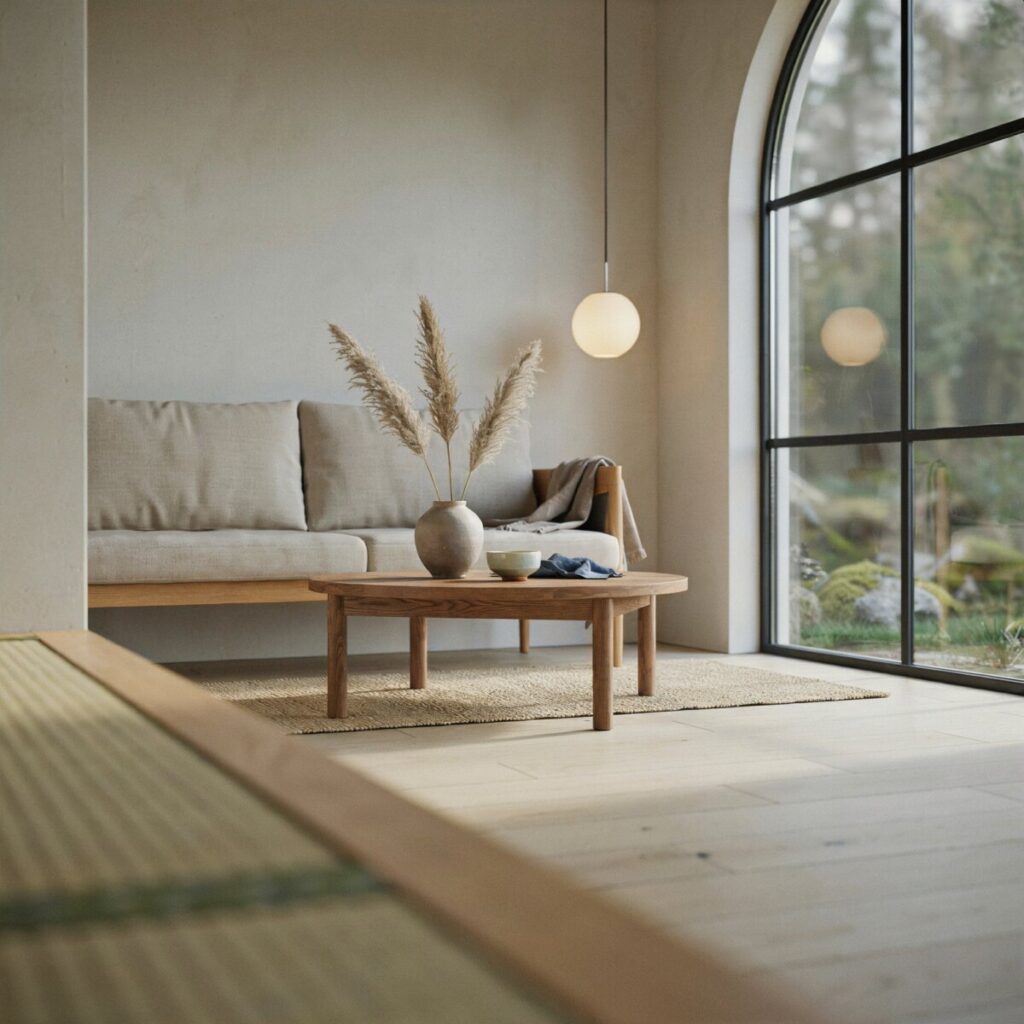
The Origins of Japandi Design
Japandi interior design emerged as designers noticed how much Japanese and Scandinavian design traditions share. The two cultures don’t have identical histories, but they arrived at similar values: simplicity, craftsmanship, natural materials, functionality, and a close connection to nature.
Japanese minimalist design was shaped by Zen aesthetics, where empty space is active and a few well-chosen objects are enough. Wabi-sabi goes further, appreciating imperfection, age, simplicity, and natural beauty — a cracked glaze or faded wood grain is part of an object’s story.
Scandinavian interior design developed in northern Europe, where long dark winters made light, warmth, and practical comfort essential. Hygge, the Danish-Norwegian idea of cozy contentment, and lagom, the Swedish ideal of “just the right amount,” both prize balance and harmony over excess. Function-first furniture and honest craftsmanship became hallmarks of the Scandinavian home.
Japandi is not about placing random Japanese decorations in a Scandinavian room. It is a balanced design language pairing compatible principles from both traditions — restraint with comfort, imperfection with practicality.
Japanese Minimalism Meets Scandinavian Function
The easiest way to understand modern Japandi style is to see what each tradition contributes and what the combination produces.
| Japanese influence | Scandinavian influence | Japandi result |
|---|---|---|
| Restraint and quiet simplicity | Comfort and everyday coziness | Calm rooms that still feel welcoming |
| Wabi-sabi appreciation of imperfection | Hygge warmth and softness | Handcrafted objects in relaxed, livable spaces |
| Dark, grounded tones | Light, airy colors | Balanced palettes with depth and brightness |
| Low-profile furniture | Practical, function-first design | Grounded silhouettes that work hard daily |
| Organic, imperfect forms | Clean, refined lines | Simple shapes with visible character |
| Meditative negative space | Cozy layered textures | Open space softened by wool, linen, and wood |
The result should feel calm but not empty, minimal but not cold, refined but not overly formal. The most successful Japandi interiors balance negative space with warmth — a nearly bare room softened by a wool rug, candlelight, and wood you can feel under your hand. That equilibrium is warm minimalism at its best.
Core Japandi Design Principles
Six Japandi design principles shape every room in a Japandi-inspired home.
1. Choose Quality Over Quantity
Japandi favors fewer, better-made pieces over a constant churn of inexpensive decor. Invest in durable furniture with timeless shapes and natural finishes, each serving a clear purpose. One well-made oak table outlasts — and outshines — three trendy ones.
2. Create a Clutter-Free Environment
Visual clutter quietly raises stress. A clutter-free home relies on closed storage, woven baskets, and streamlined shelving, keeping only useful or meaningful objects on display. If something is neither functional nor loved, it doesn’t need prime shelf space.
3. Prioritize Functionality
Every piece should support daily life: a genuinely comfortable sofa, a dining table that fits the room, an entry storage bench, an adjustable reading lamp, a bed with useful under-bed storage. Functional home decor means the room works as well as it looks.
4. Embrace Natural Materials
Natural materials in interior design are the heart of Japandi: wood, bamboo, rattan, linen, cotton, wool, stone, clay, ceramic, leather, and paper. Combining soft textures — a nubby wool rug against smooth oak, linen curtains beside clay pottery — keeps a neutral room from feeling flat.
5. Leave Room for Negative Space
In Japandi, empty space is intentional, not wasted. Negative space gives furniture and meaningful objects room to stand out and creates a peaceful flow from room to room. Resist filling every corner; open floor and wall area is part of the design.
6. Celebrate Craftsmanship and Imperfection
Handmade ceramics, visible wood grain, uneven glazes, and woven baskets add character without overwhelming the room. This wabi-sabi home design mindset finds beauty in imperfection — the small irregularities that prove a human hand made the object.
The Japandi Color Palette
The Japandi color palette begins with warm neutrals — warm white, cream, beige, taupe, greige, sand, soft gray, and mushroom — then adds earthy tones like sage green, olive green, terracotta, and clay. Charcoal, espresso brown, and black accents supply contrast, while natural wood tones act as a color of their own. It’s a dependable foundation for neutral home decor.
Light woods like oak and ash create the bright Scandinavian feel; walnut accents, espresso, charcoal, and black details lend the depth seen in Japanese-inspired home decor. Most rooms use a neutral base with a few carefully chosen darker accents.
Four combinations that work well in American homes:
- Warm white walls, oak furniture, beige textiles, and charcoal accents
- Soft gray walls, walnut furniture, cream upholstery, and olive green plants
- Greige walls, black lighting, light wood, and handmade terracotta ceramics
- Cream bedding, dark wood nightstands, linen curtains, and muted sage accents
To keep the atmosphere authentic, avoid too many bright colors, glossy finishes, neon accents, and busy patterns. Muted colors and matte surfaces read calmer and more timeless.
Essential Japandi Furniture
Japandi furniture is defined by clean lines, low visual weight, simple silhouettes, and natural wood finishes. Look for rounded or organic edges, neutral upholstery, functional storage, strong craftsmanship, comfortable proportions, and minimal ornamentation — purposeful design that fans of organic modern design will recognize immediately.
Pieces that fit the look include:
- Low-profile sofas and minimalist coffee tables
- Wooden platform beds and nightstands with clean fronts
- Simple dining tables and sculptural accent chairs
- Floating shelves, storage benches, and modular furniture
- Woven baskets, floor cushions, and paper or fabric lamps
In a small U.S. apartment or rental, Japandi style furniture doubles duty: a storage bench becomes seating and a linen closet, while a modular sofa adapts as your layout changes. In larger open-plan homes, low silhouettes and consistent wood tones keep sightlines open.
Before buying, measure doorways, hallways, room dimensions, and furniture clearances. A graceful sofa means nothing if it blocks the walking path or won’t fit through the front door.
Japandi Living Room Ideas
A Japandi living room should feel collected, not crowded. Start with these ideas:
- Start with a neutral foundation — warm white or greige walls and a simple rug.
- Choose one comfortable, streamlined sofa in linen or cotton.
- Add a natural wood coffee table with a simple silhouette.
- Layer textures — a wool throw, boucle pillows, linen curtains.
- Use one large plant instead of many small decorations.
- Add closed storage to tuck everyday clutter away.
- Display handmade ceramics or one meaningful artwork.
- Use warm, diffused lighting from floor and table lamps.
Coziness comes from texture and light, not quantity. A textured area rug, a few neutral throw pillows, and a soft blanket create a cozy minimalist interior without visual noise.
In a large living room, use furniture groupings and rugs to create intimate zones while preserving open space. In a compact apartment, keep furniture low and leggy so light flows underneath — our minimalist living room ideas guide has more ways to make the space feel larger.
Creating a Japandi Bedroom
A Japandi bedroom should feel restful and uncluttered — a place your mind can power down. Start with a low wooden bed frame dressed in neutral linen bedding, add minimal nightstands, and ground the space with a natural fiber rug. This is calm interior design at its most personal.
Keep the palette quiet: cream, taupe, and soft gray, with black or dark wood accents for depth. Simple curtains, one piece of calming wall art, and hidden clothing storage keep surfaces clear. Limit decorative objects to a handful — a clay vase, a folded throw, a small stack of books.
The room should feel peaceful, not empty. Reach for texture instead of color or pattern: washed linen, cotton, wool, woven baskets, and a soft rug underfoot make it a genuinely relaxing home environment.
Japandi Kitchen and Dining Room
A Japandi kitchen is practical, easy to maintain, and quiet to look at. Flat-front cabinets in natural wood or muted paint, matte finishes, neutral backsplashes, and stone or wood countertops set the tone. Use open shelving sparingly — one shelf of handmade ceramic dishes reads curated, while five read as clutter.
Keep counters mostly clear, with daily essentials within reach and everything else behind closed doors. Simple pendant lights, minimal countertop appliances, and functional organization complete the look.
In the dining area, choose a simple wood table and comfortable chairs, then soften the setting with a linen table runner and neutral dinnerware. A small centerpiece of branches, greenery, or handmade pottery is all the decoration the space needs. Our Scandinavian home design guide shares the same function-first spirit if you want more inspiration.
Japandi Bathroom Design
A Japandi bathroom borrows from spa design: natural stone or stone-look surfaces, warm wood accents, neutral tiles, and matte black or brushed metal hardware. Simple mirrors, soft lighting, and organic-shaped accessories keep the room serene, while greenery suited to humid spaces adds life.
Keep counters nearly bare with woven storage baskets and everyday products in matching containers.
Renters can introduce Japandi home decor without renovating: removable hooks, a wood bath tray, neutral towels, a linen-look shower curtain, and simple countertop organizers all transform the room — and all leave with you when the lease ends. It’s rental-friendly decor at its easiest.
Lighting, Textures, and Accessories
Because the palette is restrained, lighting and texture do the emotional heavy lifting. Maximize natural light with sheer linen curtains, then layer warm LED bulbs, paper lanterns, ceramic table lamps, sculptural lighting, and floor lamps for evening. Candles add the flicker Scandinavian hygge style is known for.
Texture follows the same logic: wool and jute rugs, linen cushions, cotton throws, and woven baskets give a neutral room depth. Mindful decorating means accessories are chosen intentionally — hand-thrown pottery, a wooden tray, a vase of branches.
Display a small number of meaningful objects rather than filling every shelf and tabletop. And skip the idea of “intentional clutter” — if an object doesn’t earn its place, it’s simply clutter.
Plants and Nature in Japandi Interiors
Japandi is nature-inspired at its core, which is why it pairs so well with biophilic design. Olive trees, fiddle-leaf figs, snake plants, ZZ plants, and bamboo decor all suit the look, as do simple branches, dried grasses, moss-inspired arrangements, and a few small herbs in the kitchen.
Choose indoor plants according to your light, humidity, pets, and maintenance preferences — a struggling fiddle-leaf fig adds stress, not serenity.
Remember that one carefully placed plant, or a single vase of branches, creates more visual impact than a crowded collection of houseplants.
How to Create Japandi Style on a Budget
Japandi decorating ideas don’t require a showroom budget — the style rewards restraint:
- Declutter before shopping. It’s free, and it’s the most important step.
- Rearrange existing furniture to open up negative space.
- Refinish or repair wooden pieces you already own.
- Shop secondhand for solid wood furniture; sanding and oiling can transform a thrift-store table.
- Choose neutral slipcovers to unify a mismatched sofa.
- Replace harsh bulbs with warmer options and add linen-look curtains.
- Use thrifted ceramic pieces as affordable accents.
- Buy one quality item at a time instead of a roomful of cheap ones.
- Use baskets for affordable hidden storage.
- Select multifunctional furniture and skip decor that’s merely trendy.
Costs vary widely by city, retailer, material, craftsmanship, and size, so treat any price range as a rough guide. Budget-friendly Japandi decor is mostly about editing what you own and upgrading slowly — an approach that also aligns with sustainable home decor.
Common Japandi Decorating Mistakes
Even well-intentioned rooms can miss the mark. Watch for these:
- Too much stark white. The room feels sterile — warm it with beige, wood, and soft textiles.
- Excessive black accents. Contrast turns harsh; limit black to a few deliberate lines like lighting and hardware.
- Mixing too many wood tones. The room feels accidental; choose one dominant tone plus one accent.
- Overdecorated shelves. Clutter returns; edit displays to a few meaningful objects.
- Furniture that looks good but feels bad. Form without function; always test comfort first.
- Mass-produced “Japanese-style” knickknacks. The look becomes costume; focus on principles and craftsmanship instead.
- Treating wabi-sabi as damage. Imperfection should feel intentional, not neglected.
- Choosing trendy over durable. The room ages badly; make timeless interior style your filter.
- Ignoring lighting. One overhead fixture flattens everything; layer warm, diffused sources.
- Minimalism that isn’t practical. Keep storage and daily routines in mind so the room stays livable.
- Too many patterns or bold colors. The calm dissolves; stick to muted colors and simple textures.
- Forgetting storage. Clutter has nowhere to hide; plan closed storage from the start.
Japandi Style for Small Spaces and Rentals
Japandi style shines in compact American homes because it treats open space as a feature. Multifunctional pieces — foldable dining tables, storage ottomans, wall-mounted shelves, under-bed storage — keep floor area clear. Lightweight furniture and pieces with exposed legs make rooms feel larger, as do strategically placed mirrors and vertical storage. These small apartment ideas cost little but change how a home feels.
Renters can lean on neutral removable wallpaper, temporary lighting like plug-in sconces and floor lamps, and rental-friendly decor such as curtains, rugs, and baskets. A regular decluttering routine keeps the whole space calm.
The result is a peaceful living space that feels more spacious and serene — without any structural changes. For more layout inspiration, browse our small apartment decor ideas.
Is Japandi Style Sustainable?
Japandi naturally encourages conscious consumption: fewer items, durable furniture, natural materials, repair, and reuse. Buying less and buying better reduces waste over time, which is why the style overlaps with sustainable home decor and timeless design choices.
That said, a “Japandi” label doesn’t automatically make a product sustainable. Fast-furniture copies in faux finishes can be just as wasteful as anything else. When evaluating a piece, check:
- Material sourcing and certifications where relevant
- Manufacturing practices and ethical production claims
- Product durability and repairability
- Shipping distance and packaging
- Secondhand options first
The most sustainable choice is often the piece you already own, repaired and refinished — or the solid wood table with decades of life left, waiting at a thrift store.
Japandi vs. Minimalism, Scandinavian, and Wabi-Sabi Design
It’s easy to blur Japandi with its close relatives. Here’s how the styles compare:
| Design style | Main focus | Typical features | How Japandi differs |
|---|---|---|---|
| Japandi | Balance, tranquility, and function | Neutral tones, natural materials, clean lines, tactile textures | Combines Japanese serenity with Scandinavian warmth |
| Japanese minimalism | Restraint, nature, and simplicity | Low furniture, organic materials, negative space | Japandi adds more softness and everyday comfort |
| Scandinavian design | Function, brightness, and coziness | Light woods, practical furniture, soft textiles | Japandi introduces darker tones and stronger visual restraint |
| Wabi-sabi | Beauty in imperfection and impermanence | Handmade objects, aged materials, irregular forms | Japandi uses wabi-sabi as one influence rather than the entire style |
| Modern minimalism | Simplified visual appearance | Sleek surfaces, limited decor, geometric forms | Japandi is usually warmer, more tactile, and more organic |
In short, Japandi sits at the intersection: warmer than minimalism, more restrained than Scandinavian design, and more livable than pure wabi-sabi.
Frequently Asked Questions
What is Japandi style in interior design?
Japandi style is an interior design approach that blends Japanese minimalism with Scandinavian function and comfort. It combines neutral colors, natural materials, clean lines, and handmade texture to create calm, uncluttered, deeply practical rooms. Rather than chasing trends, it focuses on intentional living, craftsmanship, and owning fewer, better pieces for the long term.
What colors are best for a Japandi home?
Warm neutrals form the base: warm white, cream, beige, taupe, greige, and soft gray. Earthy tones like sage, olive, terracotta, and clay add gentle color, while charcoal, espresso brown, black accents, and natural wood tones supply depth. Keep finishes matte and patterns quiet for the most authentic, timeless feel.
Is Japandi style expensive?
It can be as affordable or as luxurious as you make it. The style begins with decluttering, which is free, and it favors secondhand solid wood furniture, natural textures, and slow, intentional purchases over buying everything new at once. Spending on a few durable pieces usually beats a roomful of inexpensive decor.
What is the difference between Japandi and Scandinavian style?
Scandinavian design emphasizes brightness, light woods, and cozy practicality. Japandi keeps that comfort but adds Japanese restraint: darker wood tones, stronger negative space, organic imperfection, and wabi-sabi influence. Think of Scandinavian as sunny and soft, and Japandi as the same warmth with a quieter, more grounded edge.
How do I make my living room Japandi?
Start with neutral walls and a simple rug, then add one streamlined sofa and a natural wood coffee table. Include closed storage, layer linen and wool textures, use warm diffused lighting, and finish with one plant plus a few handmade ceramics. Keep accessories limited and meaningful — that simple checklist is the entire look.
Can Japandi style work in a small apartment?
Yes — small spaces are where Japandi shines brightest. Its emphasis on multifunctional furniture, hidden storage, low profiles, and clutter reduction makes compact homes feel calmer and noticeably more spacious. Light colors, mirrors, and exposed furniture legs amplify the effect, and none of it requires structural changes or a renovation budget.
Does Japandi style have to use Japanese decorations?
No. Japandi is about design principles — simplicity, natural materials, craftsmanship, and balance — not about displaying Japanese decorative objects. Respectful appreciation of the philosophy matters far more than any single product. A home can feel fully Japandi with Scandinavian furniture, local handmade pottery, and no literal Japanese decor at all.
Conclusion: Start Your Japandi Home Today
Japandi style is not about creating a perfect showroom or stripping your home of personality. It’s about designing a peaceful, functional, intentional environment with fewer, more meaningful items — a home that supports your mornings and softens your evenings with understated elegance.
Start with one room. Remove unnecessary clutter, choose a calming palette of warm neutrals, introduce natural textures like linen, wool, and wood, and keep only the furniture that serves your everyday routine. Add one handcrafted object you love, and let the negative space do the rest.
Done patiently, Japandi style grows with you — simple home design that feels less like decorating and more like a quiet, lasting sense of calm.
