
Few decisions in home decorating feel as personal — or as overwhelming — as choosing a design style. You’ll live with the result every single day, after all. If you’ve been weighing industrial vs. bohemian for your living room, bedroom, or entire apartment, you’re in good company. These two popular home decorating styles sit at nearly opposite ends of the spectrum: one is raw, structured, and urban, while the other is soft, layered, and deeply personal.
Here’s the good news: neither style is universally “better.” The right choice depends on your lifestyle, taste, home architecture, maintenance preferences, and budget. A sun-drenched loft and a cozy suburban bedroom may call for very different looks. Ahead, we’ll compare industrial vs. bohemian decor across color, materials, furniture, lighting, cost, and upkeep, so you can decide which one truly feels like home.
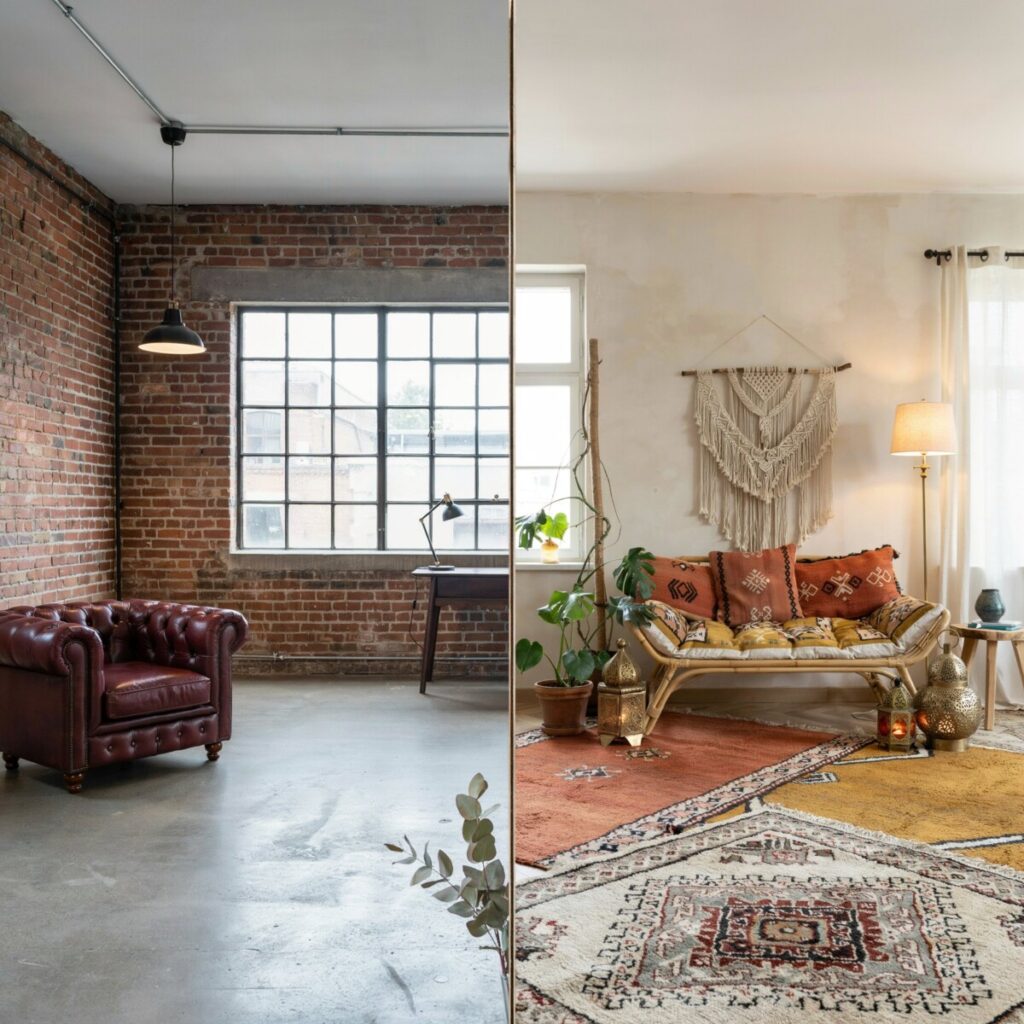
Industrial vs. Bohemian: The Quick Difference
Industrial interior design borrows its look from warehouses, factories, and urban lofts, celebrating exposed brick, concrete, black metal, and reclaimed wood. It favors neutral colors, clean lines, and functional furniture, so rooms feel open, practical, and modern.
Bohemian interior design — often called boho home decor — is relaxed, eclectic, and personality-driven. It layers colorful rugs, patterned pillows, woven textiles, houseplants, and vintage finds until a room feels cozy and collected over time.
| Category | Industrial | Bohemian |
|---|---|---|
| Overall mood | Urban, structured, modern | Relaxed, cozy, expressive |
| Main colors | Black, gray, white, brown, rust | Earthy tones, jewel tones, warm neutrals |
| Common materials | Brick, concrete, steel, reclaimed wood | Rattan, jute, linen, cotton, velvet |
| Furniture style | Streamlined, sturdy, functional | Vintage, handcrafted, comfortably mismatched |
| Decorative approach | A few bold statement pieces | Layered textiles, plants, personal collections |
| Best suited for | Lofts, open floor plans, urban homes | Apartments, bedrooms, creative cozy spaces |
| Maintenance level | Lower — easy-wipe surfaces | Higher — textiles and plants need care |
What Is Industrial Interior Design?
Industrial home decor grew out of loft apartments converted from factories and warehouses in cities like New York and Chicago, where open floor plans, high ceilings, and factory-style windows came standard. Instead of hiding pipes, beams, and ductwork, this style puts them on display. Exposed brick walls, concrete surfaces, steel accents, and unfinished materials form the backbone of the warehouse-inspired look, and exposed brick decor — real or peel-and-stick — remains its most recognizable move.
The industrial color palette stays neutral and moody: charcoal gray, black, white, warm brown, tan, and rust. Furniture is functional and sturdy, with streamlined silhouettes — leather sofas, metal-and-wood coffee tables, reclaimed wood shelves, and pipe shelving. Statement lighting, like black metal pendant lights with Edison-style bulbs, does the decorating that knickknacks do in other styles, giving the modern industrial interior its signature urban home decor edge.
Done poorly, industrial rooms can feel cold or stark. The fix is texture contrast: a wool area rug, linen curtains, warm lighting, and a few plants soften concrete and steel. Renters can join in with renter-friendly updates like matte black hardware, metal and wood furniture, and brick-look accent walls — no structural changes required.
What Is Bohemian Interior Design?
Bohemian interior design is the free spirit of home decorating styles: relaxed, creative, eclectic, and guided by personal taste rather than rigid rules. It layers textiles everywhere — colorful rugs, patterned pillows, throws, curtains, and macramé wall hangings — until a room feels soft and lived-in, prioritizing artistic expression over matching sets.
Natural materials are the heart of boho home decor: rattan, wicker, jute, bamboo, linen, cotton, and unfinished wood bring an organic, sustainable decor feel. The bohemian color palette leans earthy and rich — terracotta, mustard, olive green, rust, cream — with jewel tones like sapphire and emerald adding depth. Boho also explains why indoor plants and home decor photos so often go hand in hand: greenery is essential, not optional.
Bohemian rooms are where your life shows up: houseplants, vintage furniture, handcrafted and global-inspired accessories, art, and personal collections. That’s why bohemian home decor feels cozy, welcoming, and expressive. To keep visual balance instead of clutter, repeat a limited palette and leave breathing room between groupings. And boho ranks among the most budget-friendly home decor styles, since thrifted decor, flea-market finds, and affordable textiles carry most of the look.
Industrial vs. Bohemian: Key Differences
Color Palette
Industrial leans on neutral colors — black, gray, white, warm brown — with rust or cognac as an accent. Bohemian embraces earthy tones and jewel tones: terracotta, mustard, olive green, deep blue. In either style, you can test accent colors with an accent wall, pillows, throws, or art before committing to repainting an entire room.
Materials and Textures
Industrial decor is hard and raw: concrete, black metal, exposed brick, reclaimed wood. Bohemian decor is soft and layered: wool, cotton, jute, rattan, velvet. Combining the two families — metal and wood with wool and linen, a rich mix of natural materials in interior design — creates the texture contrast that makes a room feel intentionally designed.
Furniture
Industrial furniture is sturdy and streamlined: leather sofas, steel-and-wood coffee tables, pipe shelving, platform beds, and simple dining tables. Boho furniture is relaxed and collected: vintage armchairs, rattan seats, low wood tables, mismatched dining chairs, and baskets doubling as storage furniture. Industrial pieces say “built to last,” while boho pieces say “found with a great story.”
Lighting
Industrial homes lean on black metal pendants, Edison-style bulbs, track lighting, and factory-inspired fixtures. Bohemian homes glow with woven pendants, lanterns, table lamps, candles, string lights, and warm ambient lighting. Either way, layered lighting — overhead plus floor lamps plus accents — keeps a room from feeling flat.
Accessories and Wall Decor
Industrial wall decor includes black-and-white industrial wall art, oversized clocks, framed typography, maps, metal signs, and architectural objects with a history. Boho walls favor gallery walls, macramé, woven baskets, mirrors, tapestries, and collected artwork. Industrial accessorizes sparingly; bohemian accessorizes generously.
Overall Atmosphere
Industrial design emphasizes structure, simplicity, contrast, and urban character — a relaxed atmosphere achieved through openness. Bohemian design emphasizes comfort, creativity, warmth, individuality, and layered textures. One feels like a great city loft; the other feels like a well-loved creative studio.
Industrial vs. Bohemian at a Glance
| Category | Industrial | Bohemian |
|---|---|---|
| Style personality | Confident, practical, urban | Free-spirited, creative, personal |
| Typical room mood | Open, structured, moody | Cozy, layered, welcoming |
| Color scheme | Neutrals with rust accents | Earthy + jewel tones |
| Materials | Brick, concrete, steel, reclaimed wood | Rattan, jute, linen, cotton, velvet |
| Furniture | Clean-lined, functional, durable | Vintage, handcrafted, mismatched |
| Lighting | Metal pendants, Edison bulbs, track lights | Woven pendants, lanterns, string lights |
| Wall decor | Clocks, maps, metal signs, typography | Gallery walls, macramé, baskets, tapestries |
| Storage approach | Open shelving, pipe racks | Woven baskets, trunks, mixed open + closed |
| Ideal home architecture | Lofts, open-concept plans, high ceilings | Apartments, traditional homes, bedrooms |
| Decorating difficulty | Easy to start, harder to warm up | Easy to start, harder to keep tidy |
| Best for minimalist shoppers | Yes | Not really |
| Best for collectors and creatives | Not really | Yes |
| Common mistake to avoid | Feeling cold or stark | Feeling cluttered or chaotic |
Which Style Fits Your Home?
Your architecture should get a vote. Industrial style shines in lofts, apartments, and homes with high ceilings, open floor plans, large windows, or exposed details like brick and beams. Bohemian style adapts almost anywhere, especially cozy apartments, traditional homes, small homes, bedrooms, creative studios, and rental properties that need warmth and personality. For renters, both styles offer plenty of small apartment decorating ideas that skip permanent changes.
Room size and natural light matter too. Dark industrial colors absorb daylight, so save charcoal accent walls for sunny rooms and keep dim spaces pale and open. Richly layered boho decor can shrink a small room as well, so edit textiles and keep walls light in compact layouts. Room layout follows style: industrial prefers open arrangements with breathing room, while boho tolerates cozy, gathered groupings.
Let existing finishes guide you. Concrete floors, metal windows, and brick lean industrial; hardwood, molding, and warm walls lean boho. Then be honest about taste: if you crave clean lines and open surfaces, choose industrial; if you love visual abundance, choose bohemian.
Households matter as well. Industrial’s durable leather and metal are genuinely pet-friendly materials that stand up to busy family life. Boho’s washable slipcovers and personal corners suit kids and roommates who each want a stake in the space. Finally, think seasons: boho rooms refresh easily with new pillows and throws, while industrial rooms update with a few well-chosen accent swaps.
Choose Industrial If…
- You prefer neutral color schemes.
- You like clean lines and uncluttered spaces.
- You appreciate practical, durable furniture.
- You enjoy urban, modern, masculine, or warehouse-inspired interiors.
- You want a lower-maintenance decorating style.
- You prefer a few statement pieces over many small accessories.
- You like metal, leather, concrete, and reclaimed wood.
Choose Bohemian If…
- You love color, pattern, and texture.
- You enjoy collecting meaningful objects and artwork.
- You prefer a relaxed, cozy atmosphere.
- You like indoor plants and natural materials.
- You enjoy mixing vintage, modern, handmade, and global-inspired pieces.
- You want a flexible style that can evolve over time.
- You prefer a warm, highly personal home.
Industrial vs. Bohemian Room Ideas
Living Room
An industrial living room starts with a leather or charcoal sofa, a metal-and-wood coffee table, and a low-pile rug in tan or gray. Add pipe shelving, a black metal floor lamp, and one oversized piece of wall art; a single tall plant keeps the room from feeling sterile.
A boho living room layers a vintage-style rug under a linen sofa, then piles on patterned pillows and a chunky throw. Add a rattan accent chair, macramé or a gallery wall, woven baskets for storage, and a cluster of houseplants by the window.
Bedroom
Industrial bedroom ideas: a black metal bed frame, wood nightstands, charcoal or warm brown bedding, and a single Edison-style pendant. Soften the edges with washed linen sheets and a wool throw at the foot of the bed.
Bohemian bedroom ideas: layered bedding in cotton and velvet, a textured jute rug underfoot, warm string lights or a rattan pendant, trailing plants, and an abundance of patterned pillows for a relaxed, dreamy mood.
Kitchen and Dining
Industrial kitchens use open wood shelving on black brackets, matte black hardware, metal pendant lights, butcher-block counters, and simple slab-front cabinetry. Counters stay mostly clear so the clean lines can do their job.
Bohemian kitchens and dining areas favor open storage displaying handmade ceramics, colorful table runners, café curtains, herbs on the windowsill, a sturdy wood dining table, and rattan or pleasantly mismatched chairs.
Home Office
An industrial office supports focus with a streamlined desk, metal task lighting, pipe shelving, and neutral tones — a natural fit for clutter control and deep work.
A boho office sparks inspiration with a plant corner, layered textiles, art you actually love, and a warm table lamp, while baskets keep supplies tucked out of sight.
Can You Mix Industrial and Bohemian Styles?
Absolutely. The blended look — sometimes called industrial boho or bohemian industrial — is one of the most livable approaches to eclectic interior design. A simple formula keeps it cohesive:
- Start with an industrial foundation: neutral walls, black metal, concrete or wood floors, clean-lined furniture.
- Add bohemian warmth: area rugs, woven baskets, plants, colorful pillows, artwork, and soft textiles.
- Use a limited color palette to maintain cohesion.
- Repeat materials and colors throughout the room.
- Balance hard surfaces with soft furnishings.
- Keep one style dominant and use the other as an accent.
- Avoid adding too many unrelated patterns, colors, or decorative pieces.
For example: pair a charcoal sofa, black metal coffee table, and reclaimed wood shelving with a vintage Persian-style rug, rattan chair, hanging plants, and rust-colored pillows.
Which Style Is More Affordable?
Neither style always wins on price — both scale with how you shop. Industrial stays affordable through secondhand metal furniture, reclaimed wood, basic black lighting, and DIY open shelving. Bohemian stays affordable through thrifted furniture, secondhand rugs, inexpensive plants, woven baskets, handmade accessories, and layered fabrics.
Costs climb in both styles with authentic reclaimed wood, designer lighting, vintage rugs, quality leather furniture, artisan pieces, and custom shelving. The smart approach to affordable decorating is the same either way: decorate one room at a time, build a mood board and shopping list before buying, and prioritize large foundational pieces — sofa, bed, rug — before accessories.
US shoppers have great options in both lanes: thrift stores, flea markets, and estate sales for character pieces; local furniture stores and online marketplaces for mid-priced basics; and major home improvement retailers for hardware, lighting, and budget-friendly home decor accents.
Which Style Is Easier to Maintain?
Industrial surfaces wipe clean quickly, but dark metal and black furniture show dust fast. Exposed brick and concrete may need occasional sealing, and leather furniture needs periodic conditioning to stay supple.
Bohemian rooms ask for more ongoing care: rugs need vacuuming, macramé and woven materials collect dust, plants need watering, and layered textiles need washing. Storage is the bigger challenge, since more decorative objects mean more attention to clutter control.
For households with children or pets, industrial’s durable leather and metal hold up well, though sharp edges and glass deserve thought. In either style, washable slipcovers, closed storage, durable upholstery, and easy-care plants like pothos or snake plants go a long way toward family-friendly interiors.
Ask Yourself These Five Questions
- Do I prefer neutral colors or bold patterns?
- Do I like open space or layered decor?
- Am I drawn to metal and concrete or rattan and textiles?
- Do I want my home to feel structured or collected?
- How much time do I want to spend maintaining my decor?
Learning how to choose an interior design style comes down to honest answers here. Mostly neutral, open, metal, structured, and low-maintenance responses point toward industrial. Mostly pattern, layers, textiles, collected, and hands-on responses point toward bohemian. A fairly even split suggests a blended industrial-boho home: one style as the foundation, the other as the accent.
Industrial vs. Bohemian FAQ
What is the main difference between industrial and bohemian style?
Industrial style is structured and urban, built around exposed brick, metal, concrete, and neutral colors. Bohemian style is relaxed and expressive, layering colorful textiles, houseplants, vintage finds, and natural materials like rattan and jute. In short, industrial emphasizes simplicity, while bohemian emphasizes personality.
Is industrial decor cheaper than bohemian decor?
Not necessarily. Budget-friendly versions of both exist: secondhand metal furniture and DIY pipe shelving keep industrial affordable, while thrifted rugs, baskets, and inexpensive plants keep boho cheap. Costs rise in either style with genuine leather, authentic reclaimed wood, vintage rugs, and designer lighting.
Can industrial and bohemian styles be combined?
Yes — the blend is often called industrial boho. Start with a neutral foundation of black metal, concrete, and clean-lined wood furniture, then layer in area rugs, woven baskets, plants, and soft textiles. Keep one style dominant and limit your palette so the mix feels intentional.
Which style is better for a small apartment?
Both can work with a few edits. Industrial keeps small apartments feeling open thanks to clean lines, light neutral walls, and uncluttered surfaces. Bohemian adds warmth and personality, but limit layers, patterns, and decorative objects so a compact room reads cozy rather than crowded.
Is bohemian decor difficult to maintain?
It takes a little more care than industrial. Rugs, throws, and macramé collect dust and need regular cleaning, and houseplants need watering. Choosing washable textiles, easy-care plants like pothos, and basket storage keeps a bohemian home manageable even for busy households.
How can I make industrial decor feel cozy?
Add softness and warm light: a wool or jute area rug, linen bedding or curtains, warm-toned bulbs, and rust or cognac accents. A few houseplants and layered throws soften concrete, brick, and black metal without losing the style’s urban edge.
What colors work well in an industrial boho room?
Start with industrial neutrals — black, charcoal gray, white, and warm brown — then add bohemian accents like terracotta, rust, mustard, olive green, or deep blue. Limiting accents to two or three colors keeps a mixed industrial-boho room cohesive and calm.
Final Verdict: Industrial or Bohemian?
In the industrial vs. bohemian debate, there’s no universal winner — only the style that fits your life. Industrial is often the stronger fit if you value structure, simplicity, durable materials, and urban character, especially in lofts and open-concept homes. Bohemian is often the stronger fit if you value comfort, creativity, color, personal expression, and layered texture, especially in cozy apartments, bedrooms, and creative studios.
And if your heart is split, a blended industrial-boho approach gives you raw architectural elements softened by cozy textiles and colorful accessories — the best of both worlds. Ready to decide? Choose one room, create a simple mood board, and test the style for a few weeks before redecorating your entire home. The right style isn’t the trendiest one; it’s the one that makes you exhale when you walk through the door.
