
You walk into a café and your shoulders drop an inch. The room is bright but not glaring, cozy but not cluttered: pale wood underfoot, a wool throw tossed over a clean-lined chair, a single plant stretching toward a big window. You instantly feel calm—and chances are, you’re surrounded by Scandinavian design.
Scandinavian design is a Nordic design philosophy rooted in simplicity, functionality, natural materials, and cozy minimalism, often summed up by the Danish word hygge—that hard-to-translate feeling of warm, candlelit contentment. Born in mid-century Denmark, Sweden, Norway, Finland, and Iceland, Nordic interior design has become one of the most enduring US interior design trends of the past decade, shaping minimalist home decor from Brooklyn apartments to Los Angeles cafés and Chicago co-working lofts.
Yet modern Scandinavian style is so seamless that it can be hard to name why a space feels so good. Is it the light? The wood? The absence of clutter? Once you know what to look for, you’ll start seeing it everywhere—in hotel lobbies, coffee shops, and your friend’s living room. Here are 15 telltale signs you can use to spot Scandinavian design in the wild.
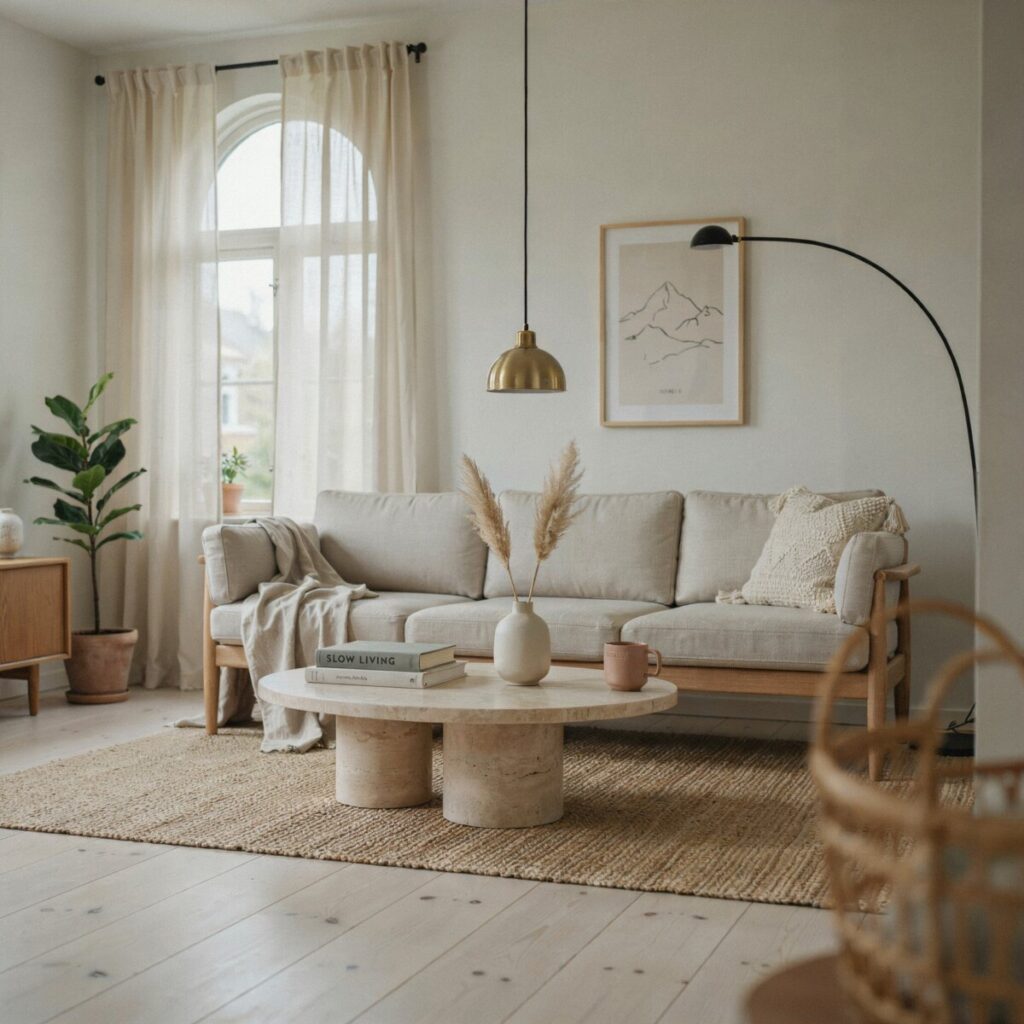
What Is Scandinavian Design?
Scandinavian interior design emerged in the 1950s as a distinct movement across Denmark, Sweden, Norway, Finland, and Iceland. Figures like Alvar Aalto, Arne Jacobsen, and Hans J. Wegner championed a radical idea for the time: that beautiful, well-made objects should be accessible to everyone, not just the wealthy. The movement fused democratic ideals with the practical realities of northern life—long dark winters, precious daylight, and a deep cultural connection to forests and fjords.
At its core, Nordic design principles come down to a handful of commitments: functionality first, minimalism with warmth, abundant natural light, a connection to nature, and high-quality craftsmanship built to last decades. Where industrial style celebrates raw metal and exposed brick, and boho layers pattern on pattern, Scandinavian rooms strip away the unnecessary and then soften what remains with wood, wool, and candlelight. And in any Scandinavian vs modern design comparison, the tell is temperature: unlike traditional American interiors with heavy furniture and formal rooms, Scandi spaces are minimal but never cold.
Two cultural concepts explain the mood. Danish hygge (“hoo-gah”) is the art of cozy contentment—candles, soft textiles, unhurried time with people you love. Swedish lagom means “just the right amount,” a balance that shows up in rooms that feel edited but lived-in. Together, the hygge lifestyle and functional minimalism produce what designers might call a natural light interior: calm, bright, and deeply livable. It’s no wonder the style has traveled so far beyond the Nordics.
The 15 Ways to Spot Scandinavian Design
1. Light, Neutral Color Palettes
The first clue is the color story. The Scandinavian color palette is dominated by whites, soft grays, warm beiges, and muted earth tones—a backdrop that bounces precious daylight around the room. Many Nordic rooms follow a loose 60-30-10 rule: about 60% white or neutral walls, 30% secondary neutrals in furniture and flooring, and just 10% accent color. The effect is serene, bright, and instantly recognizable.
Spot it in the wild: A Brooklyn apartment with crisp white walls, pale oak floors, and a single oatmeal-colored sofa is textbook neutral home decor, Nordic style.
2. Abundant Natural Light
Long winters made daylight a precious resource, and Scandinavian interiors treat it that way. Expect large, mostly uncovered windows, sheer linen curtains at most, and mirrors placed opposite windows to double the glow. Walls are often painted with a Light Reflectance Value (LRV) of 80 or higher, meaning they bounce back most of the light that hits them. Notice how a room feels at midday: if sunlight seems to pool and spread rather than disappear, that’s a clue.
Spot it in the wild: A Seattle café with floor-to-ceiling windows and not a heavy drape in sight is a classic natural light interior.
3. Light Wood Tones
If neutral walls are the canvas, light wood is the signature. Scandinavian design favors pale species—oak, pine, ash, and birch—for floors, furniture, and accents, with the natural grain left visible and no heavy staining or high gloss. This is light wood furniture at its most understated: warm, honeyed, and matte rather than shiny, keeping all that white from feeling clinical.
Spot it in the wild: A Minneapolis boutique with light ash shelving and white-washed wood floors. Run your hand along a tabletop; if you can feel the grain and see the knots, you’re on the right track.
4. Clean, Simple Furniture Lines
Scandinavian furniture speaks in clean, uncluttered silhouettes: tapered legs, gentle curves, low profiles, and zero ornate carving. Pieces feel light on their feet, often raised off the floor so light can flow underneath. You’ll also see multi-functional designs—storage ottomans, convertible sofas, nesting tables—the kind of functional furniture US shoppers increasingly seek, because every piece should earn its keep.
Spot it in the wild: A Chicago co-working space with minimalist desks and ergonomic chairs. If a chair’s shape can be described in one sentence—”a curved back on four tapered legs”—it’s likely Scandi-inspired.
5. Functional, Purpose-Driven Objects
Here’s a fun practical test: if you can’t name an object’s purpose in five seconds, it’s likely not Scandinavian. Nordic rooms are full of objects that do something—trays that corral keys, benches that store shoes, pendants aimed exactly at the reading chair. Decorative-only pieces are rare; beauty is expected to ride along with usefulness. This is functional minimalism in action.
Spot it in the wild: A San Francisco home office with hidden cable management and streamlined storage. When everything in a room quietly works, you’ve found the Nordic mindset.
6. Cozy Textiles and Layered Textures
This is where hygge home elements shine. To keep minimalism from feeling sterile, Scandinavian rooms layer texture: wool throws, linen cushions, sheepskin rugs, cotton weaves, maybe a chunky knit draped over a chair arm. The palette stays quiet while the textures do the talking, adding warmth without clutter. A good rule of thumb is at least three natural textures in one seating area.
Spot it in the wild: A Denver living room with a chunky knit blanket and a jute rug. If your hand wants to touch everything in the room, that’s no accident—it’s Nordic.
7. Minimal Clutter, Smart Storage
Scandinavian rooms breathe, and that’s thanks to minimalist storage solutions working behind the scenes. Daily life gets tucked into closed storage—handleless cabinets, woven baskets, built-ins—so surfaces stay mostly clear. “Less is more” shows up as intentional negative space: empty wall stretches, a bare countertop holding just a kettle and a bowl.
Spot it in the wild: A Portland kitchen with handleless cabinets and concealed appliances. If a room feels calm but you can’t see where the stuff lives, clever hidden storage is doing the heavy lifting.
8. Indoor Plants and Greenery
Nordic design pulls nature indoors, so potted plants are rarely an afterthought. A few well-chosen specimens—trailing pothos, succulents, a fiddle-leaf fig—add living color to a neutral room and echo the forests just outside the Nordic doorstep. This biophilic touch is a staple of indoor plants decor in Scandinavian-inspired spaces, and the pots stay quiet too: matte ceramic, terracotta, or woven baskets.
Spot it in the wild: An Austin coffee shop with hanging pothos and fiddle-leaf figs flanking the register. Quiet greenery in quiet vessels is the tell.
9. Soft, Layered Lighting
With winter darkness in mind, Scandinavian rooms never rely on one harsh overhead light. Instead you’ll see layered lighting design: floor lamps, table lamps, pendant lights, and candles working together in warm pools, usually from warm-toned bulbs around 2700K. Every corner gets its own gentle glow—a reading nook, a dining table, a windowsill.
Spot it in the wild: A Boston bookstore with reading nooks lit by adjustable brass lamps. If a space feels like dusk in the best way, count the light sources; five or more means the Nordic playbook.
10. Handcrafted and Artisanal Accents
Scandinavian design reveres craftsmanship, so handmade pieces stand out against the clean backdrop: hand-thrown ceramics with a visible wobble, woven baskets, artisanal wood bowls, a vase with a slightly uneven glaze. Deliberate imperfection adds character and keeps the room human. Look for the maker’s mark—literally and figuratively: thumbprints in clay, an asymmetrical weave, a knife-carved spoon.
Spot it in the wild: A Nashville boutique displaying local pottery alongside Scandinavian-inspired decor. When a minimal room features a few obviously handmade objects, you’re seeing Nordic respect for the human hand.
11. Muted Accent Colors
Scandi rooms aren’t all white—there are accents, but they’re muted and nature-inspired: fjord blue, forest green, dusty rose, ochre, charcoal. Typically a room limits itself to one or two accent colors, appearing in throw pillows, a single armchair, or a piece of artwork. The effect is a whisper of color rather than a shout.
Spot it in the wild: A Miami apartment with navy throw pillows and sage-green artwork against warm white walls. If the hues feel borrowed from a landscape—sea, moss, stone, dusk—that’s the Scandinavian color palette at work.
12. Open, Airy Floor Plans
Scandinavian interiors love an open, airy layout. Combined living-dining-kitchen areas maximize the flow of light and air, and furniture is arranged to encourage conversation and easy movement rather than pressed against walls. If you’re browsing open floor plan ideas, Nordic homes are the original case study: negative space is part of the plan, and sightlines stay clear.
Spot it in the wild: A Los Angeles loft where a sofa back—not a wall—defines the living zone. When you can see from the coffee maker to the reading chair, that’s Nordic flow.
13. Fireplaces or Stoves as Focal Points
Heat matters in the North, so fireplaces and wood stoves often anchor a Scandinavian room—not as ornament, but as a functional gathering spot. Modern versions range from minimalist stone fireplaces to sleek black wood-burning or ethanol stoves, almost always simple in form. It’s a direct echo of the Nordic need for warmth through long winters, and a natural hub for hygge.
Spot it in the wild: A Colorado mountain cabin with a minimalist stone fireplace, two chairs angled toward it, and a basket of birch logs nearby. When the hearth is the quiet star, you’ve found the Nordic heart.
14. Graphic Art and Simple Wall Decor
Scandinavian walls are edited, not empty. When art appears, it’s intentional: black-and-white photography, abstract line drawings, typography posters, or a single large-scale print. Gallery walls skew monochrome, framed in light wood or thin black metal. The test is subtraction: in a Scandi room, you can’t imagine adding another frame without breaking the calm.
Spot it in the wild: A Philadelphia apartment with a gallery wall of monochrome prints in matching oak frames. When art feels like a deep breath rather than noise, that’s Nordic curation.
15. Sustainable and Eco-Friendly Materials
Finally, look at what things are made of. Sustainable interior design is a core Nordic value: responsibly sourced wood (look for FSC certification), recycled metals, organic cotton, wool, and low-VOC paints. Objects are built to last decades, not seasons—a quiet rejection of throwaway culture.
Spot it in the wild: A green-certified office in San Diego with reclaimed wood desks and recycled plastic chairs. When a space’s materials come with a conscience—reclaimed, recycled, or renewable—you’re seeing Scandinavian design’s deepest principle: respect for nature.
Why Scandinavian Design Resonates in the US
So why has Scandinavian design taken off so thoroughly in the USA? Part of it is cultural alignment. American homes have long prized practicality and comfort, and Nordic design delivers both without fuss, slotting neatly into American interior design trends from mid-century revivals to today’s “quiet luxury” mood.
Then there’s the IKEA influence. Since the Swedish retailer’s US expansion, millions of American households have absorbed Scandi silhouettes—simple sofas, birch shelving, minimalist kitchenware—often without knowing the design lineage. Brands like West Elm and CB2 have pushed the aesthetic further, translating Nordic restraint into US-sized living rooms.
There’s also a psychological pull. In a fast-paced, screen-saturated age, a calm home environment feels like medicine. Cozy minimalism offers order without sterility, and hygge gives permission to slow down with a candle and a warm drink. Research on restorative environments consistently links uncluttered, light-filled rooms with lower stress—exactly what Nordic interiors provide.
Finally, the style adapts regionally. Colder states like Minnesota and Vermont lean into heavier wools and sheepskins; coastal California and Florida favor breezy linens and lighter palettes. That flexibility—rooted principles, local expression—is why US interpretations of the Nordic lifestyle keep multiplying, from mountain cabins to desert casitas. Scandinavian design doesn’t ask Americans to live like Danes; it offers a toolkit that bends to wherever you call home.
How to Bring Scandinavian Design Into Your Own Space
Ready to bring the look home? These Scandinavian home tips make it easy to start small:
- Start with a neutral base. Warm white or soft gray walls and quiet-toned large furniture are your canvas.
- Invest in one or two quality natural wood pieces. A solid oak coffee table or ash sideboard adds instant warmth and ages gracefully.
- Add texture with throws, rugs, and cushions. Layer wool, linen, and cotton in similar shades—minimalist decor ideas live and die by texture.
- Maximize daylight, then layer lighting. Sheer curtains or none at all, a mirror opposite the window, and two or three warm 2700K lamps instead of one harsh overhead.
- Declutter intentionally and prioritize function. Before anything new comes in, ask what it does. Functional decor in the US is easier to source than ever, from storage benches to lidded seagrass baskets.
Learning how to style Scandinavian interior spaces doesn’t require a renovation or a Copenhagen airfare. Edit often, let light and wood do the heavy lifting, and practice your eye on the world around you. A natural light home—and the calm that comes with it—starts with noticing.
Conclusion
From light wood and neutral walls to layered lighting, smart storage, and that unmistakable sense of calm, Scandinavian design elements add up to more than a trend—they’re a philosophy of living well with less. Whether it’s a Brooklyn apartment, an Austin coffee shop, or a Colorado cabin, modern Nordic style adapts to wherever it lands while keeping its core promises: function, warmth, and light.
The best part? These minimalist living tips cost nothing to practice. Next time you step into a space that feels just right, see how many of these 15 elements you can spot. Chances are, you’ll never look at a cozy café the same way again.
