
There’s a moment—usually somewhere between the third espresso and the fourth glance at sun-washed shutters—when American travelers in Europe fall in love with a house that isn’t theirs. Maybe it’s a Parisian apartment with herringbone floors and gilded moldings, or a Provençal farmhouse where linen curtains breathe with the breeze. That feeling is unmistakable, and it’s exactly what’s fueling America’s current fascination with European interior design.
In 2026, the U.S. interpretation of quiet luxury home decor has matured beyond a trend cycle into something deeper: a craving for homes that feel collected, calm, and quietly confident. European style interior design delivers this by blending tradition, craftsmanship, and understated sophistication into rooms that feel elegant yet deeply livable—lived-in elegance, not showroom perfection.
The influences you’ll meet in this guide range from French Country and Italian Tuscan to Scandinavian minimalism, English cottage charm, and Parisian chic. And here’s the thesis we’ll return to again and again: you don’t need a European address to live in a European-inspired home. You just need the right principles.
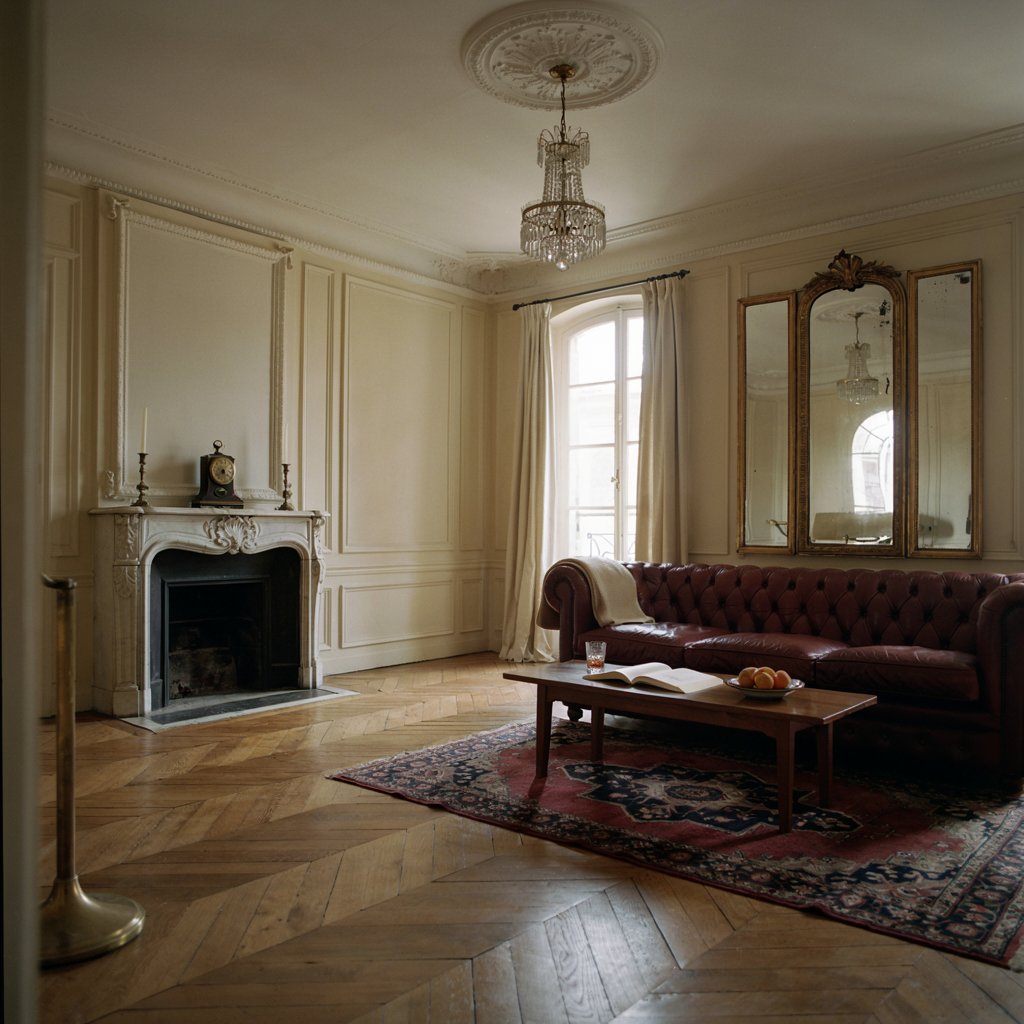
What Is European Interior Design? Core Principles Explained
European interior design is not one single look—it’s a philosophy of living with fewer, better things in rooms that honor their architecture. Whether you’re drawn to a Stockholm studio or a Siena villa, these timeless interior design principles appear again and again.
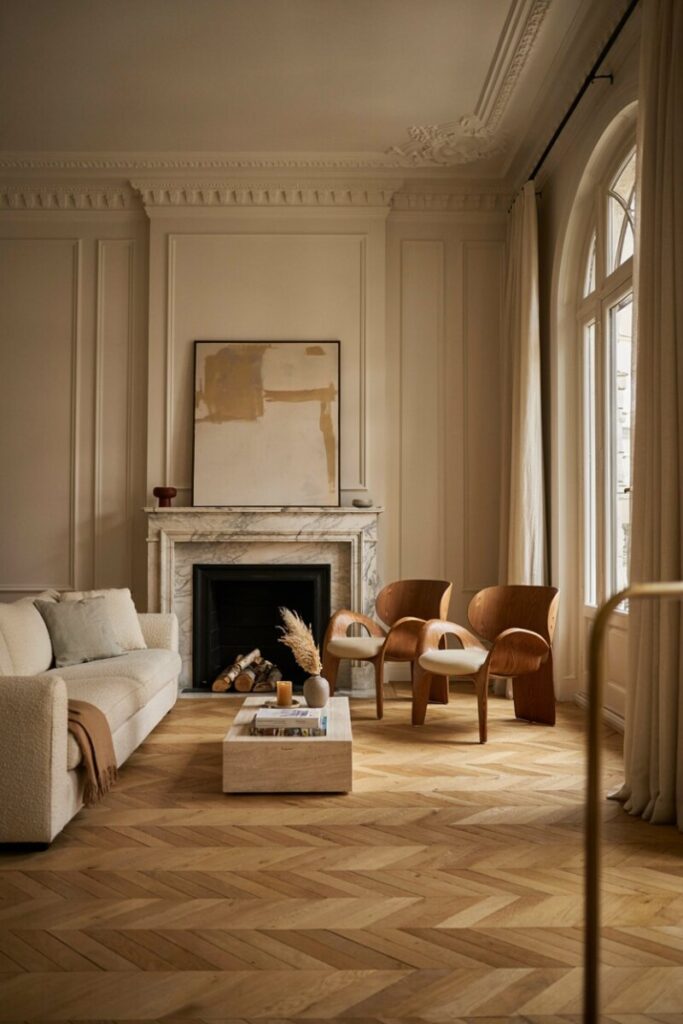
Timelessness Over Trends
European homes are furnished for decades, not seasons. Classic silhouettes—a Louis-style armchair, a plain oak farm table—outlive trend cycles, and enduring color palettes mean your room won’t photograph as “dated” five years from now.
Warm Minimalism
Think clean lines without sterility. Warm minimalism interior design keeps spaces edited but never cold, layering texture and softness so rooms feel curated rather than cluttered—the opposite of both maximalism and showroom starkness .
Material Honesty
Unlacquered brass that patinas under your hand, honed stone that shows its grain, reclaimed wood, rumpled linen textiles, and hand-troweled plaster. European home decor celebrates materials that age gracefully and tell the truth about what they are.
Architectural Integration
European rooms work with their bones: built-in millwork, crown molding, tall baseboards, and intentional spatial planning. The architectural details in European homes create proportion and history—even when, in newer American houses, they’re added rather than original.
Layered Neutral Color Schemes
Buttery creams, warm whites, taupe, soft sage, camel, and ecru replace cool greige. European color palettes for homes rely on layered neutrals and tonal depth—closely related hues stacked together—rather than high contrast.
Top European Design Styles to Know (and How to Adapt Them)
Before you mix, it helps to know the dialects of the European style interior. Here are the six most influential—and how to adapt each to an American floor plan.
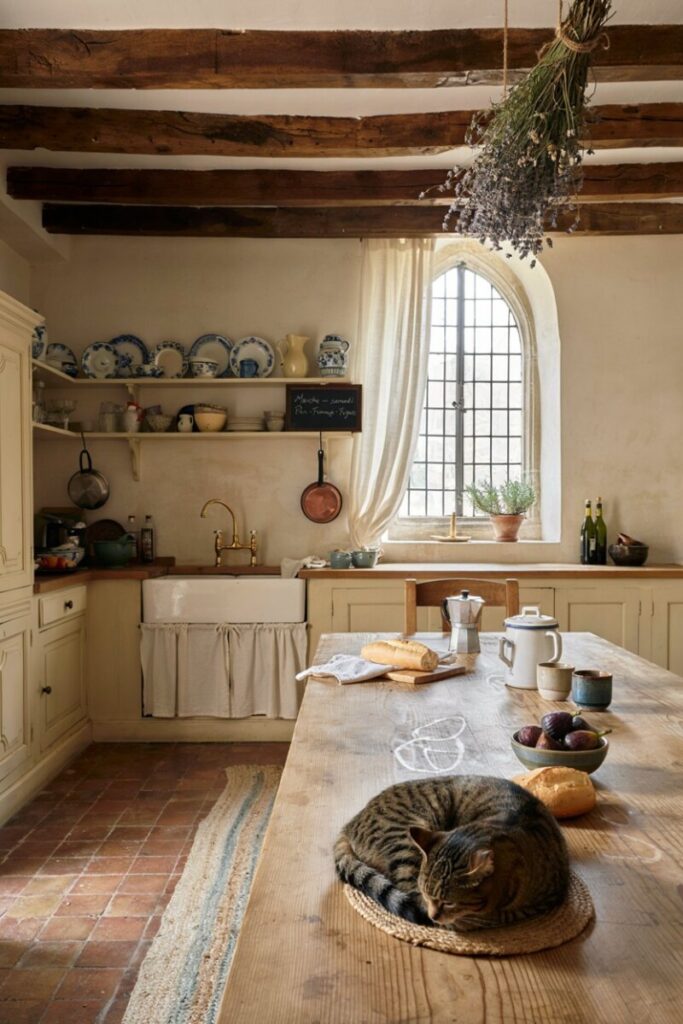
French Country
Picture Provence: gingham and toile, antique wood furniture with a distressed finish, soft pastels, and a table that always looks ready for lunch. Adapt it with a farmhouse table, slipcovered seating, and one or two pastoral accents—no rooster collection required.
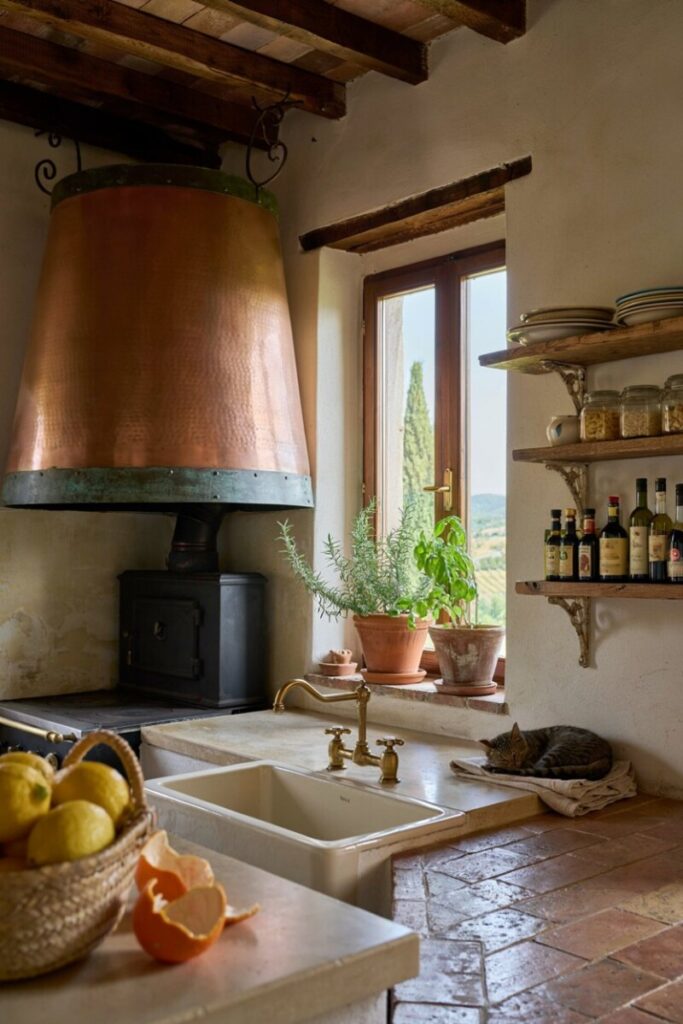
Tuscan / Italian
Sun-baked terracotta, wrought iron, textured plaster walls, and earthy reds and ochres define the style. In U.S. homes, lean on the materials—honed stone countertops, iron light fixtures, olive-toned textiles—and skip the heavy murals to keep it fresh.
Scandinavian
Light woods, functional furniture, monochrome accents, and hygge-driven textiles. Scandinavian design is the family’s most minimalist dialect and the easiest entry point for modern American condos and small spaces.
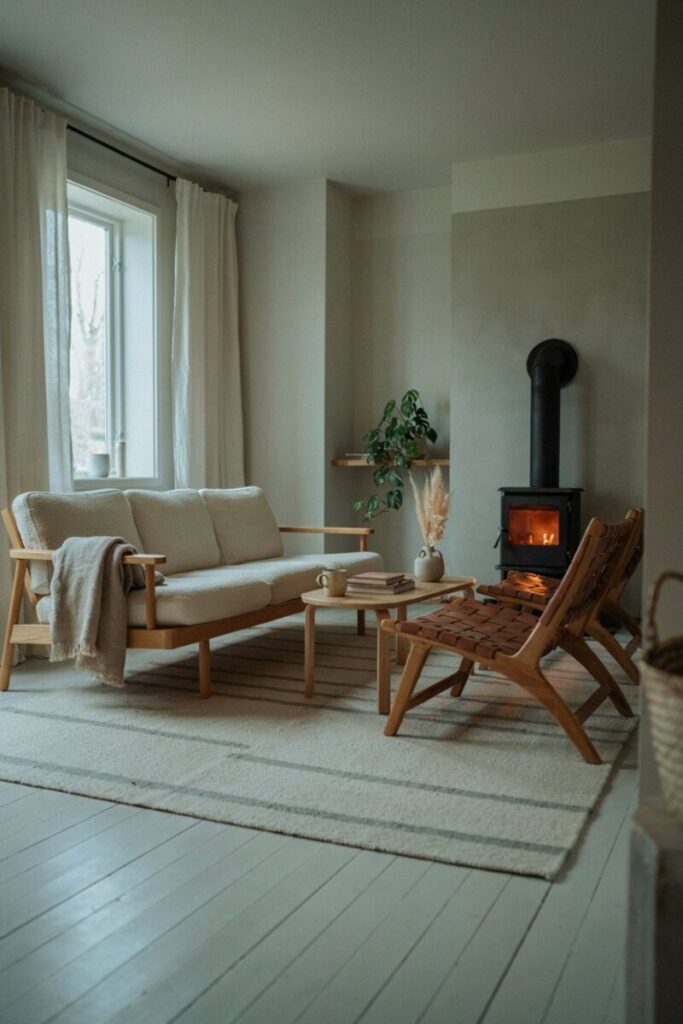
Parisian Apartment
Herringbone parquet, white walls framed by ornate moldings, a marble fireplace, vintage mirrors gilded by age, and one irreverent contemporary artwork to keep things witty. It’s high-low mixing at its most confident.
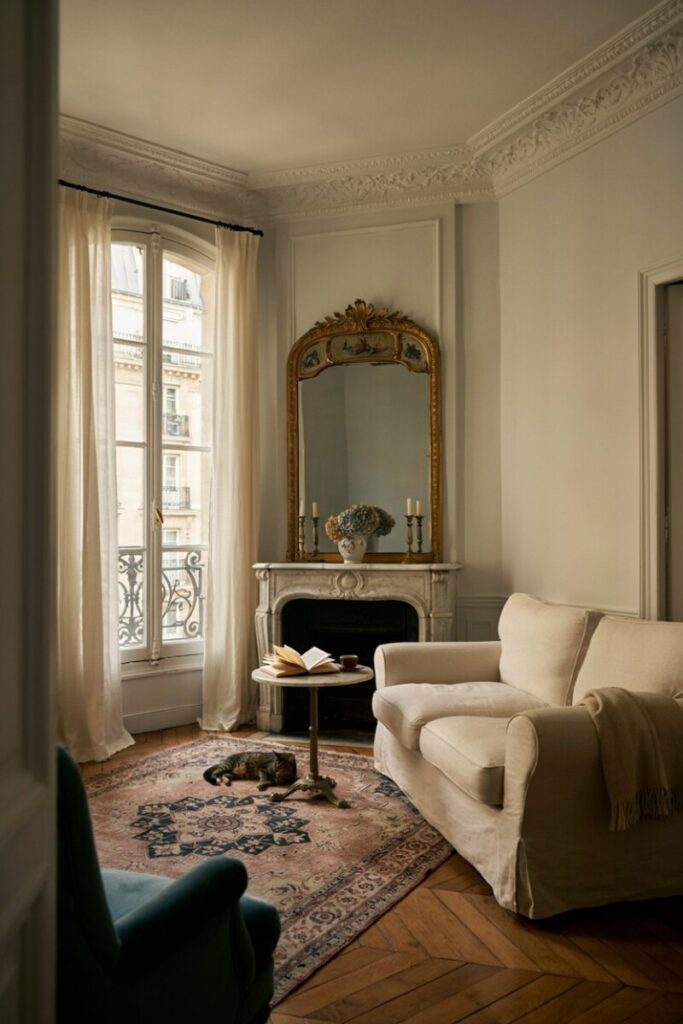
English Cottage
Floral patterns, layered rugs, cozy reading nooks, and dark wood accents. English cottage style embraces “collected” clutter done well—chintz cushions, stacked books, and lamps that glow warmly at dusk.
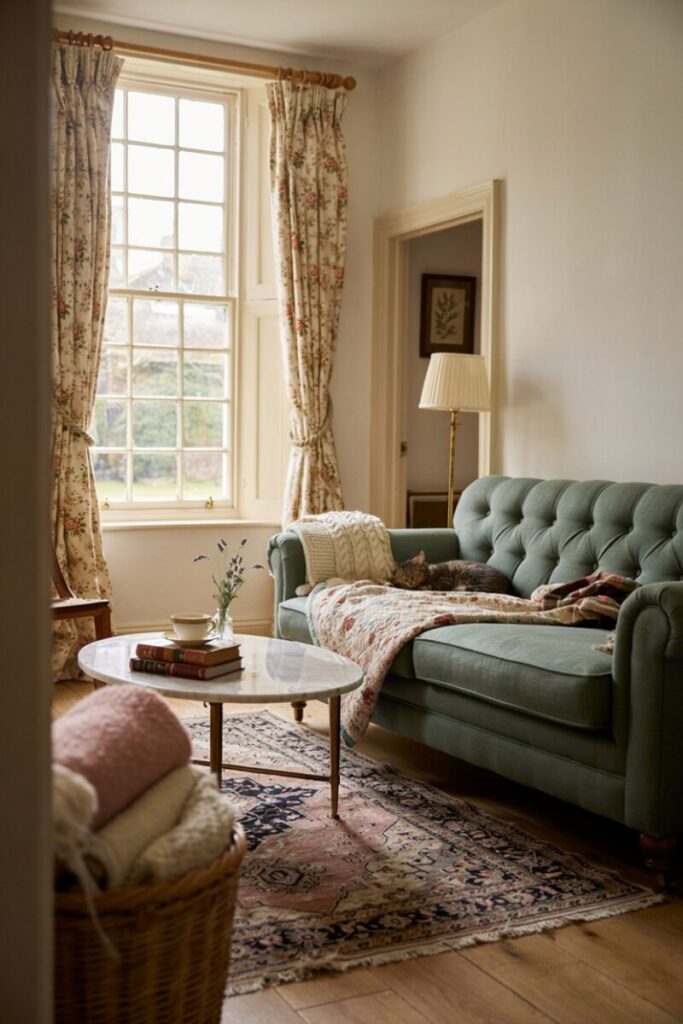
Modern European
Modern European design is the fusion dialect of the moment: contemporary minimalism meeting heritage detail—curved furniture silhouettes, sculptural lighting, and limewashed walls alongside original moldings. If you’re weighing French country decor vs modern European, ask one question: do you want romance and pattern, or calm and silhouette? Both are unmistakably European.
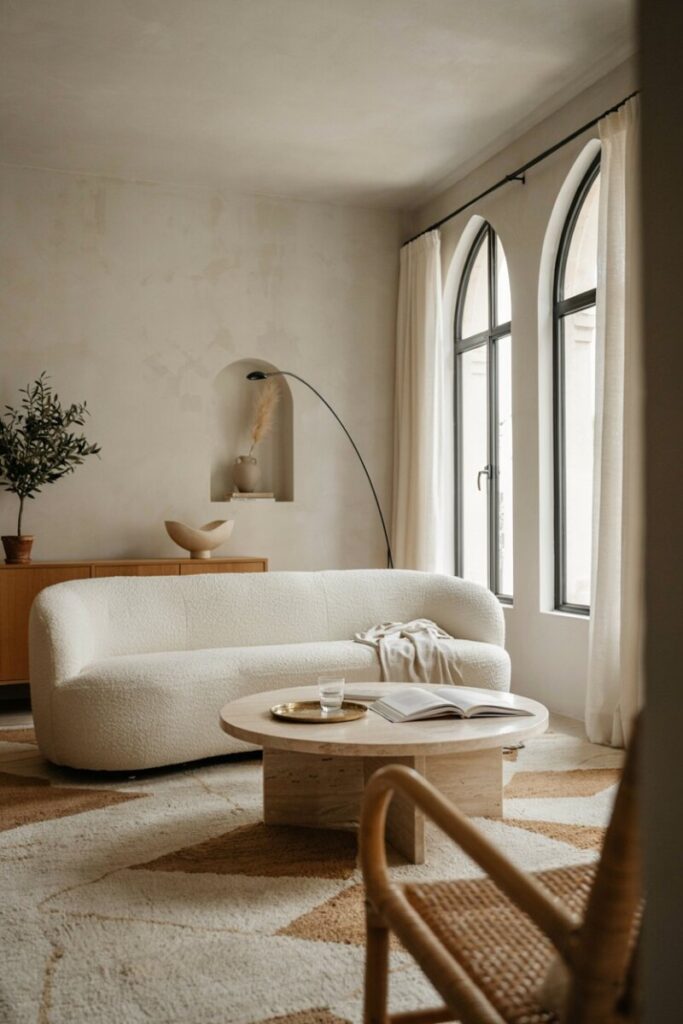
And if you’re debating Scandinavian vs Tuscan interior design, think climate and temperament: Scandinavian is cool, light, and restrained; Tuscan is warm, earthy, and abundant. Most American homes land beautifully somewhere in between.
Key Elements of European Interior Design for US Homes
So how do you get a European look in your American home? Start with the building blocks below—the elements that read “European” almost instantly, even in a builder-grade house or a rental.
Color Palettes
Warm neutrals and muted earth tones form the base, with soft accents like sage, dusty rose, or navy layered on top. The best neutral paint colors for European style carry warm undertones—think Benjamin Moore “White Dove” or Sherwin-Williams “Alabaster”—never stark, never blue-gray. [Internal link: “The Best Neutral Paint Colors for a Timeless Home”]
Flooring
Hardwood, parquet, or stone tile underfoot, with area rugs adding softness where wall-to-wall carpet would dull the architecture. If your home came carpeted, revealing or installing wood flooring is one of the highest-impact swaps available.
Walls & Finishes
Textured plaster, limewash paint, shiplap, or beadboard add a depth flat latex can’t. Limewash and Roman clay, in particular, continue to define timeless, layered European walls in 2026 . For authentic techniques and finishes, resources from Annie Sloan are a great starting point.
Furniture
European furniture styles favor lean profiles, curved silhouettes, and mixed materials—wood plus metal plus upholstery. Pieces should feel chosen one at a time, not delivered in a single flat-packed shipment.
Lighting
Statement chandeliers, wall sconces, and layered ambient lighting replace rows of overly bright recessed cans. Dimmers are non-negotiable; European rooms glow rather than glare.
Textiles & Soft Furnishings
Linen curtains that pool slightly at the floor, wool throws, handmade ceramics, and imperfect pottery with scalloped edges. Textiles are where European interiors get their softness—and their soul.
Decor Accents
Ornate or vintage mirrors and decor, old art (even thrifted prints in beautiful frames), books as decor, fresh flowers, and natural elements like branches or olive stems. One vignette per surface, then stop.
[Image suggestion: before/after of a US living room transformed with warm neutrals, molding, and vintage accents]
Room-by-Room Guide: Applying European Design in Your Home
Living Room
Anchor the room with a curved or low-profile sofa, layer a vintage rug over natural fiber, and build a gallery wall from mismatched vintage frames. Add unlacquered brass fixtures or accents and one sculptural light. These European interior design ideas for living rooms work at any square footage. [Internal link: “How to Style a Gallery Wall Like a Designer”]
Kitchen
Matte or painted cabinetry, open shelving for dishes, honed stone countertops, and integrated or panel-ready appliances. The NKBA’s 2026 kitchen trends report echoes this direction—craftsman detailing, natural materials, and wellness-focused, light-filled spaces . [Internal link: “European Kitchen Design Ideas: A Complete Guide”]
Bedroom
An upholstered or simple wood headboard, neutral linen bedding, antique or vintage-look nightstands, and soft, low lighting. Keep surfaces nearly clear—European bedrooms are for resting, not storing.
Bathroom
A freestanding tub where space allows, honed marble or marble-look tile, minimal vanity storage, and wall-mounted fixtures. For European bathroom design in small spaces, go monochrome: one warm neutral on walls and floor visually doubles the room.
Dining Room
A solid wood table with intentionally mismatched chairs, a statement chandelier hung low, and a simple wine display. This is the room where Old World charm shines brightest.
Home Office
A built-in desk or millwork, a well-worn leather chair, styled bookshelves (books horizontal and vertical, objects in odd numbers), and a desk placed to catch natural light.
Budget-Friendly Tips to Achieve the European Look
European home decor on a budget is not a contradiction—some of the most convincing European rooms are mostly thrifted. Try these moves first:
- Paint walls in warm neutrals (Benjamin Moore “White Dove,” Sherwin-Williams “Alabaster”) for an instant Old World backdrop.
- Swap hardware to unlacquered brass or matte black on cabinets and doors.
- Add molding, trim, or picture-frame wall panels for architectural interest—a weekend project with outsized payoff. [Internal link: “Budget-Friendly Home Upgrades That Add Value”]
- Shop vintage and secondhand for furniture and decor; patina can’t be faked and can’t be rushed.
- Use area rugs to define spaces, layer texture, and quiet echoing rooms.
- Add plants and fresh flowers—even market tulips in a simple vase read as continental flair.
Common Mistakes to Avoid
- Overusing stark white or cool grays. European palettes lean warm; check undertones in daylight and lamplight.
- Cluttering surfaces with too many decor items. European design values breathing room—edit twice.
- Ignoring lighting layers. Ambient plus task plus accent, all on dimmers.
- Choosing trendy, disposable furniture over timeless pieces. Buy fewer, better things, even if it means waiting.
- Forgetting textiles and softness. Hard finishes without linen, wool, and cotton read as a lobby, not a home.
The Future of European Design: 2026 Trends to Watch
From quiet luxury’s maturation to soft modernism, these are the European design trends 2026 watchers should know—less about novelty, more about depth.
Quiet Luxury, Grown Up
The beige-on-beige version of quiet luxury is fading as designers report widespread “beige fatigue” . What remains is the core idea—craftsmanship over flashiness—expressed with matte finishes, tonal depth, and more personal rooms, alongside Mediterranean warmth and sumptuous textiles .
Soft Modernism
Rounded forms and comfort-first silhouettes continue to dominate, as 2026 favors softer, more fluid shapes over sharp angles and rigid geometry . Think curved sofas, arched niches, and sculptural details.
Biophilic Integration
Natural moss walls, indoor greenery, and organic textures connect interiors to the landscape—part of a broader push toward biophilic design elements and sustainable home design.
Personalized Built-Ins
“Modern heritage” interiors with fluted and reeded millwork and elevated built-ins are on the rise . Architectural planning from the start means fewer add-ons later.
Stone Evolution
Softer, warmer palettes and honed finishes with subtle movement replace high-contrast slabs, while natural wood kitchens—fitted and unfitted alike—are having a genuine moment .
Conclusion: Your European-Inspired Home Awaits
European interior design ultimately comes down to three words: intentionality, quality, and warmth. It’s the confidence to leave a wall nearly bare, the patience to buy the right piece once, and the generosity of a table with room for one more.
Start small. Paint one room a buttery neutral. Hang one vintage mirror. Spend one Saturday at an estate sale. Learning how to add European charm to your home isn’t a renovation question—it’s a habit of deliberate choices, and it begins with a single one.
Tell us in the comments: Which European style speaks to you—and what’s the first corner of your home you’ll transform?
FAQ
What is the difference between European and American interior design?
American interiors often favor open plans, larger furniture, and trend-driven updates, while European interiors prioritize proportion, smaller-scale furniture, architectural details in European homes, and pieces that last generations. The European approach is more edited and more rooted in a home’s original character.
Can I achieve European style in a small apartment?
Absolutely—some of the world’s best European interiors are tiny. Lean profiles, mirrors to bounce light, layered lighting, and a restrained palette make compact spaces feel intentional rather than cramped.
Is European home decor expensive?
It can be, but it doesn’t have to be. The philosophy is “fewer, better things,” which pairs naturally with vintage shopping, gradual collecting, and investment pieces bought over time.
Which European style is best for beginners?
Scandinavian and Modern European are the most forgiving starting points, while French Country and English Cottage reward a love of pattern and collecting.
How do I mix European styles without clutter?
Unify with one consistent color palette and wood tone, then vary the eras. One dominant style (about 70%) with one accent style (30%) keeps the mix confident.
